
No. Masturbation does not cause acne. There is no evidence that it does, and no plausible way for it to — the brief hormonal blips around orgasm are nothing like the sustained hormonal activity that acne actually requires. In years of practice I have never seen a case of acne that was caused, or cured, by a man’s masturbation habit. This is one of the most common myths I am asked about, and it rests entirely on a misunderstanding about hormones. Let me clear it up properly.
I am Dr Shah Dupesh, a Consultant Andrologist in Chennai. Young men come to me genuinely distressed, convinced that masturbation has “ruined” their skin and that quitting will fix it. They are chasing the wrong culprit — just as with the other myths about masturbation’s side effects. Here is what actually drives acne, why the myth is so sticky, and what genuinely helps.
Quick Facts
- Masturbation does not cause acne, pimples or oily skin — there is no evidence it does, and no sustained hormonal change that could make it happen.
- The myth assumes masturbation spikes testosterone; in reality, orgasm produces only tiny, brief hormonal changes, not the sustained androgen levels that drive acne.
- Acne and masturbation both begin in puberty — they rise together, which is why people wrongly blame one for the other.
- Real acne is caused by androgens, excess oil, clogged pores, bacteria and genetics — not by a habit.
- Stopping masturbation will not clear your skin, because masturbation never caused it.
- Persistent or scarring acne is very treatable — see a doctor rather than blaming yourself.
Where the myth comes from: the testosterone misunderstanding
The whole belief hangs on a single chain of logic: masturbation raises testosterone, testosterone makes skin oily, oily skin causes acne. The chain breaks at the very first link. When researchers measured the hormonal response to masturbation in healthy men, the picture was clear. An early study found a brief, short-lived rise in several steroids, including testosterone, immediately after masturbation (Purvis et al., 1976), while a later controlled study found testosterone was entirely unaltered by orgasm (Exton et al., 2001). In neither case is there the sustained elevation of androgens that acne actually requires. A momentary blip is simply not the same as the steady, day-after-day hormonal drive that produces a breakout.
It is worth understanding the difference. Acne is driven by sustained androgen activity at the level of the oil gland over weeks and months, especially the conversion of testosterone to dihydrotestosterone in the skin. A few minutes of arousal and a brief orgasm do not change that long-term hormonal environment. The hormones that cause acne are the ones circulating all day, every day during puberty — not a momentary blip.
What about cortisol, prolactin and the other hormones?
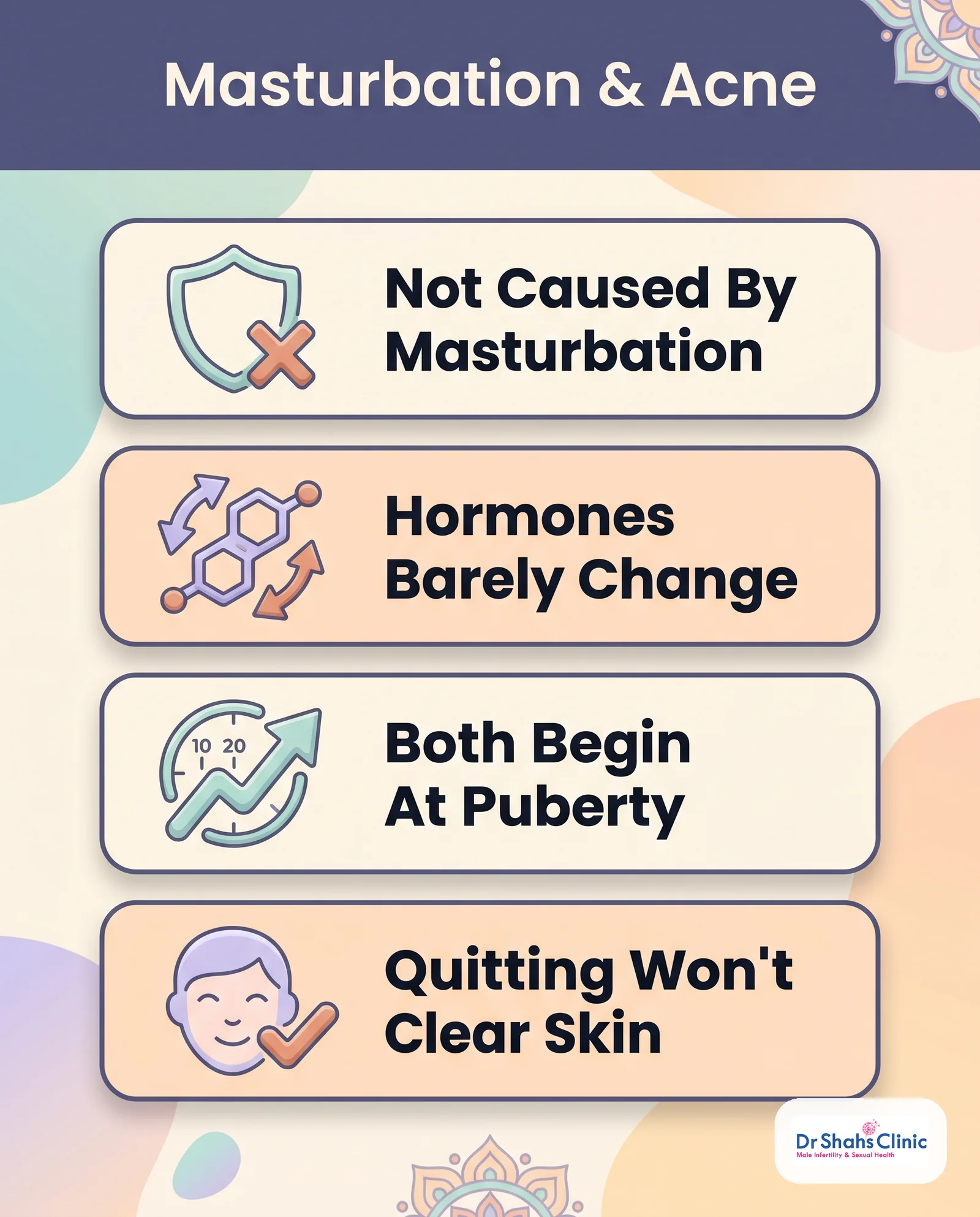
Whenever I explain that masturbation does not touch your testosterone in any lasting way, the next worry is the other hormones — “but doesn’t orgasm spike cortisol, or prolactin, and doesn’t that break me out?” It is a fair question, so let me walk through every hormone people blame, one by one. The short version: yes, a few of them shift for a few minutes around climax, and no, none of those brief blips is the sustained hormonal pattern that acne actually needs.
| Hormone | What orgasm actually does | Effect on acne |
|---|---|---|
| Testosterone | No lasting change — levels are essentially the same before and after (Exton, 2001) | None. Acne needs steadily high androgens, not a momentary flicker. |
| Prolactin | A brief rise that peaks at climax and settles within the hour | None. Too short-lived to influence the oil glands. |
| Cortisol | Little to no measurable change — studies find no consistent rise | None from the act itself. (Chronic stress and poor sleep can worsen existing acne — but that is your lifestyle, not masturbation.) |
| Oxytocin & endorphins | Rise and give the relaxed, sleepy feeling afterwards | None — if anything they lower stress, which is good for skin. |
So the whole hormonal case against masturbation collapses under a simple fact: acne is driven by months of raised androgens acting on oil glands, while everything around orgasm is measured in minutes. A blip cannot build a breakout.
Why acne and masturbation seem linked: it is puberty
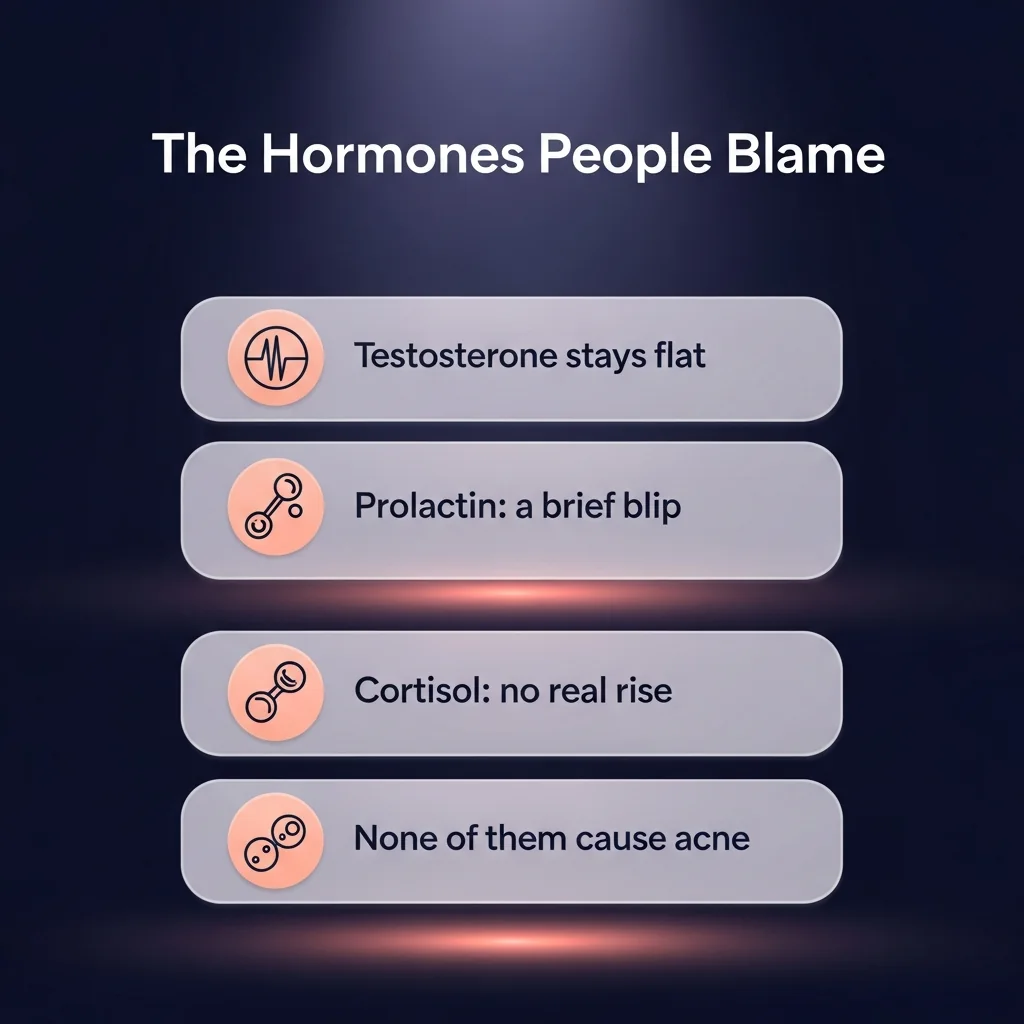
Here is the real reason the myth feels true. Both acne and masturbation begin at the same moment in life — puberty. As a boy moves through puberty, his androgen levels climb steeply. Those rising androgens do two things at once: they switch on the oil glands in the skin (producing acne), and they switch on sexual drive (producing masturbation). Acne and masturbation are therefore two parallel results of the same hormonal surge, not cause and effect.
So the teenager who notices his skin breaking out at exactly the age he starts masturbating jumps to the obvious conclusion. But correlation is not causation. The acne would have appeared whether or not he ever masturbated, because the driver is puberty itself.
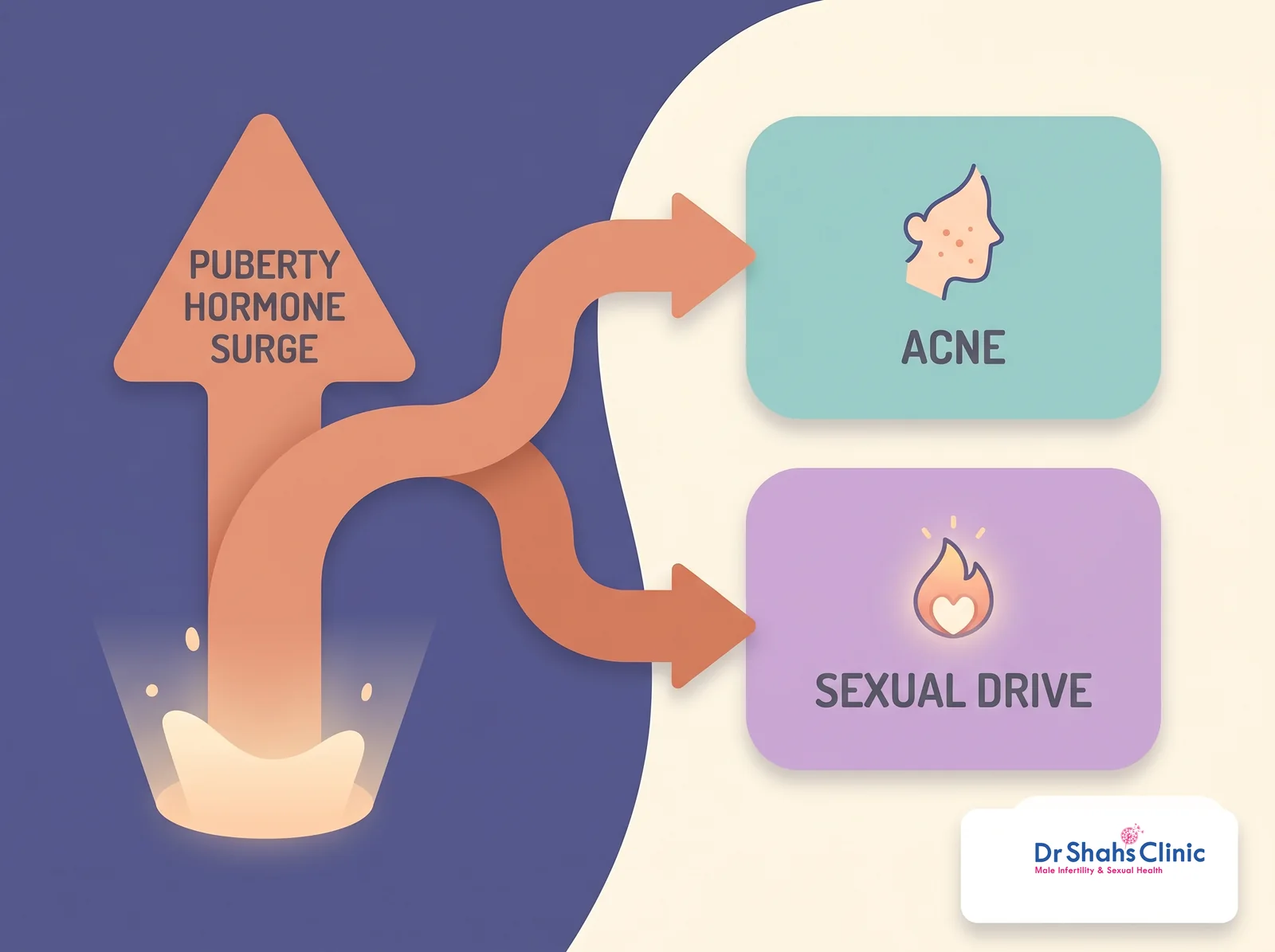
I have lost count of the young men who arrive ashamed, certain that masturbation has scarred their face, asking me to confirm that quitting will clear it. It will not, and I tell them so plainly — not to dismiss them, but to free them. Once a young man understands that his acne and his sexual development simply arrived together at puberty, the guilt lifts, and we can talk about what actually treats the skin. Blaming masturbation only adds shame to a problem that already dents a teenager’s confidence.
What actually causes acne
Acne is a genuine medical condition of the hair follicle and oil gland, and dermatology understands it well. Four things combine to produce it (Williams et al., 2012; Cong et al., 2019):
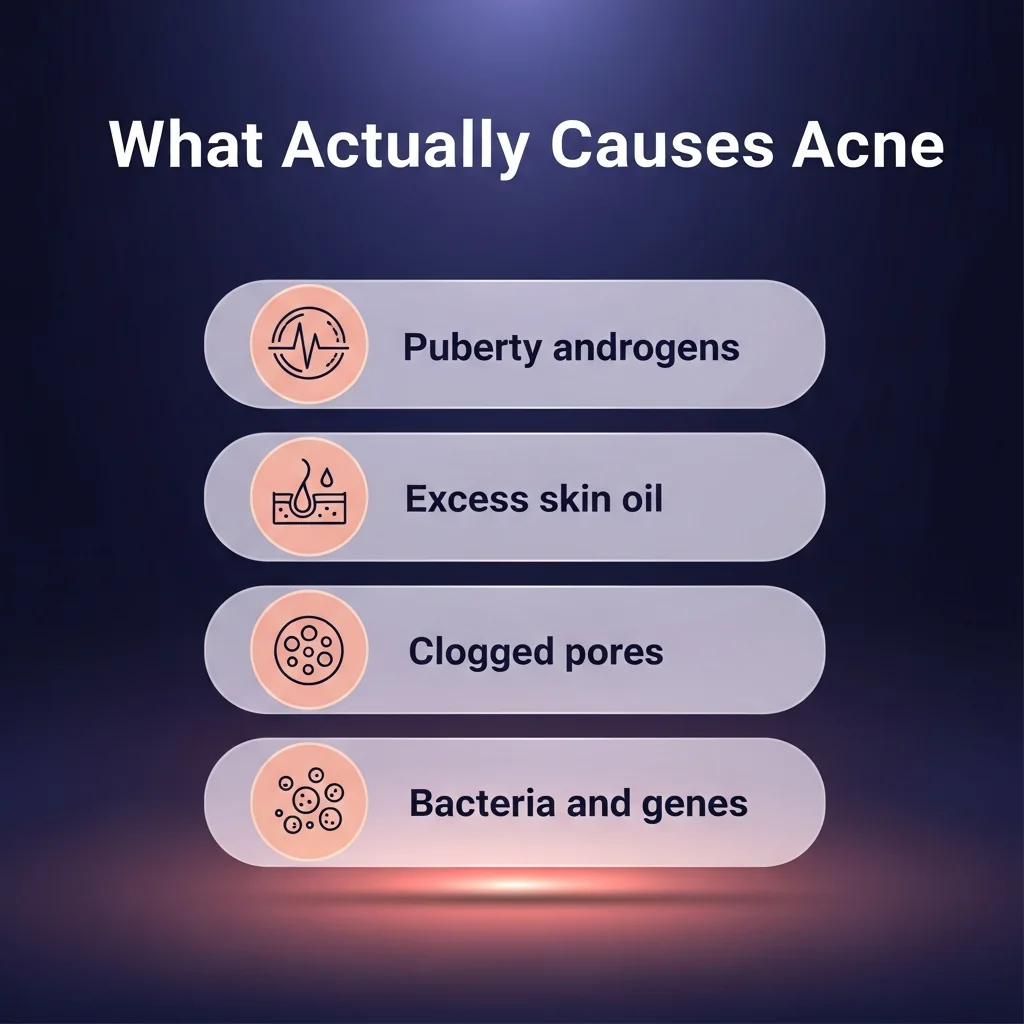
- Androgens. The hormones of puberty enlarge the oil glands and increase sebum production.
- Excess sebum. That extra oil mixes with dead skin cells.
- Clogged pores. The follicle opening becomes plugged with oil and skin cells (a comedone).
- Bacteria and inflammation. Cutibacterium acnes multiplies in the blocked follicle, triggering the redness and swelling of a pimple.
On top of these, genetics is a powerful factor — if your parents had bad acne, you are more likely to. None of these mechanisms has anything to do with masturbation.
Talk to a men’s-health specialist
Does diet play a role?
This is a fairer question than the masturbation one. The evidence suggests diet has a modest influence on acne, though it is nowhere near as decisive as puberty and genetics. The strongest signal is for high-glycaemic-load diets — lots of sugar and refined carbohydrates — which can worsen acne, and there is weaker evidence that dairy, especially skimmed milk, may aggravate it in some people (Meixiong et al., 2022; Bowe et al., 2010; Baldwin & Tan, 2021). The old playground warnings about chocolate and fried food, by contrast, are largely overstated.
So will quitting masturbation clear my skin?
No. Because masturbation never caused your acne, stopping it cannot cure it. Many young men try a “NoFap” streak and credit it for clearer skin, but that is a trap of timing and expectation: acne naturally waxes and wanes, teenage skin often improves with age regardless, and people who start a streak frequently also start sleeping better, drinking more water, or washing their face more — the kind of changes that genuinely help. The abstinence gets the credit that belongs to puberty passing and better habits. The same pattern of false blame shows up when men ask whether masturbation causes erection problems or infertility — the honest answer always needs the evidence, not the myth.
What genuinely helps, and when to see a doctor
If acne is bothering you, the answer is treatment, not abstinence. A simple routine — gentle cleansing twice a day, not scrubbing, and over-the-counter ingredients like benzoyl peroxide or salicylic acid — helps mild acne. If your acne is persistent, painful, cystic, or starting to scar, see a doctor or dermatologist early, because effective prescription treatments exist and scarring is far easier to prevent than to fix. As an andrologist, the one thing I add is this: if acne in an adult man comes alongside other changes — for instance after taking steroids or testosterone — that is worth a proper hormonal review, because those do raise androgens, unlike masturbation.
Book a confidential consultation
Talk to Dr Shah about masturbation myths, hormones and men’s health — honest, evidence-based and judgment-free.
Free guide · no spam · unsubscribe anytime.
Give a consistent over-the-counter routine — a gentle cleanser plus benzoyl peroxide or salicylic acid — a fair four to six weeks. If your skin has not clearly improved by then, that is the moment to see a dermatologist rather than keep switching products, because moderate or scarring acne responds far better to prescription treatment than to anything on a shop shelf.
Myth vs Fact: masturbation and acne
| The myth you’ve heard | The clinical fact |
|---|---|
| Masturbation spikes testosterone and causes acne. | Orgasm causes only tiny, brief hormonal changes. Acne is driven by sustained puberty-level androgens, not a momentary blip. |
| The more you masturbate, the worse your acne. | There is no dose-response link. Frequency of masturbation does not track with severity of acne. |
| Acne started when I began masturbating, so it’s the cause. | Both started at puberty from the same androgen surge. That is coincidence, not causation. |
| Quitting masturbation (NoFap) will clear my skin. | It will not. Any improvement is from time, age and better habits — not abstinence. |
| It must be a “dirty” habit showing on my face. | Acne is a medical condition of oil glands and follicles, not a sign of behaviour or hygiene. |

Private 1-on-1 consultation
Worried a habit is harming you? Let’s separate myth from fact.
A short, private consultation puts the masturbation myths to rest and focuses on what genuinely affects your health. No shame, no jargon.
Book a Confidential Consultation
Frequently Asked Questions
Does masturbation cause pimples?
No — and this is the same question in different words. “Pimples” and “acne” are the same thing: a pimple forms when a pore clogs with oil and dead skin, driven by the steady hormones of puberty — not by ejaculating. Masturbation causes neither one pimple nor a face full of them.
Does gooning or edging for hours cause acne?
No. “Gooning” — long, repeated edging sessions — does not change the picture at all. Doing it more often, or for longer, does not produce the sustained androgen levels that acne needs; the hormone blip around each climax is just as brief and just as harmless. Frequency and duration simply do not feed acne. And while badly disrupted sleep can aggravate existing breakouts, stopping is still not a skin treatment. If the habit itself feels compulsive or is costing you sleep, that is a separate issue worth addressing — here is how often masturbation is actually healthy.
Does masturbation cause acne or pimples?
No. There is no evidence that masturbation causes acne. The myth assumes masturbation raises testosterone enough to cause breakouts, but the hormonal changes around orgasm are small and short-lived — not the sustained androgen levels that actually drive acne.
Does masturbation increase testosterone and make skin oily?
Not in any way that matters for your skin. Any rise in testosterone after masturbation is brief and short-lived; it is the steady, sustained androgen levels of puberty that make skin oily and cause acne, not a momentary blip from ejaculating.
Will stopping masturbation (NoFap) clear my acne?
No. Since masturbation did not cause your acne, quitting cannot cure it. People who report clearer skin on a NoFap streak are usually benefiting from time, natural improvement with age, and better habits like sleep and skincare — not from abstinence itself.
Why did my acne start at the same time I began masturbating?
Because both are triggered by puberty. Rising androgens switch on the skin’s oil glands (causing acne) and sexual drive (leading to masturbation) at the same age. They appear together because they share a cause, not because one causes the other.
What actually causes acne, then?
Acne comes from androgens enlarging the oil glands, excess sebum, clogged pores, the bacterium Cutibacterium acnes and inflammation, all strongly influenced by genetics. Diet, especially high-sugar foods, can play a modest role. Persistent or scarring acne should be treated by a doctor.
References
- Exton MS, Krüger TH, Bursch N, et al. Endocrine response to masturbation-induced orgasm in healthy men following a 3-week sexual abstinence. World J Urol. 2001;19(5):377-82. PMID 11760788
- Purvis K, Landgren BM, Cekan Z, et al. Endocrine effects of masturbation in men. J Endocrinol. 1976;70(3):439-44. PMID 135817
- Williams HC, Dellavalle RP, Garner S. Acne vulgaris. Lancet. 2012;379(9813):361-72. PMID 21880356
- Cong TX, Hao D, Wen X, et al. From pathogenesis of acne vulgaris to anti-acne agents. Arch Dermatol Res. 2019;311(5):337-349. PMID 30859308
- Meixiong J, Ricco C, Vasavda C, et al. Diet and acne: A systematic review. JAAD Int. 2022;7:95-112. PMID 35373155
- Bowe WP, Joshi SS, Shalita AR. Diet and acne. J Am Acad Dermatol. 2010;63(1):124-41. PMID 20338665
- Baldwin H, Tan J. Effects of Diet on Acne and Its Response to Treatment. Am J Clin Dermatol. 2021;22(1):55-65. PMID 32748305