
Most lumps on the testicle are harmless. A soft, movable, pea-sized lump that sits separate from the testicle is almost always a benign epididymal cyst. The one to act on is a hard, painless lump felt on the testicle itself.
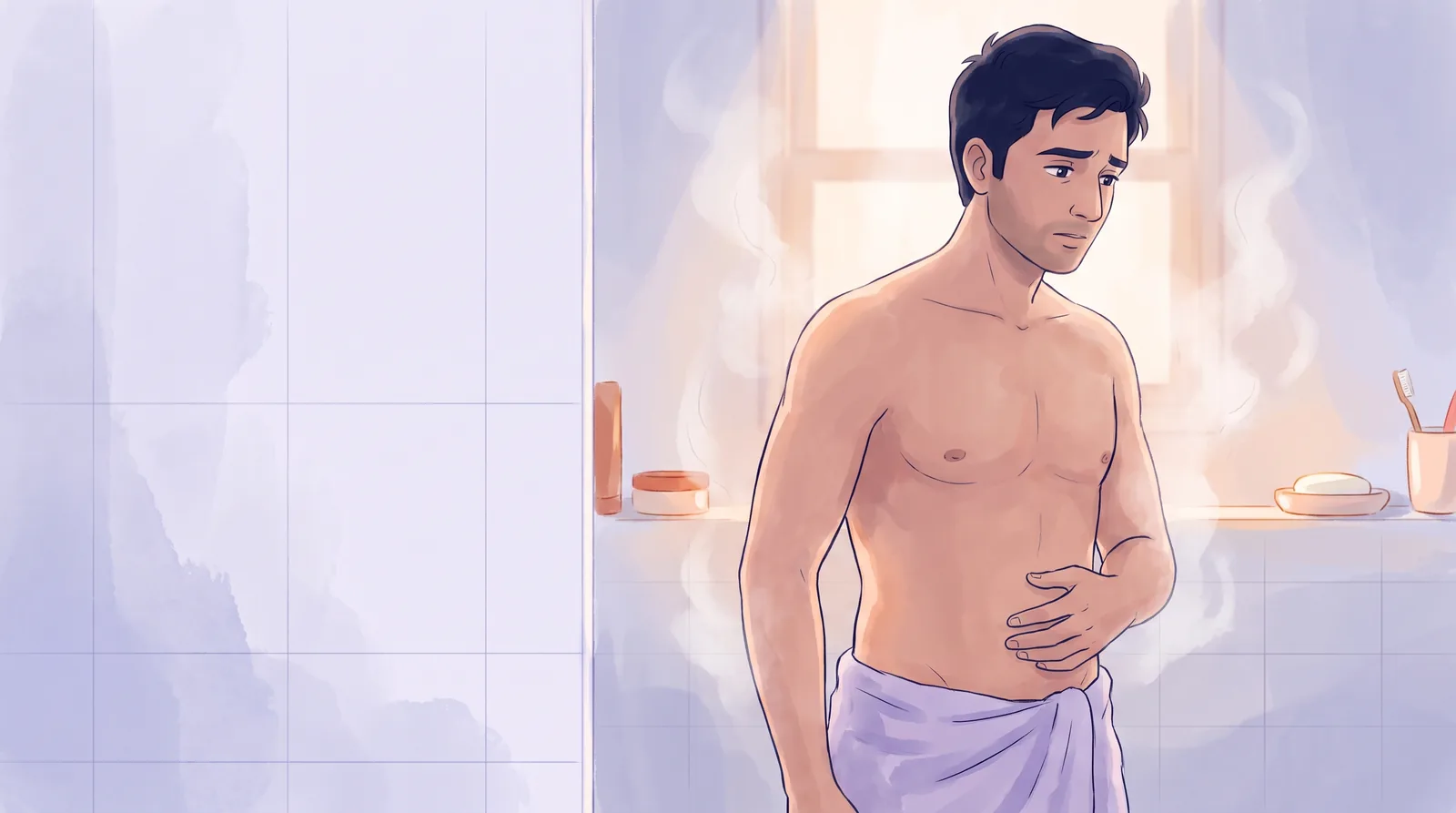
As a practising andrologist in Chennai, I meet this fear almost every day: a man finds a “lump in my balls” in the shower and is convinced, by the time he reaches me, that it is cancer. I understand the panic. So let me settle it plainly — in roughly 8 out of 10 of the men I examine for a scrotal lump, the cause is completely benign: an epididymal cyst, a varicocele, a hydrocele, or a harmless skin cyst. There is one lump I never brush aside, and I will show you exactly how to recognise it.
Quick Facts
- Most testicular lumps are benign — spermatoceles, hydroceles, varicoceles and simple cysts are well-recognised non-cancerous causes of a scrotal lump (Rubenstein, 2004).
- Position is everything — a scrotal ultrasound reliably tells a lump on the testicle (worrying) from one beside it (almost always benign), and cystic fluid from a solid mass (Akin, 2004).
- The cancer lump is hard and painless — testicular cancer most often shows up as a painless mass on the testicle itself (Singla, 2025; Chong, 2023).
- Even cancer is highly curable — testicular cancer is the most common solid malignancy in men aged 15–40 (~10,000 US cases a year, mean age 33), and 90–95% are germ cell tumours with excellent survival (Singla, 2025).
- Sudden, severe pain is the real emergency — testicular torsion needs surgery within about six hours, when the salvage rate is around 90% (Langan, 2022).
Where is the lump? Position decides the diagnosis
If you remember one thing from this page, make it this: position, position, position. Where the lump sits on your scrotum tells me, before any scan, what it most likely is. I run through three questions with every man who sits across from me.
Is it on the skin, beside the testicle, or on the testicle itself?
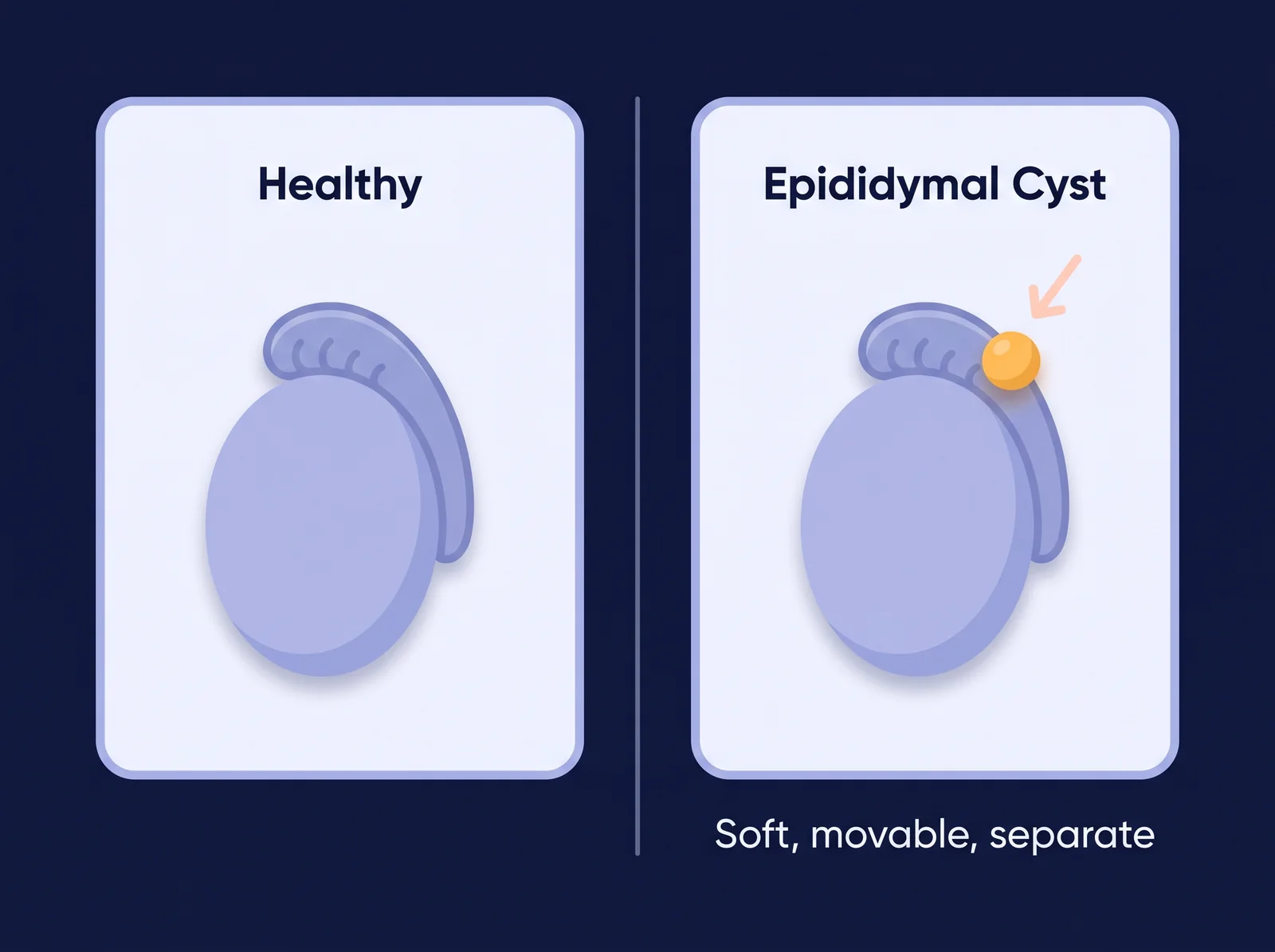
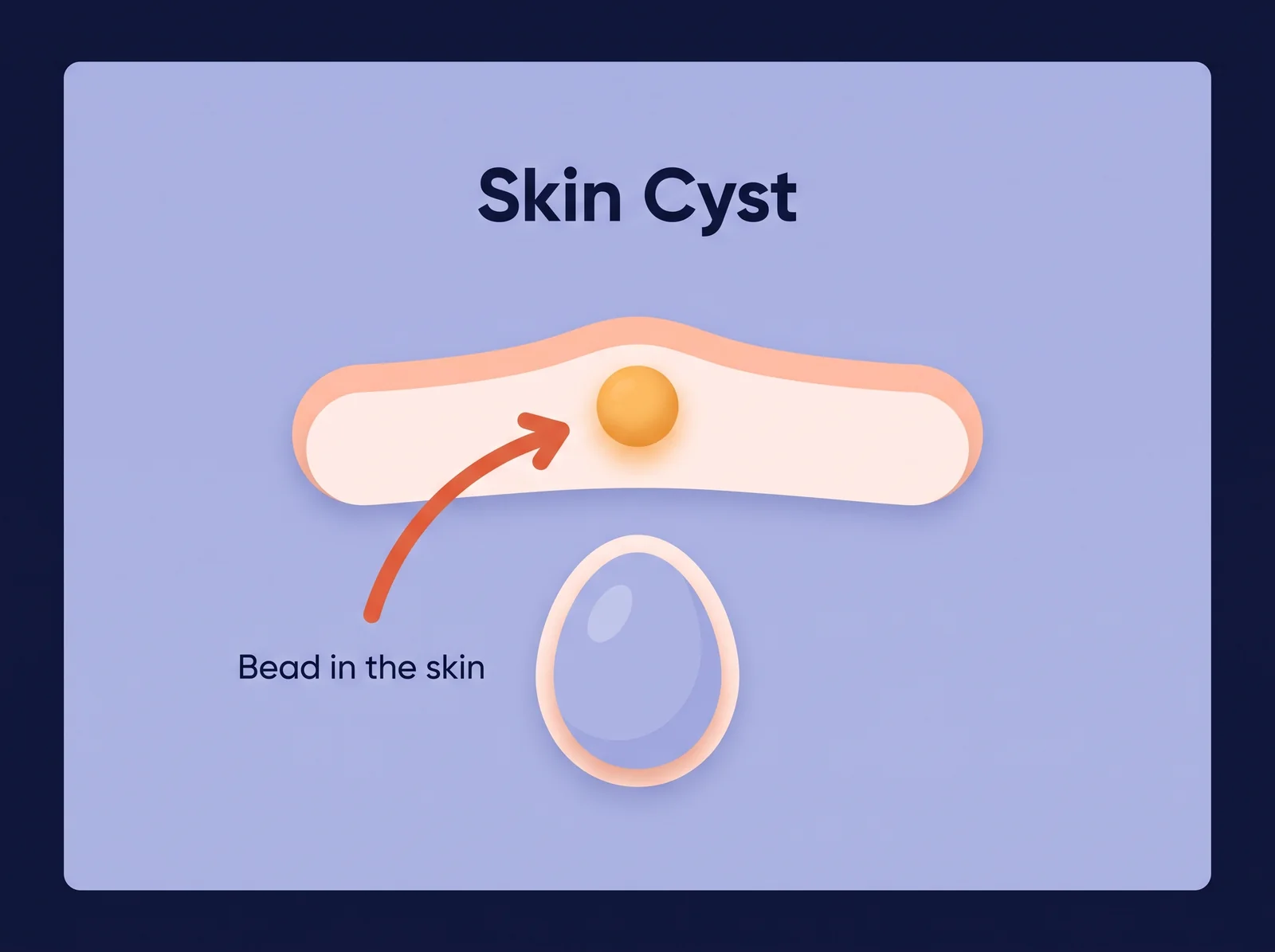
Pinch the lump gently. If it is in the skin of the scrotum — like a small pellet you can roll under your fingertips — it is usually a harmless sebaceous cyst. If it is a soft, distinct pea sitting above or behind the testicle but clearly separate from it, that is the classic epididymal cyst or spermatocele. The lump that earns a same-week scan is the one that feels part of the testicle itself — a firm nodule you cannot separate from the underlying egg-shaped organ.
This is exactly why imaging matters. A scrotal Doppler ultrasound differentiates a testicular mass from an extratesticular one, and tells whether it is cystic, solid or complex — the single test that converts “I don’t know what this is” into a clear answer (Akin, 2004).
How many lumps, and one side or both?
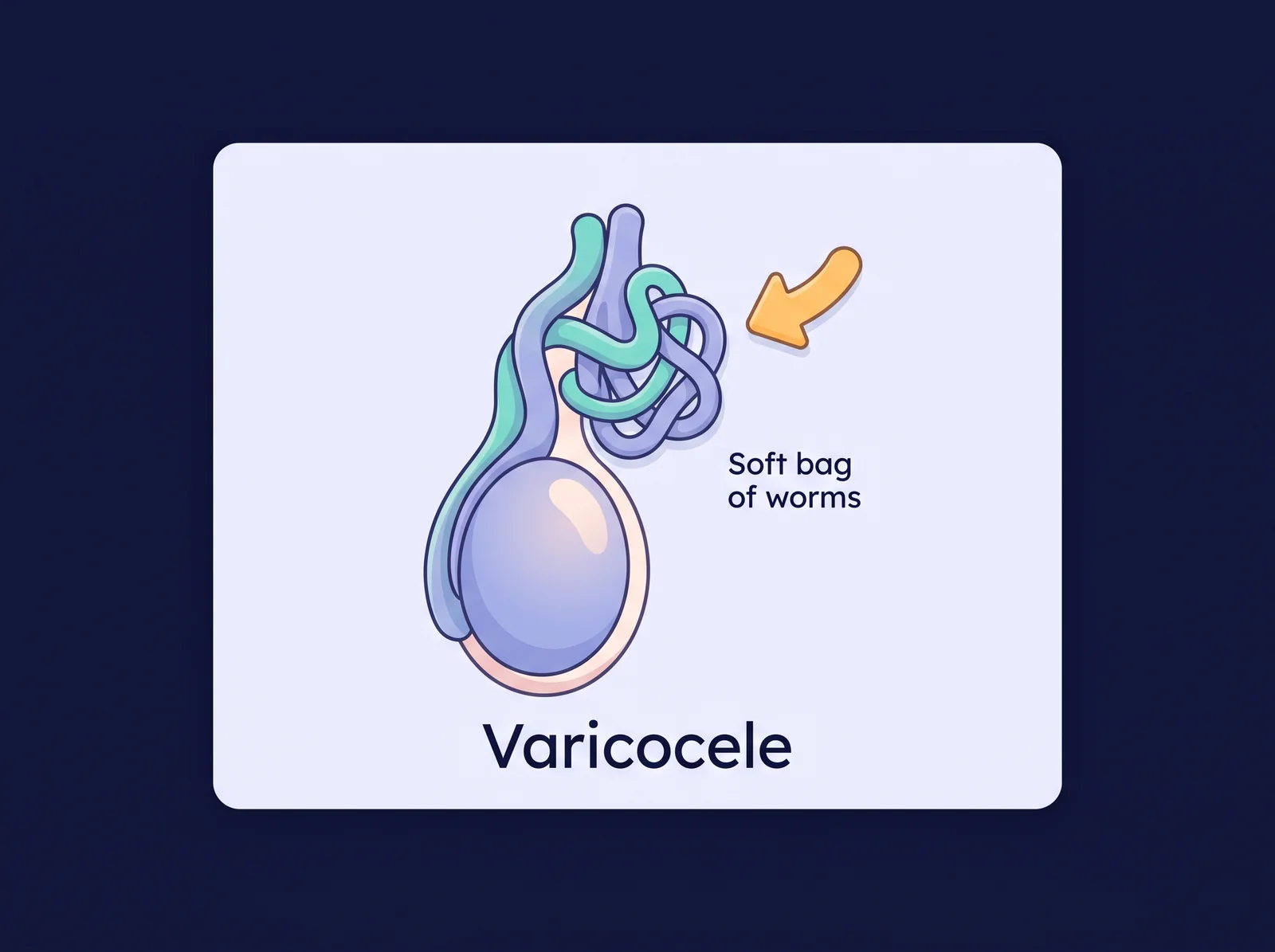
A soft, worm-like fullness on the left side that you feel more when standing is almost always a varicocele. Generalised swelling of one whole side that lets light shine through points to a hydrocele. A single, hard, fixed nodule on one testicle is the pattern I take seriously. If you also notice a general fullness or heaviness rather than a discrete lump, read my guide on what swelling in the testicles actually indicates.
The harmless lumps on the testicle (and most lumps are harmless)
Let me reassure you with the actual list. The overwhelming majority of intrascrotal lumps are benign — spermatoceles, hydroceles, varicoceles, epidermoid and simple cysts (Rubenstein, 2004). Here is how each one feels in my hands.
Epididymal cyst and spermatocele — the movable pea-sized lump
This is the lump I diagnose most. The epididymis is the soft, coiled tube that sits behind and above each testicle, storing and carrying sperm. A small fluid-filled sac there is an epididymal cyst; when it contains sperm it is called a spermatocele. Both feel like a smooth, movable pea, sit separate from the testicle, and are painless. Hydroceles and spermatoceles are common benign adult scrotal swellings (Rioja, 2011). Epididymal cysts most often turn up in men aged 20 to 40 and tend to sit there quietly without causing harm; small, symptomless ones are simply watched, and removal is reserved for cysts large enough to bother you (Zhao, 2023). If it is not growing or hurting, I usually leave it alone.
Varicocele — the “bag of worms”
A varicocele is a tangle of enlarged veins above the testicle, classically described as feeling like a “bag of worms,” more obvious on the left and when you stand. It is genuinely common — found in roughly 12% of men with normal semen, and far more often (around 40%) in men investigated for infertility (Chiba, 2016). A clinic-based study of men over the age of 40 reported a much higher 48% — but that is a selection-biased figure from men already attending a urology clinic for assessment, not the prevalence in the general male population, so I would not read it as “half of all men” (Besiroglu, 2019).
Most cause no trouble at all. The reason I check for them is fertility: varicoceles are the commonest correctable cause of low sperm production, so if you are also trying to conceive, see my explainer on whether varicoceles cause infertility and consider a semen analysis.
Hydrocele — a soft fluid swelling
A hydrocele is a painless collection of fluid around the testicle. It feels soft and smooth, can grow to a surprising size, and characteristically lets light pass through when a torch is held against it (transillumination). It is benign and only needs treatment when the size becomes uncomfortable.
Sebaceous (epidermoid) cysts on the scrotal skin
Some “bumps on the balls” never involve the testicle at all — they are sebaceous or epidermoid cysts of the scrotal skin, the same kind you can get anywhere on the body. They feel like firm little beads within the skin, are harmless, and need nothing unless they get infected. Men often search “how to get rid of bumps on the balls” for exactly these.
The one lump that needs urgent attention: testicular cancer
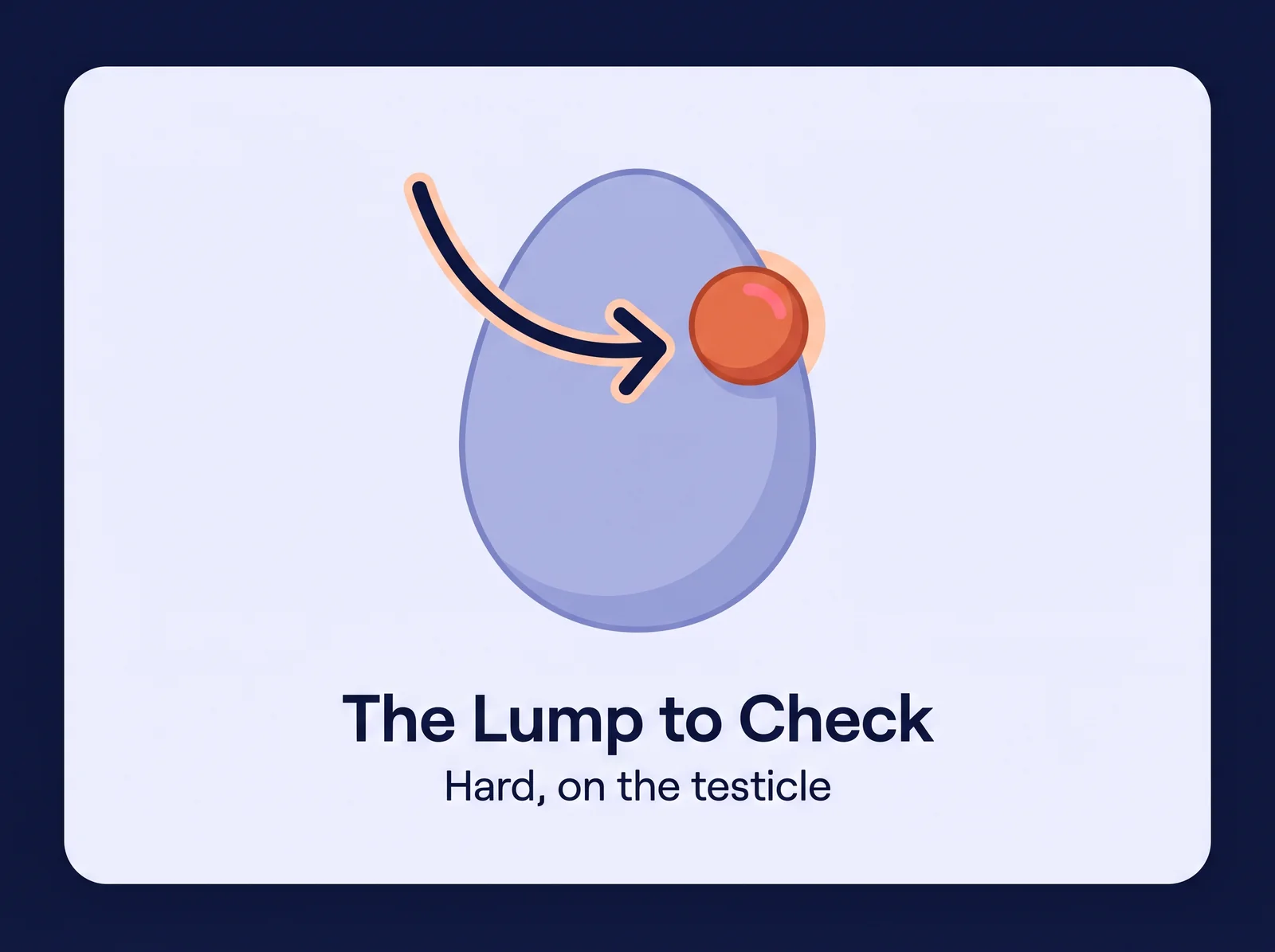
I will be direct, because vagueness here helps no one. The lump I never ignore is a hard, painless lump felt on the testicle itself. Testicular cancer most commonly presents as precisely this — a painless scrotal mass (Chong, 2023).
What a cancer lump feels like — hard, painless, on the testicle
A cancerous lump is typically firm, sits within the body of the testicle (not beside it), does not hurt, and does not transilluminate. The commonest type — a seminoma — classically grows as exactly this kind of slow, painless, firm intratesticular nodule. Painlessness is the trap — many men wait, assuming “no pain means nothing serious.” That is the opposite of the truth here. If you feel a hard nodule that is part of the testicle, do not wait for it to start hurting.
Who is at risk, and why the outlook is excellent
Here is the reassurance that goes with the seriousness. Testicular cancer is the most common solid malignancy in men aged 15–40, with about 10,000 new cases a year in the US and a mean age at diagnosis of 33; between 90% and 95% are germ cell tumours, which are divided into seminomas and non-seminomatous tumours. Risk factors include an undescended testis (cryptorchidism), a family history, and infertility — and crucially, it is one of the most curable cancers we have, with five-year survival around 99% when caught early, even reaching 85% in men whose disease has already spread widely (Singla, 2025).
That excellent outlook is also why doctors do not run population-wide screening programmes for it — the incidence is low and the outcomes are so favourable that mass screening adds no benefit (Ilic, 2011). What that means for you is simple: you do not need to live in fear or get scanned “just in case.” You need to know your own anatomy and act on a hard, new, painless lump. That is the whole job.
Painful lump vs painless lump — what it tells me
The presence or absence of pain reshuffles my whole list. Scrotal and testicular conditions split neatly into painful ones — testicular torsion, torsion of a testicular appendage, and epididymitis — and painless ones — hydrocele, varicocele and testicular cancer (Langan, 2022).
Sudden, severe pain is an emergency. A testicle that becomes acutely, intensely painful — often with nausea and a high-riding position — can be testicular torsion, where the cord twists and cuts off blood supply. This needs surgery within about six hours to reliably save the testicle, when the salvage rate is roughly 90% (Langan, 2022; Crawford, 2014). Do not wait, do not “sleep on it” — go to an emergency department. Slower-building ache with swelling, sometimes with fever or burning urine, is usually epididymitis, an infection treated with antibiotics. If pain rather than a lump is your main problem, read why your balls hurt — and know that the dull ache of blue balls after arousal is something else entirely and harmless.
How to examine your testicles for a lump (step by step)
Self-examination is the single most useful habit I can teach you, because you will find a change long before anyone else does (Chong, 2023). And because testicular cancer is so treatable when caught early, men’s-health advocates argue strongly for knowing your own anatomy — a familiarity that costs nothing and catches the rare serious lump while it is still small (Fadich, 2018). Here is exactly how I tell my patients to do it.
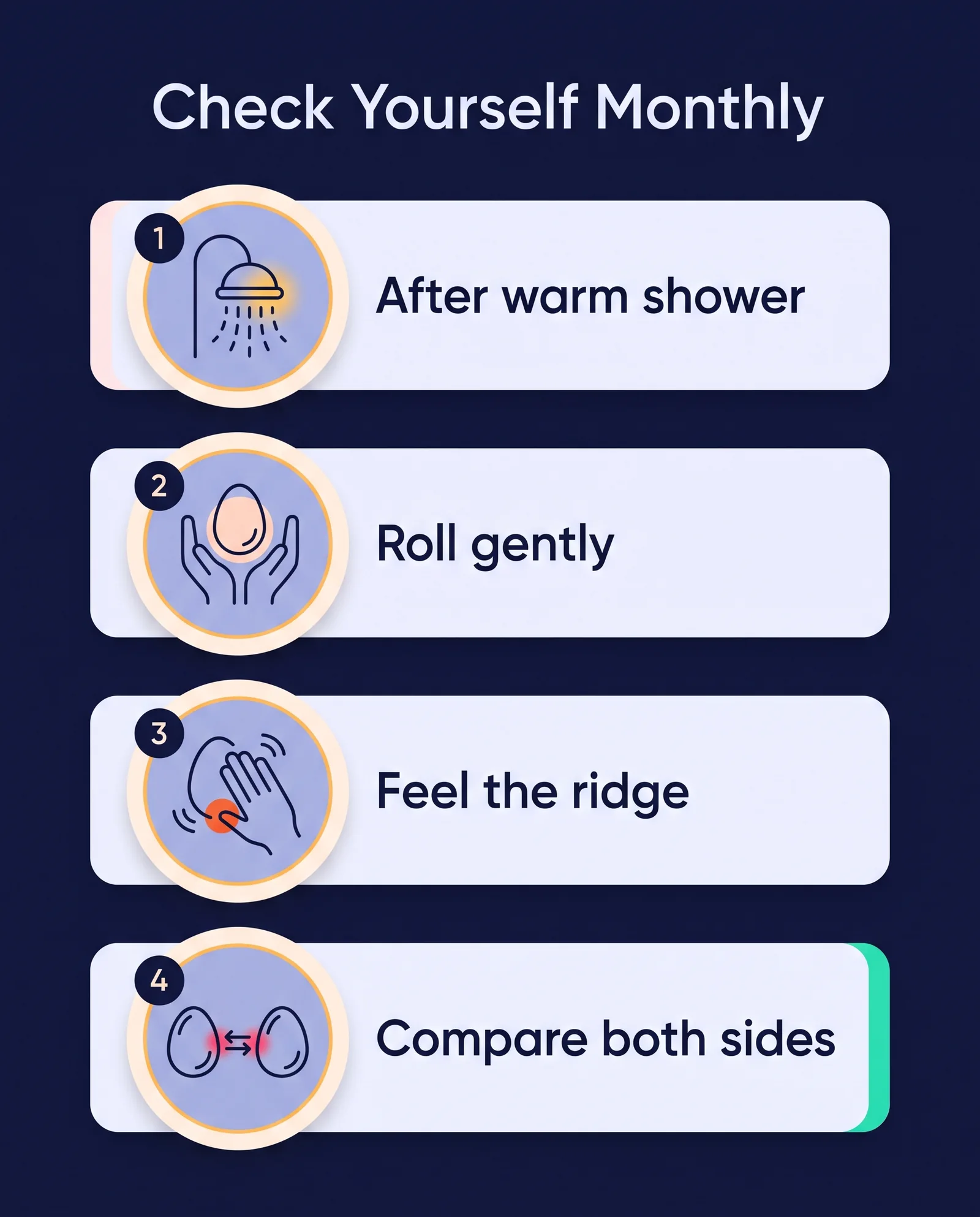
- Do it after a warm shower or bath. The heat relaxes the scrotal skin, so the testicles hang lower and are easier to feel.
- Examine one side at a time. Cup the testicle and roll it gently between your thumb (in front) and fingers (behind). It should feel smooth, firm and egg-shaped, like a hard-boiled egg without the shell.
- Find the epididymis. Behind and slightly above each testicle you will feel a soft, rope-like ridge — that is the normal epididymis. Knowing it is meant to be there stops a lot of needless panic.
- Compare the two sides. It is completely normal for one testicle to be slightly larger or to hang lower than the other.
- Flag anything new. A hard, painless nodule on the surface of the testicle, a change in size or weight, or a firm area that wasn’t there last month — those are the findings to bring to me.
Do this once a month. For a fuller walk-through, see my dedicated page on how to do a testicular self-exam.
Harmless vs see-a-doctor: a quick decision table for a lump on the testicle
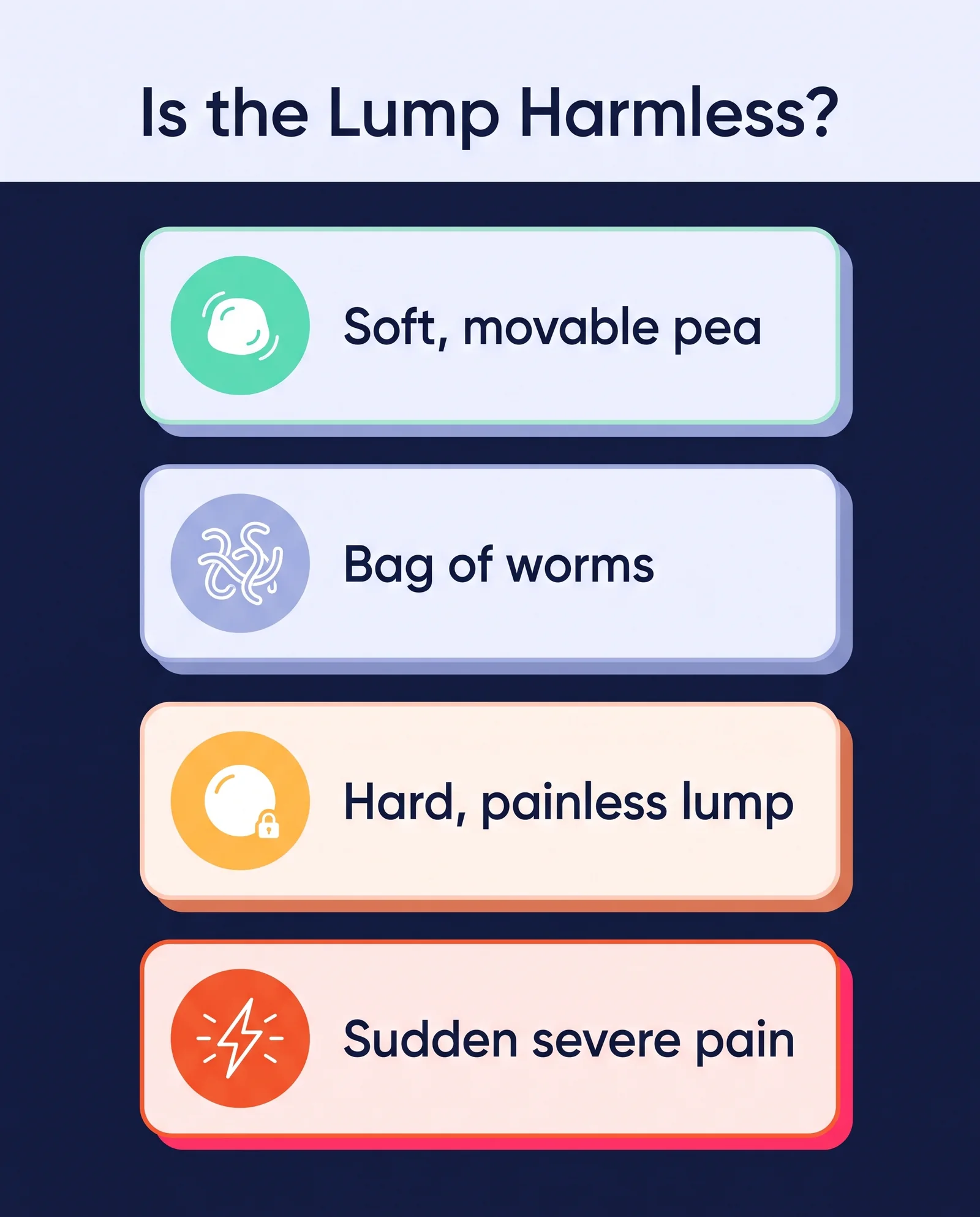
This is the table I wish every worried man had before he started searching at midnight. Match your lump to the row that fits.
| What you feel | Most likely | What to do |
|---|---|---|
| Soft, movable pea, separate from the testicle, painless | Epididymal cyst / spermatocele | Reassurance — review only if it grows |
| Soft “bag of worms” above the testicle, worse on standing | Varicocele | Non-urgent check; semen test if trying to conceive |
| Soft, smooth swelling of one whole side, lets light through | Hydrocele | Non-urgent review |
| Firm bead in the scrotal skin, painless | Sebaceous / epidermoid cyst | Reassurance — treat only if infected |
| Hard, painless lump on the testicle, fixed, new | Possible testicular cancer | Scan this week — see an andrologist now |
| Sudden, severe pain, swelling, nausea | Testicular torsion | Emergency — surgery within ~6 hours |
In my clinic, most men who come in gripped by the words “lump in my balls” walk out reassured — what they found is a harmless epididymal cyst or a varicocele, and I send them home without treatment. The lump I never let wait is the hard, painless one felt on the testicle itself; that is the only one where I push the scan to the same week. And here is the part men forget in their fear: even when it does turn out to be testicular cancer, it is among the most curable cancers I treat — the men who do badly are almost always the ones who ignored a painless lump for months because it did not hurt.
When to see an andrologist about a lump on the testicle
Most lumps need nothing more than a confident examination. But I want to see you promptly if any of these red flags fit:
- A hard, painless lump felt on the testicle itself, or a firm area that is part of the testicle.
- A change in size, weight or consistency of a testicle, or a new heaviness or aching in the scrotum.
- Sudden, severe testicular pain — treat this as an emergency and go straight to hospital.
- A lump with fever, burning urine, or penile discharge, which points to infection such as epididymitis rather than a simple cyst — a picture that can overlap with sexually transmitted infections and deserves a proper screen.
- A lump alongside trouble conceiving — sometimes a varicocele is the first clue, so it is worth checking your semen analysis and reading about low sperm count and the wider picture of male infertility.
If any of these fit, a quick examination and a scrotal ultrasound settle it fast — and in the large majority of men, the news is good.

Reader Q&A
Real questions men have left on this page, answered the way I would in clinic.
I’ve found a small pea-sized lump above my right testicle. It moves when I touch it and doesn’t hurt. Am I in trouble? — Rohit
From your description — small, movable, painless, and clearly above the testicle rather than part of it — this has the classic feel of an epididymal cyst, which is harmless. Nothing you describe sounds like cancer. Still, get it examined once so you have a confident diagnosis on record; an ultrasound takes ten minutes and ends the worry for good.
I keep reading about testicular cancer and now I’m checking myself five times a day and convinced every bump is a tumour. How do I know? — Anonymous
First, breathe. Checking five times a day is anxiety, not screening — once a month is plenty. The lump that matters is hard, painless and feels like part of the testicle itself, not the soft rope-like epididymis behind it (that is meant to be there). If you genuinely cannot tell, that is exactly what a single consultation is for — let me feel it once and tell you.
There’s a little bump on the skin of my scrotum, not on the testicle. What is it? — Karan
A firm bead sitting in the skin itself, separate from the testicle, is almost always a harmless sebaceous cyst — the same kind people get on the back or face. It needs no treatment unless it becomes red, painful or infected. Don’t squeeze it; if it bothers you, it can be removed in a minor procedure.
Get a straight answer about a lump on your testicle
One private consultation with Dr Shah tells you whether it is a harmless cyst, a varicocele, or the one lump that needs acting on.
Free guide · no spam · unsubscribe anytime.
Frequently Asked Questions
Is it normal to have a bump on your testicle?
A soft, movable, painless bump sitting beside or above the testicle — most often an epididymal cyst — is extremely common and harmless. Most intrascrotal lumps are benign (Rubenstein, 2004). What is not normal is a hard, painless lump felt on the testicle itself; that one should be examined promptly.
Should I be worried about a pea-sized lump on my testicle?
Usually not. A pea-sized lump that is soft, movable and clearly separate from the testicle is almost always a benign epididymal cyst or spermatocele. The pea-sized lump that needs a scan is one that feels hard and is part of the testicle itself. When in doubt, an ultrasound settles it within minutes (Akin, 2004).
Are testicular cancer lumps hard or soft?
Hard. A cancerous lump is typically firm, painless, and felt within the body of the testicle, whereas benign cysts and spermatoceles are soft and movable beside it (Singla, 2025). Painlessness does not make a hard testicular lump safe — it is the most common way testicular cancer presents (Chong, 2023).
What will a lump on the testicle feel like?
The way a lump feels is the single best clue to what it is. A harmless epididymal cyst feels like a smooth, movable pea sitting above the testicle; a varicocele feels like a soft “bag of worms”; a hydrocele feels like a soft swelling that lets light through. The lump that matters feels different — a hard, fixed nodule that is part of the testicle itself and does not hurt.
What are the 5 warning signs of testicular cancer?
A painless lump or firm area on a testicle; a change in size or shape of a testicle; a feeling of heaviness or a dull ache in the scrotum or lower abdomen; a sudden collection of fluid; and any new firmness that wasn’t there before. A painless lump on the testicle is the classic first sign (Singla, 2025).
Can an STD cause a lump in the testicle?
Indirectly, yes. Sexually transmitted infections such as chlamydia and gonorrhoea can cause epididymitis — inflammation of the epididymis that produces a tender, swollen lump, usually with pain, fever or burning urine, rather than a hard painless mass (Langan, 2022). If those symptoms fit, get a proper STI screen.
How do you get rid of bumps on the balls (scrotal skin)?
Bumps in the scrotal skin are usually harmless sebaceous cysts and need no treatment. Do not squeeze or pick at them. If one becomes large, painful or infected, it can be drained or removed in a simple minor procedure — see a doctor rather than attempting it yourself.

Private 1-on-1 consultation
Stop guessing what that lump is
One private examination – and a ten-minute scan if needed – tells you for certain whether a lump on your testicle is a harmless cyst or something that needs treating.
Book a Confidential Consultation
You don’t have to guess what this lump is
If a lump on your testicle has been keeping you up at night, take the pressure off: in most men I see, it is a harmless cyst, a varicocele or a hydrocele that needs nothing at all. The one lump worth acting on quickly is a hard, painless one felt on the testicle itself — and even then, caught early, the outlook is excellent. You never have to guess which one you have. A single examination and, if needed, a ten-minute scan will tell you for certain.
References
- Rubenstein RA, Dogra VS, Seftel AD, Resnick MI (2004). Benign intrascrotal lesions. The Journal of Urology. PMID 15076274
- Akin EA, Khati NJ, Hill MC (2004). Ultrasound of the scrotum. Ultrasound Quarterly. PMID 15602220
- Rioja J, Sanchez-Margallo FM, Uson J, Rioja LA (2011). Adult hydrocele and spermatocele. BJU International. PMID 21592287
- Ilic D, Misso ML (2011). Screening for testicular cancer. The Cochrane Database of Systematic Reviews. PMID 21328302
- Crawford P, Crop JA (2014). Evaluation of scrotal masses. American Family Physician. PMID 24784335
- Chiba K, Fujisawa M (2016). Clinical Outcomes of Varicocele Repair in Infertile Men: A Review. The World Journal of Men’s Health. PMID 27574593
- Fadich A, Giorgianni SJ, Rovito MJ, et al. (2018). USPSTF Testicular Examination Nomination — Self-Examinations and Examinations in a Clinical Setting. American Journal of Men’s Health. PMID 29717912
- Besiroglu H, Otunctemur A, Ozbek E (2019). The prevalence and severity of varicocele in adult population over the age of forty years old: a cross-sectional study. The Aging Male. PMID 29683379
- Zhao L, Yu Z, Zhang Z (2023). Microscopic Cyst Resection for the Treatment of Patients Diagnosed with Epididymal Cyst. Journal of Visualized Experiments. PMID 37067264
- Langan RC (2022). Scrotal Masses. American Family Physician. PMID 35977130
- Chong JJ, Tan TJ, Png KS (2023). Testicular self-examination for early detection of testicular cancer. World Journal of Urology. PMID 37036497
- Singla N, Bagrodia A (2025). Testicular Germ Cell Tumors: A Review. JAMA. PMID 39899286
A private, judgment-free space to talk through fertility and men’s sexual health. Walk in, or book ahead by phone.
📍No 21, Sree Kalki Apartments, Ground Floor, Bazullah Road, T-Nagar, Chennai 600017