

You can genuinely improve both your sperm quality and your sperm count — and for most men it comes down to a handful of unglamorous lifestyle changes, held consistently for about three months, with the right medical treatment added only when it is actually needed. Not three days. Three months. As a practising andrologist in Chennai, I have read thousands of semen reports over the years, and the men who turn their reports around are almost never the ones chasing a miracle pill from a pharmacy shelf. They are the ones who fix the boring things, avoid the popular mistakes, and give their body one full sperm cycle to respond.
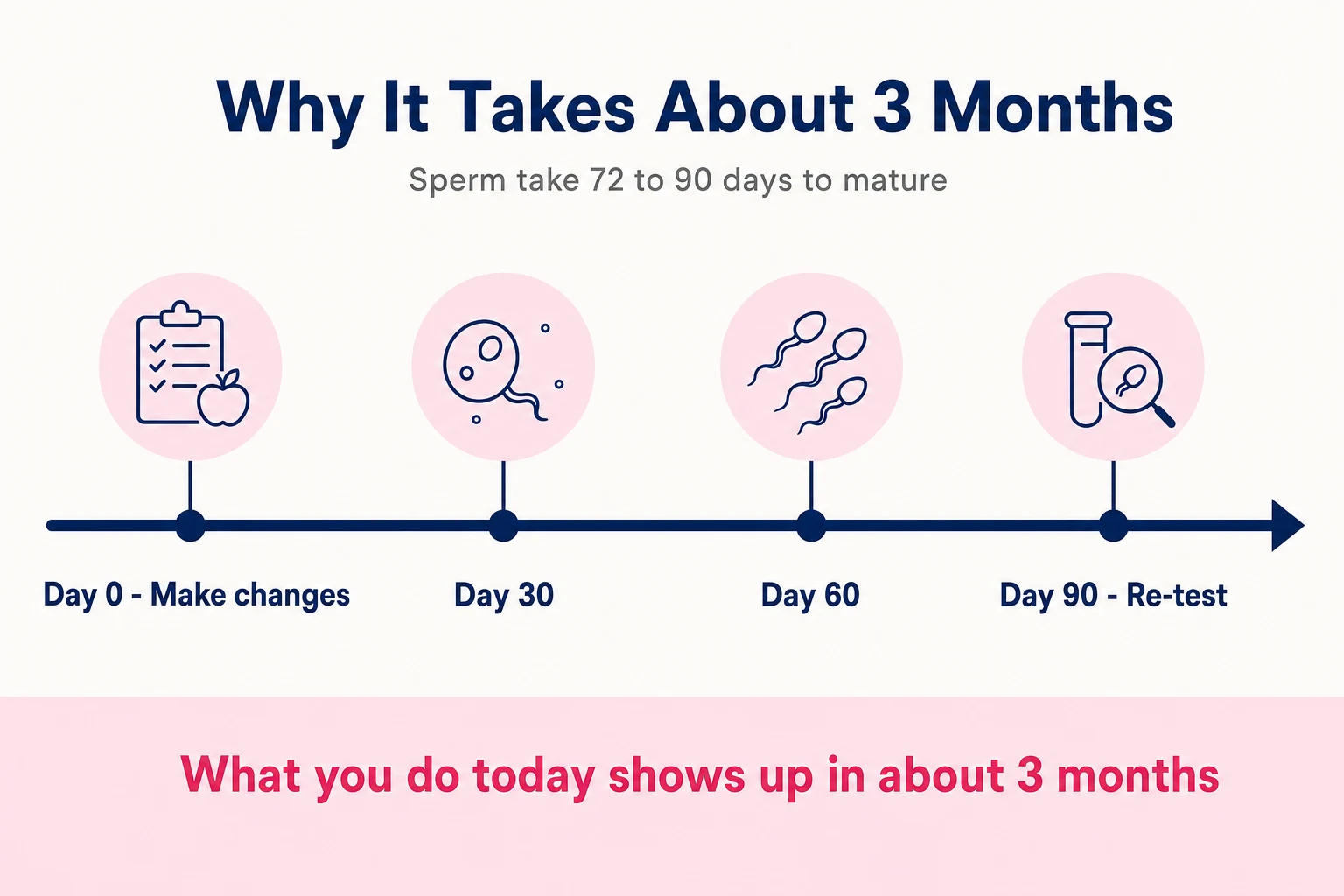
Let me explain what is actually happening, because the internet has made this needlessly confusing. Sperm are not made and shipped the same day. A sperm cell takes roughly 72 to 90 days to be built, matured and readied for ejaculation. So whatever you do today — good or bad — shows up in your semen report two to three months later. That single fact is why “how to boost sperm in 3 days” is the wrong question, and why honest advice looks slower and duller than the miracle promises you have been reading.
Here is the two-minute version before we go deeper.
Now let me give you the whole picture — the master plan I actually use in clinic, one evidence-based lever at a time.
How to increase sperm quality — the short version
The essentials I give every man in my clinic, before we get into the detail.
Give it three months
Sperm take 72–90 days to mature, so real change shows on a repeat semen analysis at about three months — never in three days.
Weight is the biggest lever
Losing excess weight improves sperm parameters like morphology and motility; even a 5–10% drop shifts the report.
Cool, smoke-free, active
Quit smoking, keep the testicles cool and move most days. These free habits move the report more than any pill.
Skip the antioxidant pills
OTC antioxidants like CoQ10 do not reliably help you conceive and can even backfire — get your antioxidants from food, not a bottle.
Have sex every 2–3 days
Regular ejaculation keeps sperm DNA fresh — “saving up” for the fertile window makes quality worse, not better.
Stuck at 3 months? Get real treatment
A varicocele, infection or hormone problem needs a specialist and prescription-only treatment — never a blind or self-bought medication.
What does “sperm quality” actually mean?
Most men use “sperm quality” to mean one thing — are my sperm strong enough to make a baby? Clinically it is really five things, and a semen analysis measures each against the World Health Organization’s 2021 reference values. You can be perfect on four and fail on one, so it helps to know exactly what is being judged.
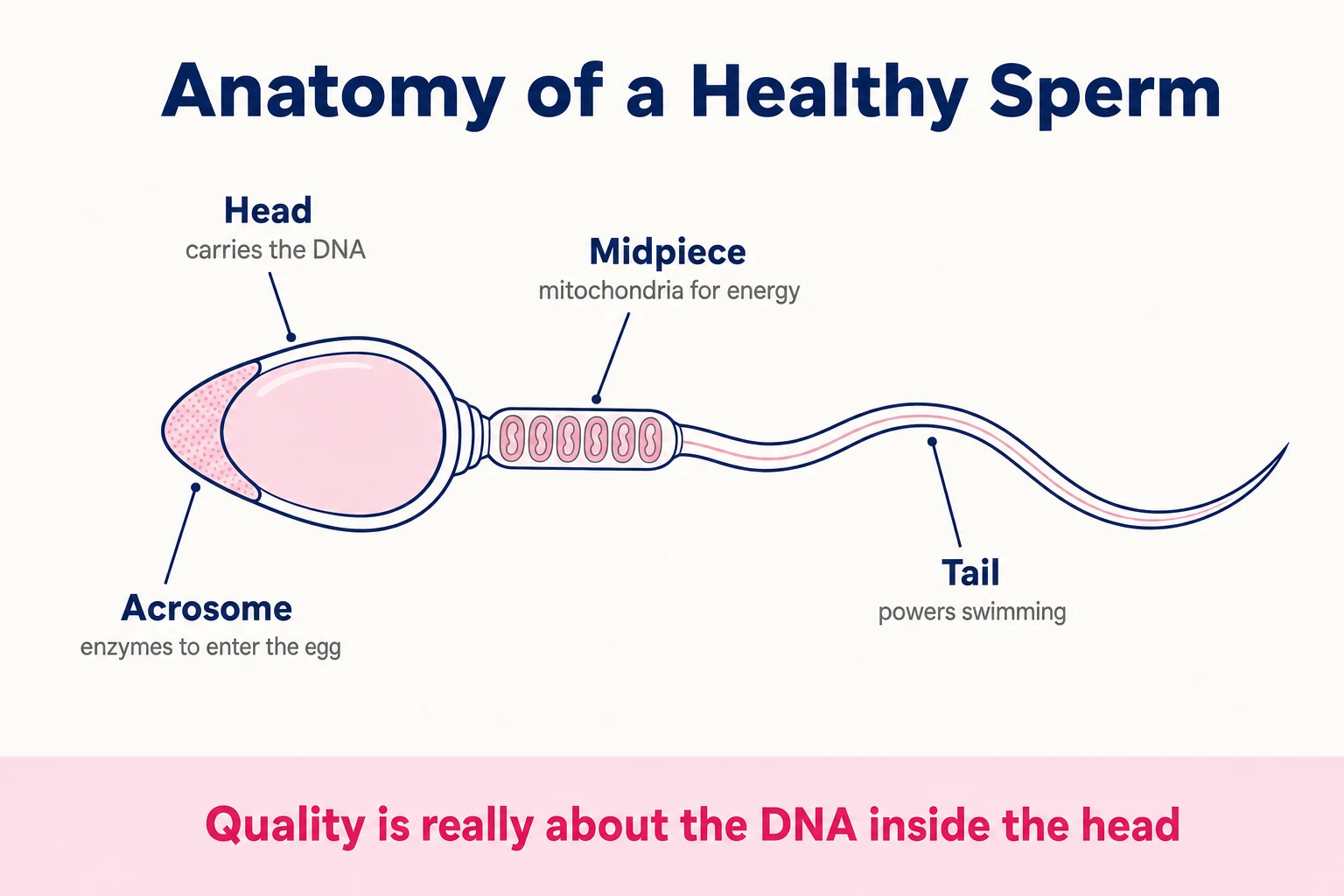
Think of it like judging a cricket squad. You want enough players (count and concentration), players who can actually run (motility), players built in the right shape (morphology), a decent turnout on the day (volume), and — the one everybody forgets — players whose instructions are not garbled (DNA integrity). That last one, sperm DNA fragmentation, is increasingly linked to miscarriage and failed IVF (Farkouh, 2023), and a basic report does not even print it (Zhao, 2026).
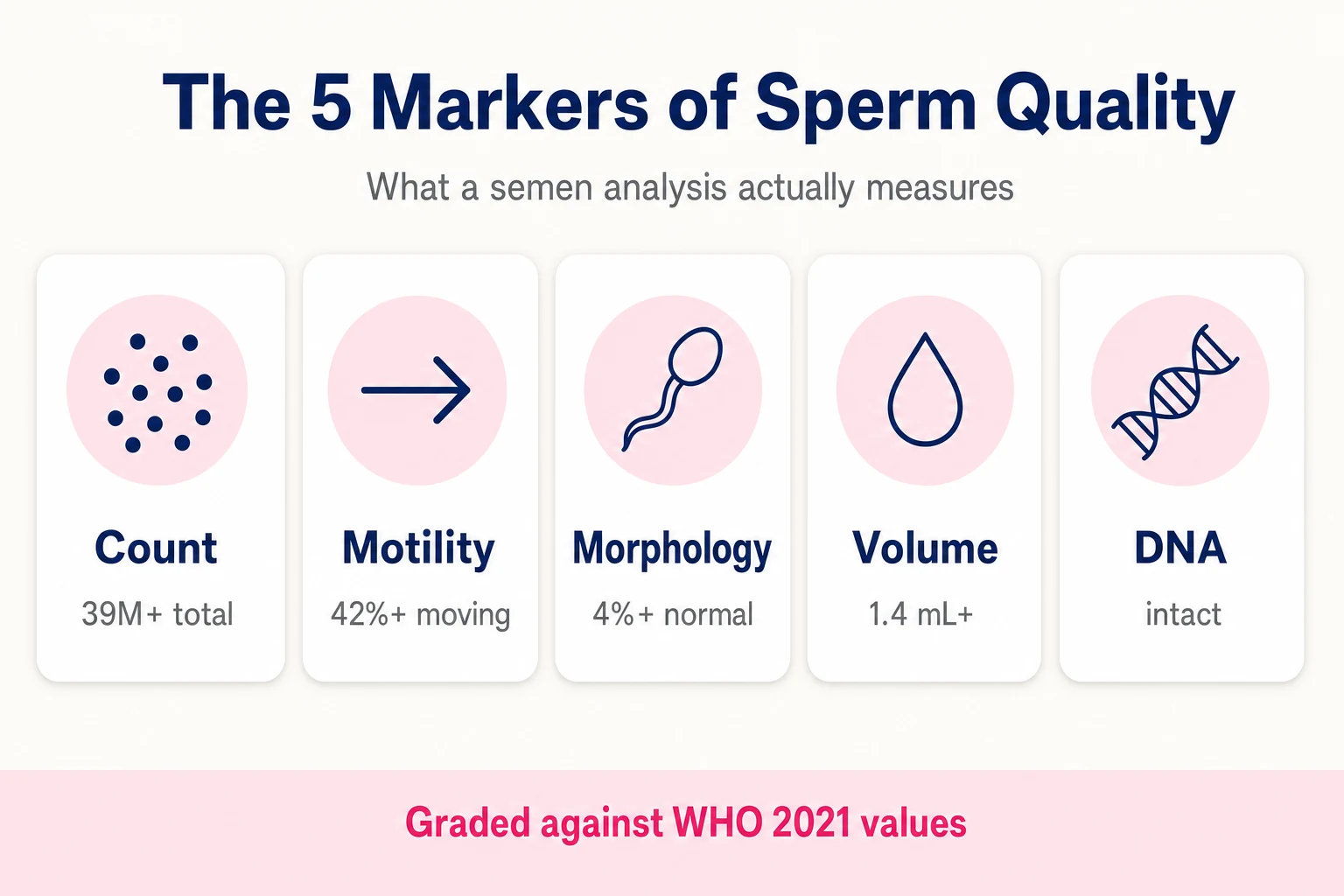
Here is how those markers line up against the WHO 2021 thresholds a lab grades them against:
| What is measured | WHO 2021 lower reference limit | What it tells you |
|---|---|---|
| Semen volume | 1.4 mL | How much fluid carries the sperm |
| Sperm concentration | 16 million / mL | How crowded each millilitre is |
| Total sperm count | 39 million / ejaculate | Total players on the field |
| Total motility | 42% | Proportion that actually move |
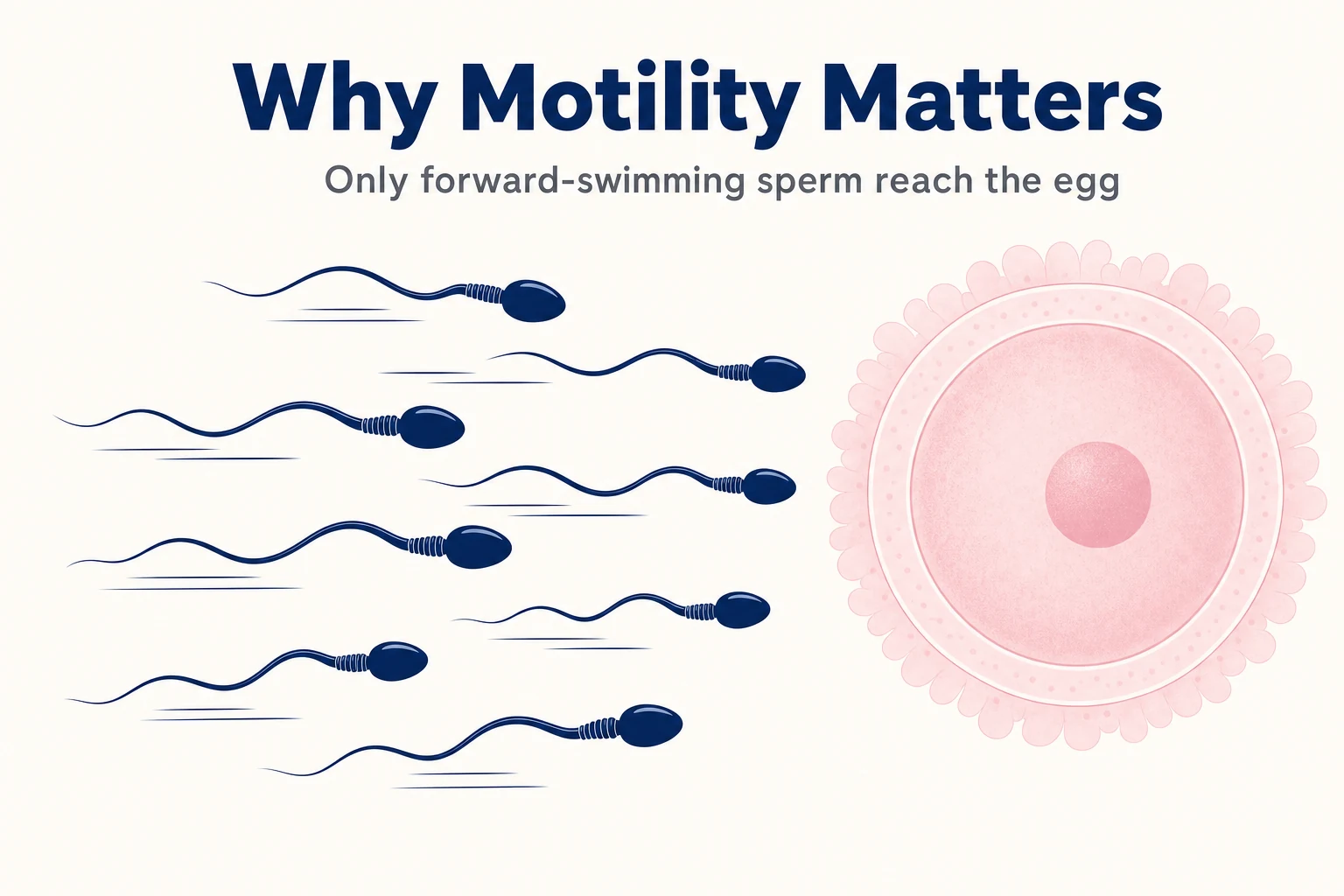
| Progressive motility | 30% | Proportion swimming forward, not in circles |
| Normal morphology | 4% | Proportion built in the right shape |
| Vitality | 54% alive | Proportion still living |
Notice that 4% normal morphology is the passing mark — yes, it is normal for 96% of a fertile man’s sperm to look imperfect. And 70% motility is excellent, comfortably above the 42% cut-off. If your report reads like that, your quality is fine and your anxiety is the thing to treat. If you are staring at a low report and want the line-by-line translation, I have written a full walkthrough of how to read a semen analysis.
How long does it really take to improve sperm quality and quantity?
Because spermatogenesis runs on that 72–90 day cycle, the honest timeline is this: start today, and expect the first measurable change on a repeat semen analysis at about three months, not before. I ask patients to hold their changes for a minimum of two-and-a-half to three months and then re-test. Anyone selling you a three-day or seven-day transformation is selling the calendar short — the biology simply does not move that fast.
This matters more than it sounds, because age is quietly working against you the whole time. Sperm DNA quality declines as men get older, and the risk it carries for conception and offspring health rises with advancing paternal age (Cannarella, 2026). “I’ll sort it out next year” is the single most expensive sentence in my clinic. If you are trying to conceive, the time to fix your sperm is now, over one full cycle — and if you are planning a family, it is worth getting tested before marriage.
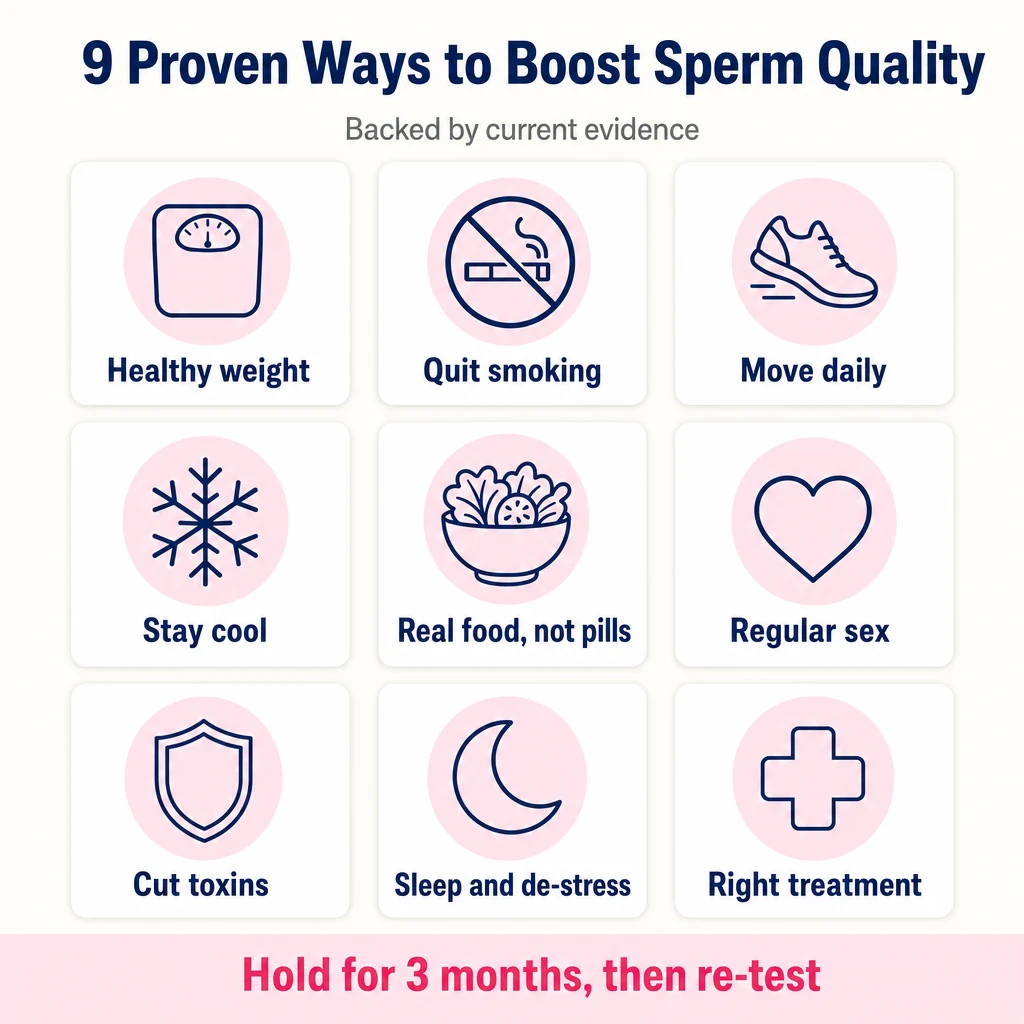
Nine evidence-based ways to increase sperm quality and quantity
Here is what genuinely moves the needle, ordered roughly by how much impact I see in clinic. None of it is exotic, and all of it is backed by current evidence. Doing four or five of these together is what produces the transformations men come back to thank me for.
1. Get your weight into a healthy range
If I could force just one change on an overweight patient, it would be this. Carrying excess fat behaves like a hormone-disrupting organ — it converts your testosterone into oestrogen, raises scrotal temperature, and drags down count, motility and DNA integrity. A higher BMI is consistently linked to poorer sperm quality and lower testosterone (Ji, 2025).
The good news is that it responds to effort: lifestyle-based weight loss improves specific sperm parameters such as morphology and motility (Peel, 2026). You do not need to become a bodybuilder — as a rule of thumb, losing about 10% of your body weight is worth roughly a 10% gain in your numbers, and if your BMI is over 30 that shift in the testosterone-to-oestrogen balance matters. If your count is low, my full guide to low sperm count goes deeper.
2. Stop smoking — and go easy on alcohol
Smoking damages sperm on every axis: concentration, motility and morphology all fall, and the effect is dose-dependent — the more you smoke, the worse it gets (Sharma, 2018). Vaping is not the safe swap it is marketed as; nicotine and the heavy metals in the aerosol still reach the testicle. Heavy, regular alcohol lowers testosterone and worsens semen quality, though the occasional drink is not the villain. In clinic I am blunt about this: if you are serious about the next three months, the cigarettes have to go completely and the drinking has to become genuinely occasional.
3. Move every day — but do not overtrain
Moderate, regular exercise improves semen parameters in men; the sweet spot is consistent moderate activity, not punishing extremes (Yang, 2025). The simple target I give everyone is a 45–60 minute brisk walk most days — around 10,000 steps, or 6–7 km, six days a week with one rest day. One caveat from the clinic: obsessive endurance training, anabolic steroids and testosterone “boosters” from the gym do the opposite, and exogenous testosterone can shut sperm production off almost entirely. If you lift, keep it clean.
4. Keep your testicles cool
Your testicles hang outside the body for a reason — sperm production needs to run a couple of degrees below core temperature. Heat is one of the most underrated sperm-killers I see. Occupational and everyday heat exposure is linked to lower semen quality (Han, 2026), and a large prospective study found that heat during the vulnerable windows of the sperm-making cycle was tied to accelerated “ageing” of sperm at the DNA level (Nobles, 2026). How you dress matters too: tighter, hotter clothing raises scrotal temperature and is linked to modest, inconsistent differences in semen parameters, though underwear choice on its own has not been shown to change pregnancy outcomes (Zleczewski, 2026).
Practically: skip the laptop-on-lap, keep your phone out of your trouser pocket while you are trying, cut out saunas, steam rooms and long hot baths, switch to looser cotton underwear, and if your job means sitting in heat for hours, take real breaks to cool down.
5. Eat real food — not antioxidant pills
There is no magic food, but there is a clearly winning pattern. A Mediterranean-style diet — vegetables, fruit, whole grains, fish, nuts, olive oil, and much less processed and red meat — is repeatedly associated with better semen quality (Agarwal, 2025). Just as important is what you cut: sugar-sweetened drinks (colas, packaged “juices”) and deep-fried, ultra-processed food flood the body with the free radicals that damage the sperm membrane, so swap them for more colourful vegetables, some protein and healthy fat, and a lower refined-carb load. The evidence on any single food compound is genuinely mixed, which is exactly why the winning move is the pattern, not one “super-nutrient” (Mostafa, 2025).
The juice I actually recommend to patients is a simple apple, carrot and beetroot juice (add a little lemon or orange) — a cheap, colourful way to get real dietary antioxidants from food. Get them from your plate, not from a pill bottle.
6. Have sex regularly — every two to three days
Men are told to “save up” sperm before the fertile window. This is usually a mistake. Sperm sitting in storage accumulate DNA damage; regular ejaculation keeps the pool fresh. The evidence on ejaculatory frequency shows that, for most men, more frequent ejaculation is associated with fresher, better-quality sperm — better motility and DNA integrity — rather than depletion; you trade a little per-sample volume for healthier sperm (Clay, 2026). My standard advice for couples trying to conceive is simple: have sex every two to three days across the cycle rather than hoarding for one “big” attempt. Frequent, not frantic.
7. Cut the hidden toxins and heat sources
Beyond smoking, a surprising amount of sperm damage comes from everyday exposures. Elevated seminal heavy metals such as cadmium and copper are linked to male infertility in men (Chen, 2025), and broad human reviews of modern risk factors keep flagging the same culprits: pollution, lead, endocrine-disrupting plastics (BPA), pesticides, and occupational heat and chemical exposure (Wang, 2026). And more broadly, modifiable lifestyle factors track closely with the prevalence of abnormal semen (Djokoto, 2026). You cannot control everything, but you can stop microwaving food in plastic, avoid handling pesticides bare-handed and ditch recreational drugs.
8. Protect your sleep and manage stress
Chronic psychological stress is not just in your head — it is consistently linked to poorer semen quality, especially lower sperm concentration and motility, though this evidence is observational and does not prove cause and effect (Costa, 2026). Poor sleep compounds it, and your biggest testosterone surge happens while you sleep — so aim for a solid six to eight hours. I am not going to tell you to “just relax,” because the men in my clinic trying to conceive are under genuine pressure. But protecting sleep and building in real decompression shows up in the report.
9. Get the right medical treatment — when lifestyle isn’t enough
If a fair three-month run of the changes above does not move the report, the ninth lever is proper medical treatment, guided by blood tests and a specialist — not another supplement. This is where the biggest gains in both quality and quantity actually come from, and I have given it its own section below.
50 foods that improve sperm quality — the list I actually give my patients
Patients always ask me for the list, so here it is. But read this line before you read the table: no single food on it will fix your semen analysis. The reason food works is that these items, eaten together and repeatedly, build the dietary pattern that the evidence supports — a Mediterranean-style plate consistently associated with better semen quality (Agarwal, 2025), rich in the dietary polyphenols that track with better sperm parameters (Mostafa, 2025). The mechanisms are real and increasingly well-mapped at molecular level: micronutrients feed the machinery of sperm production, membrane integrity and DNA packaging (Ramgir-Naidu, 2026), and genetic evidence supports a causal link between circulating micronutrient status and fertility risk (Zhang, 2025). So treat this as a shopping list for the pattern, not fifty magic bullets.
I have grouped them by what they actually supply, and kept them to things you can genuinely buy in an Indian market — because a list full of açaí and quinoa is useless in Chennai.
| Food | What it supplies | How I tell patients to eat it |
|---|---|---|
| Zinc & selenium — sperm production, testosterone, DNA integrity | ||
| 1. Pumpkin seeds | Zinc, magnesium | A small handful, roasted, as an evening snack |
| 2. Sesame seeds (ellu) | Zinc, calcium | In chutney podi, or as ellu urundai |
| 3. Cashews | Zinc, magnesium | Four or five a day, unsalted |
| 4. Brazil nuts | Selenium (very high) | Just two a day — more is not better |
| 5. Chickpeas (chana) | Zinc, folate, protein | Sundal, twice a week |
| 6. Kidney beans (rajma) | Zinc, folate | With rice, once a week |
| 7. Oysters | Highest zinc of any food | If you eat seafood, once a fortnight |
| 8. Goat liver | Zinc, B12, vitamin A | A small portion, once a fortnight |
| Leafy greens for folate & B vitamins — DNA synthesis, lower DNA fragmentation | ||
| 9. Spinach (palak) | Folate | Lightly sautéed — not boiled to death |
| 10. Drumstick leaves (murungai keerai) | Folate, iron, vitamin C | Keerai poriyal, twice a week |
| 11. Amaranth leaves (thandu keerai) | Folate, iron | Poriyal or kootu |
| 12. Broccoli | Folate, vitamin C | Steamed, still crunchy |
| 13. Lentils (masoor dal) | Folate, protein | Your daily dal |
| 14. Black-eyed peas (karamani) | Folate, zinc | Sundal |
| Citrus & antioxidant fruit for vitamin C — protects the sperm membrane | ||
| 15. Amla (Indian gooseberry) | Exceptional vitamin C | One fresh, or as juice, daily in season |
| 16. Guava | Vitamin C, lycopene | One a day |
| 17. Orange / mosambi | Vitamin C, folate | Whole fruit — not packaged juice |
| 18. Lemon | Vitamin C | Squeezed over food, daily |
| 19. Papaya | Vitamin C, carotenoids | A bowl at breakfast |
| 20. Strawberries | Vitamin C, polyphenols | When in season |
| 21. Blueberries | Anthocyanin polyphenols | Frozen is perfectly fine |
| 22. Kiwi | Vitamin C, vitamin E | One a day |
| Lycopene & carotenoids — linked with better motility | ||
| 23. Tomatoes, cooked | Lycopene | Cook them in oil — cooked beats raw here |
| 24. Watermelon | Lycopene, citrulline | A plate in summer |
| 25. Carrots | Beta-carotene | Raw sticks, or in poriyal |
| 26. Red capsicum | Vitamin C, carotenoids | In a stir-fry |
| 27. Pumpkin (poosanikai) | Carotenoids | Kootu or curry |
| Omega-3 fats — sperm membrane fluidity | ||
| 28. Walnuts | ALA omega-3 | A small handful daily — the best single nut here |
| 29. Flaxseed | ALA omega-3, lignans | Ground, a spoon in curd |
| 30. Chia seeds | ALA omega-3 | Soaked, in water or curd |
| 31. Sardines (mathi) | EPA/DHA, vitamin D | Twice a week |
| 32. Indian mackerel (ayila) | EPA/DHA omega-3 | Twice a week |
| 33. Anchovies (nethili) | EPA/DHA, calcium | Dry-fried or in curry |
| 34. Salmon | EPA/DHA, vitamin D | If available and affordable |
| Polyphenols — the antioxidants worth having, from food | ||
| 35. Pomegranate | Punicalagin polyphenols | One fruit, or fresh juice |
| 36. Dark chocolate (70%+) | Flavanols | Two squares — not the whole bar |
| 37. Green tea | Catechins | Two cups a day, away from meals |
| 38. Beetroot | Nitrates, betalains | In my apple-carrot-beetroot juice |
| 39. Extra-virgin olive oil | Polyphenols, healthy fat | For salads and finishing, not deep-frying |
| 40. Curry leaves (karuveppilai) | Polyphenols | Actually eat them — do not push them to the side |
| Vitamin D, choline & natural CoQ10 — hormones and energy | ||
| 41. Whole eggs | Choline, vitamin D, protein | Eat the yolk; one or two daily |
| 42. Curd / fortified milk | Vitamin D, calcium, protein | Daily |
| 43. Paneer | Protein, calcium | Twice a week |
| 44. Mushrooms (sun-exposed) | Vitamin D2 | In a stir-fry |
| 45. Peanuts | Natural CoQ10, niacin | Boiled or roasted, unsalted |
| 46. Almonds | Vitamin E, magnesium | Five or six, soaked overnight |
| Whole grains — blood sugar, insulin and testosterone | ||
| 47. Ragi (finger millet) | Slow carbs, calcium, fibre | As koozh or dosa |
| 48. Oats | Beta-glucan fibre | Breakfast |
| 49. Hand-pounded / brown rice | Fibre, B vitamins | Swap it in for polished white rice |
| 50. Barley | Fibre, slow carbs | In soups, or as porridge |
Now the honest part about how to use that table. Do not try to eat all fifty. The men whose reports actually improve do something much simpler: half the plate vegetables and greens, a quarter protein, a quarter whole grain, a fruit a day, a small handful of nuts and seeds, fish twice a week, and olive oil or a decent cold-pressed oil instead of repeatedly reheated frying oil. Pick six or seven items from the list that you genuinely like and will eat every week, and rotate them. Consistency for one full sperm cycle beats a perfect week.
And what you remove matters at least as much as what you add. Cut the sugar-sweetened drinks, the deep-fried and repeatedly reheated oil, the processed and cured meats, the trans fats in commercial bakery items, and the daily alcohol. In my clinic, the man who adds walnuts but keeps his two colas a day does not improve. The one who quietly drops the colas and the evening fried snack usually does. Then re-test after three months and read the numbers properly — my guide to reading a semen analysis line by line will tell you whether the change is real or just normal variation.
The antioxidant trap: why I do not hand my patients a bag of pills
This is the part that will surprise you, because it is the opposite of what most fertility clinics do. Roughly nine out of ten men who walk into a fertility clinic are sent home with a bag of over-the-counter antioxidants — coenzyme Q10, L-carnitine, vitamin E, “fertility blends.” I rarely prescribe them, and here is the honest, evidence-based reason.
First, the benefit is not what it looks like. The trials that show antioxidants nudging semen numbers up are mostly low-quality, and the Cochrane review of antioxidants for male subfertility concluded the evidence for their effectiveness is genuinely uncertain (de Ligny, 2022). Even when a meta-analysis does find a pooled bump in the numbers, the certainty is very low and the prediction intervals cross zero — meaning for any given man the benefit may be nothing at all (Melhem, 2026).
Second — and this is what matters — they do not get you a baby. Even the largest meta-analysis to find a pregnancy signal found no improvement in live birth (Agarwal, 2023), real-world supplement use in men trying to conceive was not associated with a higher live-birth rate (Sealy, 2026), and across the best trials supplements shift some numbers but rarely move pregnancy or live birth (Michaelsen, 2025). And the largest, most rigorous recent randomized trial found antioxidants did not improve conception and actually lowered the ongoing-pregnancy rate in the optimal treatment window, so much so that the investigators advised against their use (de Ligny, 2025).
There is a biological reason for this, too. Sperm are not supposed to live in a sterile, oxidation-free bubble — they need a certain amount of reactive oxygen species to mature, capacitate and fertilise the egg. Flooding the body with high-dose antioxidants can tip men into “reductive stress” that disrupts those very steps (Pyneandee, 2026). So the popular pills waste your money at best, and at worst set you back. Save the antioxidants for your plate.
When lifestyle isn’t enough: the medical protocol that works
If you have given the lifestyle changes a fair three-month run and the report is still poor, it is time to stop self-treating and get evaluated — because some causes of poor sperm quality are structural or hormonal, and no juice or pill fixes those. A proper work-up checks your hormones (FSH, LH, testosterone, oestradiol, prolactin, thyroid) and looks for treatable causes. Genital-tract infections, for instance, quietly degrade semen quality (Campbell, 2026), and clear with the right treatment.

On varicocele, I part ways with the surgeons. A varicocele — a bag of dilated veins that overheats the testicle — genuinely does harm sperm, through heat, low oxygen and oxidative stress (Sheikh, 2026). But here is the catch the operating theatres gloss over: the evidence that repairing it actually improves your chance of a live baby is weak and hotly contested (Teng, 2025).
Yes, some studies show semen numbers nudge up after surgery (Ramon, 2024), but I do not rush men onto the table. In most cases I treat medically first — and in my practice, the right medical combination improves both the report and the real-world pregnancy rate without an operation.
That combination is built on two agents that genuinely work. The first is a microfined Lyon bean (velvet bean, Mucuna pruriens) seed extract — 500 mg a day for 60 to 70 days. In infertile men it acts on the hypothalamic-pituitary-gonadal axis to raise testosterone and LH and improve semen quality (Shukla, 2009), and it lowers the stress hormones and oxidative load that suppress sperm (Shukla, 2010).
The second is letrozole, an aromatase inhibitor that tips the testosterone-to-oestrogen balance back in a man’s favour — I aim for a testosterone-to-oestrogen ratio under 10. It measurably improves sperm concentration, motility, morphology and even DNA integrity, with real spontaneous pregnancies following (Kooshesh, 2020). The newest randomized trials confirm it: letrozole upgrades sperm concentration in men with severe spermatogenic failure (Sun, 2026), and improves semen parameters in moderate-to-severe cases too (Ullur, 2025).
Clomiphene, by contrast, is the drug most men get handed first — and network comparisons do rank it highest for bumping sperm concentration and count. But no treatment reliably moved progressive motility, and none of those trials even measured pregnancy or live birth (Santi, 2025); the evidence that clomiphene actually improves pregnancy stays thin and uncertain (Khashaba, 2025). As with antioxidants, better numbers on paper do not reliably become a baby — and in my hands clomiphene rarely delivers one.
Used in the right combination, guided by bloods, this protocol improves quality and quantity together and, in my clinical experience, lifts both spontaneous and treatment pregnancy rates.
⚠️ A serious warning — never take sperm medication without a prescription. The drugs that improve sperm are prescription-only for a reason, and the wrong ones actively cause harm. Testosterone injections — sold in gyms and online as a fertility or “energy” boost — do the exact opposite: exogenous testosterone switches off the body’s own signals through negative-feedback inhibition and can drive a man into severe oligoasthenoteratozoospermia, and sometimes complete azoospermia. And hCG injections, handed out blindly by many non-specialist doctors, frequently produce no improvement at all — or a subtle drop in motility and other parameters. Every one of these needs the right hormone profile and a specialist behind it. Please do not self-prescribe, and do not accept a blind prescription without the blood tests to justify it.
If motility specifically is your problem, my page on low sperm motility covers the targeted fixes; if no sperm are showing at all, that is a different and more urgent conversation — see azoospermia.

Private 1-on-1 consultation
Worried about a “low” semen report?
Bring the report — or just your questions — to a private, no-shame consultation with a practising andrologist. We will find the real cause and the fastest safe way to improve it.
Book a Confidential Consultation
Sperm quality, quantity and IVF or ICSI
Couples often assume that once you reach IVF or ICSI the sperm no longer matters because “they just inject one in.” Not true. Elevated sperm DNA fragmentation is associated with lower fertilisation, poorer embryo quality and higher miscarriage risk (Zhao, 2026), and shows a modest link to embryo aneuploidy even in ART cycles (Zou, 2026).
As a rough guide, when the fraction of DNA-damaged sperm climbs past roughly 35–40%, natural conception falls, IVF and IUI success drop, and miscarriage rises — although the exact cut-off is assay-specific, and bodies still treat DFI testing as investigational rather than a standalone decision-maker (Chakra, 2026), so it is best used selectively.
Here is the practical part. The same one-cycle work — weight, heat, food, sleep, plus the medical protocol where needed — improves the sperm you bring to the lab, which is why I ask couples to optimise for about eight weeks before starting a cycle. It genuinely raises fertilisation, embryo and pregnancy rates. Keep your expectations honest, though: even a good IVF cycle rarely succeeds more than about a third of the time, and ICSI needs only a handful of good sperm — so a very low count is not the end of the road. My overview of male-infertility treatment explains how these pieces fit together.
In my clinic, I see this every week: a couple arrives panicking over a single “low” report, having already spent thousands on antioxidant sachets a previous doctor prescribed. Two things are almost always true. First, they re-tested too soon — a report taken three weeks after a fever, or three weeks after starting changes, is meaningless; you must wait one sperm cycle. Second, they bought the easy, purchasable thing (pills) and skipped the hard, free things (weight, cigarettes, heat, sleep) and the specific medical treatment that actually works. The men who turn their reports around, and go on to a pregnancy, are the ones who do it the other way round.
Frequently asked questions
How can I increase my sperm quality and quantity naturally?
Lose excess weight, stop smoking, keep alcohol occasional, walk 45–60 minutes most days, keep your testicles cool (loose underwear, no laptop-on-lap, phone out of the pocket), eat a Mediterranean-style diet while cutting sugary drinks and fried food, sleep six to eight hours, manage stress, and have sex every two to three days. Hold all of it for three months, then re-test. That combination — not any single food or antioxidant pill — is what raises count, motility and DNA integrity together.
How long does it take to improve sperm quality?
About three months. Sperm take roughly 72–90 days to be made and matured, so any change you make today only shows up on a semen analysis two to three months later. Ignore any promise of results in three or seven days — the biology cannot move that fast.
Do CoQ10 or antioxidant supplements improve sperm?
Not in the way you have been told. The trials showing a bump in semen numbers are low-quality and uncertain, and even pooled the benefit is very low-certainty and may not apply to you (de Ligny, 2022; Melhem, 2026); the outcome that matters — a live baby — does not improve (Agarwal, 2023; Sealy, 2026), and the largest recent trial found antioxidants actually lowered pregnancy in the optimal window (de Ligny, 2025). Sperm need some oxidation to work, so mega-dosing antioxidants can backfire (Pyneandee, 2026). Get your antioxidants from food, and spend the money on treating the real cause.
What are the signs of poor sperm — and of healthy sperm?
Poor sperm quality usually has no symptoms at all. Most men feel completely normal and only discover a problem on a semen analysis after struggling to conceive. Occasional clues — low libido, testicular pain or swelling (a possible varicocele), or watery, very low-volume semen — are worth checking, but the only reliable “sign” is the report itself, and in some men that report shows no sperm at all. If you have been trying for a year (or six months if your partner is over 35), test.
Can I make my sperm thicker, and does watery semen mean low quality?
The thickness of your semen is not a measure of sperm quality — “thick” is not a goal and watery is not automatically a problem. What matters is what the analysis reports: count, motility, morphology and DNA. That said, consistently watery or very low-volume semen can be a clue worth checking — very short abstinence before the sample, dehydration, a low-grade infection (Campbell, 2026), or genuinely low concentration. Treat the parameters, not the appearance.
Which foods and drinks improve sperm quality?
Leafy greens, seasonal fruit and berries, tomatoes and watermelon, citrus and amla, walnuts and almonds, eggs, fish twice a week, whole grains, dal and olive oil — the Mediterranean pattern. My go-to juice is a simple apple, carrot and beetroot mix. What matters most is cutting the sugary drinks, fried food and trans fats — the pattern beats any single “super-food,” and food beats supplements.
Can you still get pregnant with low sperm motility?
Yes. The same three-month work that raises count also raises motility, and conception is still possible with reduced motility — naturally when it is mildly down, and via IUI or ICSI when it is lower, guided by the total motile count rather than the percentage. A report showing zero motile sperm should not be read as sterility until a vitality test tells apart dead sperm from alive-but-immotile ones, which remain usable for ICSI. See my page on low sperm motility.
Can sperm quality be improved before IVF or ICSI?
Yes, and you should — optimise for about eight weeks first. The same lifestyle work plus the right medical treatment improves the sperm you bring to the lab, and lowering DNA fragmentation is associated with better fertilisation, embryo quality and miscarriage risk in ART, though the effect is modest and assay-dependent (Zhao, 2026). ICSI needs only a handful of good sperm, so even a very low count is workable.
Does frequent ejaculation reduce sperm quality?
No — for most men it improves it. Sperm held in storage accumulate DNA damage, so ejaculating every two to three days keeps the pool fresher and healthier than “saving up” (Clay, 2026).
The bottom line
Improving your sperm quality and quantity is neither mysterious nor fast, and it is not about a shelf of antioxidant pills. Fix your weight, your cigarettes, your heat exposure, your diet and your sleep; have regular sex; skip the OTC antioxidants and put that money toward treating the real cause; and get properly evaluated by a specialist — with the right prescription-only medical treatment, never a blind one — if three consistent months do not move the report. Do that, and most men see a genuinely better semen analysis, and a real shot at the pregnancy they came for. If you would like that done properly, that is exactly what I do.
References
- Farkouh A, et al. Sperm DNA fragmentation in male infertility: from bench to bedside. Arab Journal of Urology. 2023. PMID 38178953.
- Zhao, et al. Sperm DNA fragmentation testing in the era of assisted reproduction. Archivos Españoles de Urología. 2026. PMID 42104690.
- Zou, et al. Sperm DNA fragmentation and embryo aneuploidy: a comprehensive analysis. Reproductive Biomedicine Online. 2026. PMID 42070496.
- Chakra MA, et al. Evaluating sperm DNA damage: when and why it does not add to the evaluation of male-factor infertility. Advances in Experimental Medicine and Biology. 2026. PMID 42036606.
- Cannarella R, et al. Advancing paternal age: effects on sperm quality and offspring health. Maturitas. 2026. PMID 42385478.
- Ji, et al. BMI is associated with sperm quality and sex hormones in men: a systematic review and meta-analysis. Frontiers in Endocrinology. 2025. PMID 41427049.
- Peel, et al. The effect of obesity interventions on male fertility: a systematic review. Human Reproduction Update. 2026. PMID 41065428.
- Sharma R, et al. Cigarette smoking and semen quality: a new meta-analysis. European Urology. 2018. PMID 27113031.
- Yang T, et al. Effects of exercise interventions on fertility-related indicators in young men: a systematic review and meta-analysis. International Journal of Behavioral Medicine. 2025. PMID 40993349.
- Han N, et al. Occupational heat exposure and fertility stress as independent factors of low semen quality. American Journal of Men’s Health. 2026. PMID 42415629.
- Nobles, et al. Heat exposure during susceptible windows of spermatogenesis and sperm epigenetic age. Human Reproduction. 2026. PMID 41875434.
- Zleczewski, et al. Garment fit, scrotal thermoregulation, and male fertility outcomes. Translational Andrology and Urology. 2026. PMID 42293842.
- Agarwal, et al. Mediterranean diet, semen quality, and medically assisted reproduction. Advances in Nutrition. 2025. PMID 40419219.
- Mostafa, et al. Association between dietary polyphenol intake and semen quality. Nutrients. 2025. PMID 40944174.
- Clay, et al. Ejaculatory frequency and male fertility: a literature review. Translational Andrology and Urology. 2026. PMID 41809803.
- Chen J, et al. Associations of semen essential/non-essential elements with the risk of male infertility: a systematic review and meta-analysis. Toxicology Letters. 2025. PMID 40829714.
- Wang, et al. Current risk factors for male infertility and semen parameters. Asian Journal of Andrology. 2026. PMID 41527944.
- Djokoto, et al. Lifestyle factors and prevalence of semen abnormalities. PLoS One. 2026. PMID 41538375.
- Costa, et al. Psychological stress and semen quality impairment: a systematic review. JBRA Assisted Reproduction. 2026. PMID 42441879.
- de Ligny W, et al. Antioxidants for male subfertility. Cochrane Database of Systematic Reviews. 2022. PMID 35506389.
- Melhem SJ, et al. Pharmacologic and nutritional therapies in idiopathic male infertility: a systematic review and meta-analysis. Andrology. 2026. PMID 42206761.
- Agarwal A, et al. Impact of antioxidant therapy on natural pregnancy outcomes and semen parameters in infertile men: a systematic review and meta-analysis of RCTs. World Journal of Men’s Health. 2023. PMID 36102104.
- Sealy NRZ, et al. Supplement use among couples seeking fertility treatment and associations with live birth and pregnancy loss. Fertility and Sterility. 2026. PMID 42031092.
- de Ligny WR, et al. Antioxidant treatment and the chance to conceive in men seeking fertility care: the SUMMER randomized clinical trial. JAMA Network Open. 2025. PMID 40996763.
- Pyneandee EM, et al. The positive roles for reactive oxygen species in human reproduction; implications for the therapeutic application of antioxidants. Antioxidants. 2026. PMID 42351980.
- Michaelsen, et al. The effect of dietary supplements on male infertility: pregnancy, live birth and sperm parameters. Nutrients. 2025. PMID 40431450.
- Sheikh WM, et al. Multifactorial pathophysiology of varicocele: integrating hemodynamic, oxidative, and endocrine mechanisms. Pathology, Research and Practice. 2026. PMID 42391721.
- Teng, et al. Influence of varicocelectomy on assisted reproductive technology outcomes. American Journal of Men’s Health. 2025. PMID 40293106.
- Ramon, et al. Varicocele repair in improving spermatozoa, FSH and LH parameters in infertile males with azoospermia. Asian Journal of Andrology. 2024. PMID 38877692.
- Shukla KK, et al. Mucuna pruriens improves male fertility by its action on the hypothalamus-pituitary-gonadal axis. Fertility and Sterility. 2009. PMID 18973898.
- Shukla KK, et al. Mucuna pruriens reduces stress and improves the quality of semen in infertile men. Evidence-Based Complementary and Alternative Medicine. 2010. PMID 18955292.
- Kooshesh L, et al. Effect of letrozole on sperm parameters, chromatin status and ROS level in idiopathic oligo/astheno/teratozoospermia. Reproductive Biology and Endocrinology. 2020. PMID 32404173.
- Sun Y, et al. Letrozole and infertility among males with spermatogenic failure: a randomized clinical trial. JAMA Network Open. 2026. PMID 42313386.
- Ullur P, et al. Efficacy and safety of letrozole in improving semen parameters of subfertile men with moderate-to-severe oligoasthenoteratozoospermia: a placebo-controlled randomised trial. Journal of Human Reproductive Sciences. 2025. PMID 40342887.
- Khashaba S, et al. Efficacy of clomiphene citrate and tamoxifen on pregnancy rates in idiopathic male subfertility: a systematic review and meta-analysis. Asian Journal of Urology. 2025. PMID 39990067.
- Santi D, et al. Empirical hormonal treatments for idiopathic male infertility: a network meta-analysis comparing antiestrogens and FSH. European Journal of Endocrinology. 2025. PMID 41347881.
- Campbell, et al. Impact of male genital tract infections on semen quality: a systematic review. Fertility and Sterility. 2026. PMID 41825760.
- Ramgir-Naidu S, et al. Nutritional modulation of male fertility: a molecular-focused scoping review. Journal of Health, Population and Nutrition. 2026. PMID 42310716.
- Zhang J, et al. Causal associations of circulating micronutrients with the risk of infertility: a Mendelian randomization study. Food Science & Nutrition. 2025. PMID 41169787.
A private, judgment-free space to talk through fertility and men’s sexual health. Walk in, or book ahead by phone.
📍No 21, Sree Kalki Apartments, Ground Floor, Bazullah Road, T-Nagar, Chennai 600017