

The male fertility tips to get pregnant fast that actually work are a sequence, not a list. Book a semen analysis this week. Move to sex three times a week. Fix tobacco, weight and sleep. Then re-test at 90 days, because that is one full sperm cycle.
Most articles hand you twenty things to do at once. That is why they do not work.
I am Dr Shah Dupesh, a consultant andrologist in Chennai. I see the same three men every week. The one who has been “trying” for two years and has never given a semen sample. The one taking nine supplements and no tests. And the one whose sex life has quietly become a monthly appointment neither of them enjoys.
This is the plan I actually give them, in the order I give it.
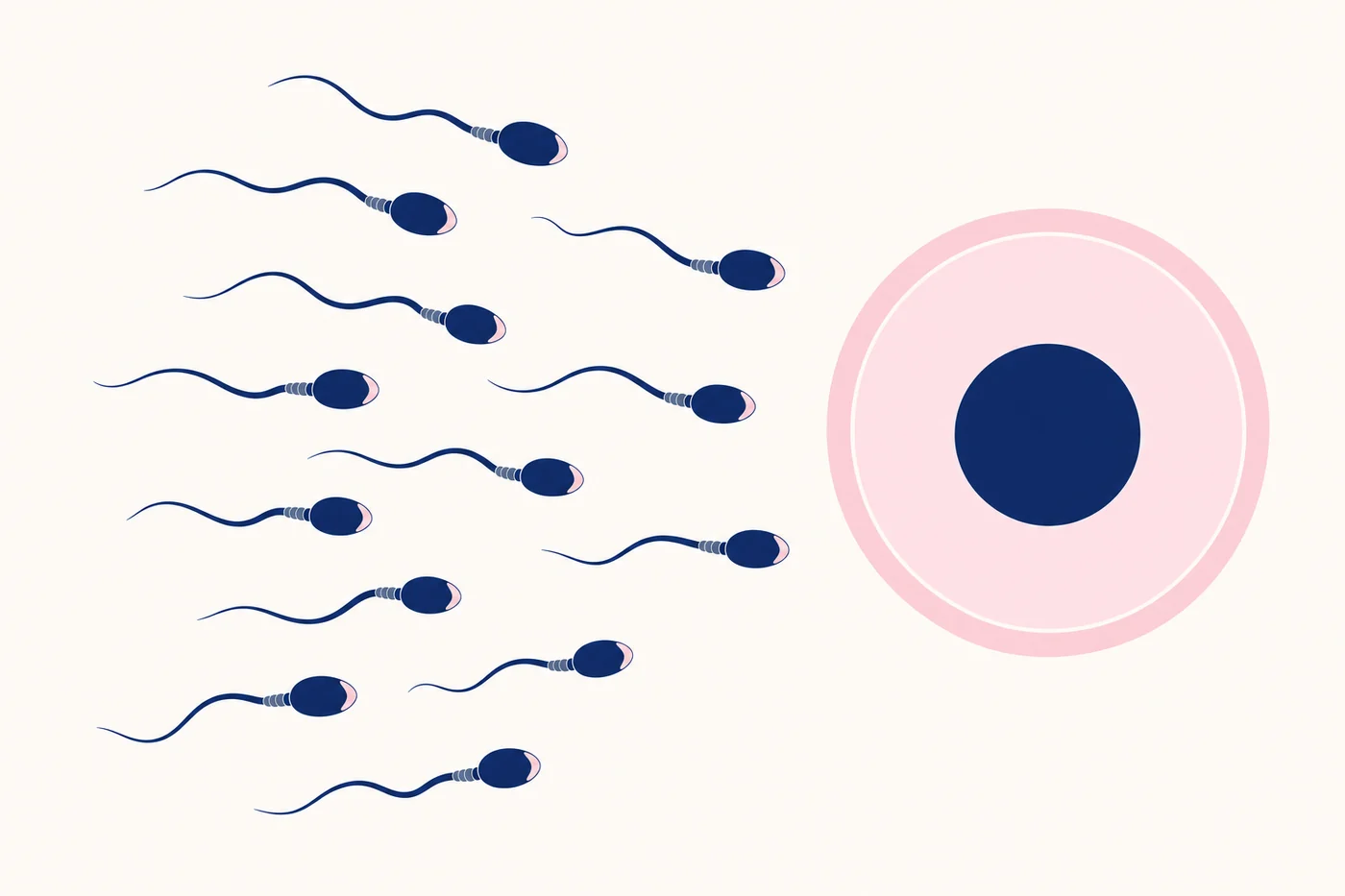
Everything in this plan is aimed at one moment: enough healthy sperm, in the right place, at the right time.
At a glance
Measure before you change anything
Two semen samples, a few weeks apart, before any supplement or lifestyle plan. You cannot fix what you have not measured.
Hands, not just a lab report
A varicocele cannot appear on a semen report. It has to be felt for, standing up, and that step is routinely skipped.
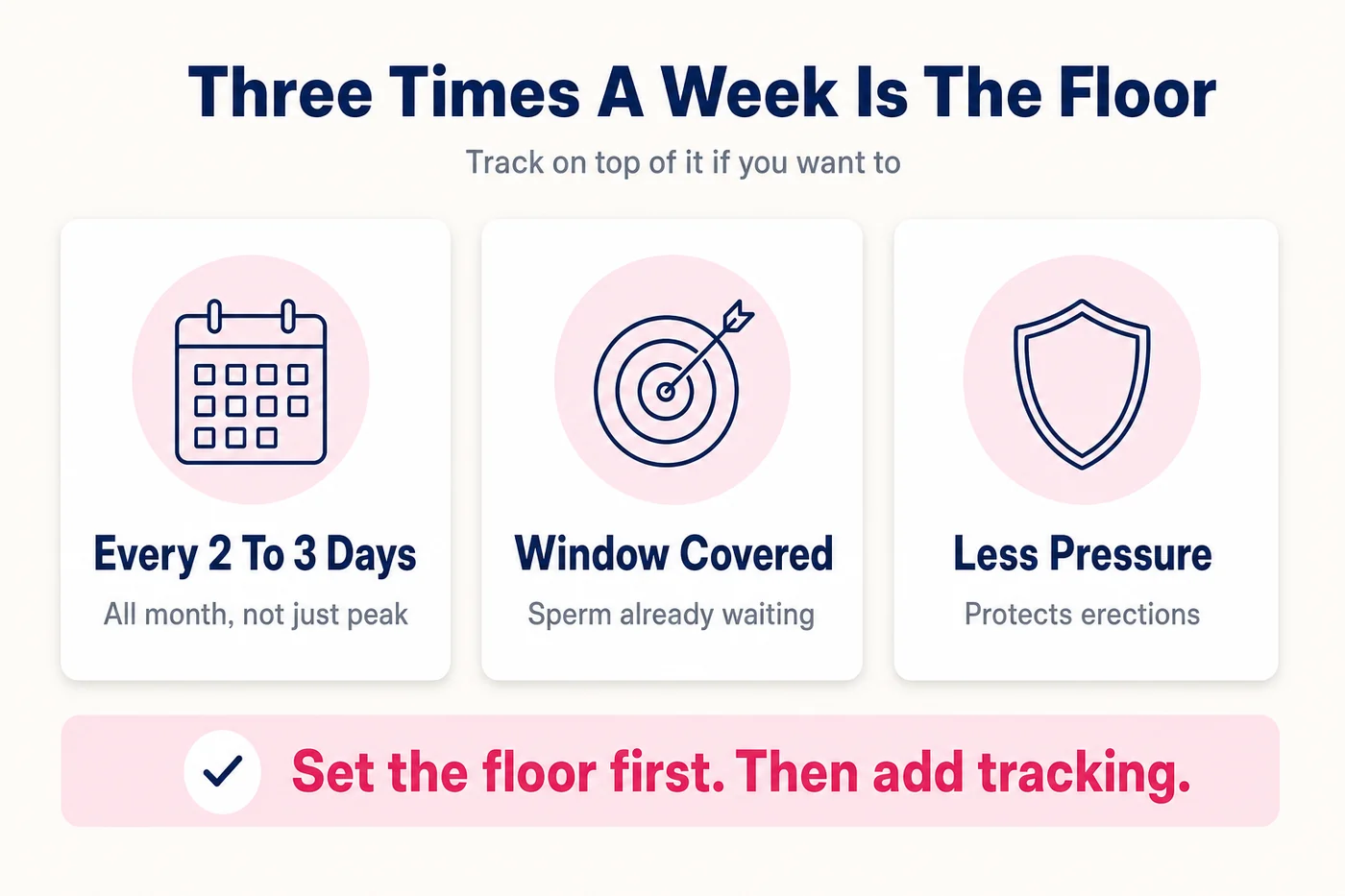
Three times a week is the floor
Sperm are then already waiting whenever ovulation happens. Add ovulation tracking on top if it suits you — it probably helps (Gibbons, 2023).
Every form of tobacco counts
Cigarettes, vapes, gutka, khaini and zarda alike. The most dose-related lever on the whole list (Sharma, 2016).
Then weight, sleep and the mechanics
Weight into range, seven to eight hours of sleep, short abstinence and a sperm-safe lubricant.
Ninety days, then a decision
One sperm cycle. Re-test and escalate on purpose rather than drifting — and any prescription belongs to a specialist, not a shopping app.
Those six points are the spine of it. Everything below is the detail, plus the three things that quietly waste your ninety days.
I recorded a short version of this a while back and it still holds up. Under a minute.
Let us start with what you should do in the next seven days.
Week one: the four male fertility steps to take now
1. Book a semen analysis this week
You cannot fix what you have not measured.
I meet men who have spent eighteen months on lifestyle changes and herbal powders without ever producing a sample. Some turn out to have a completely normal count. Some turn out to have azoospermia — no sperm at all — and every month of “trying naturally” was a month lost.
Get two samples, a few weeks apart. Semen quality swings a lot between samples, so one low report is not a diagnosis. That is precisely why I ask for two.

And read the result together. A semen report handed to one person alone, in silence, does more damage than the number on it usually warrants.
If you are unsure what the numbers mean, start with what a normal sperm count actually is.
And here is something the big fertility sites leave out. If your basic report keeps coming back normal but nothing is happening, ask about sperm DNA fragmentation. It is damage inside the sperm head that a routine semen analysis does not measure at all, and the WHO’s sixth edition manual now describes four assays for it.
I will give you the honest state of play rather than sell you a test. In a global survey of 436 clinicians managing male infertility, 75.3 percent thought DNA fragmentation testing could explain infertility that otherwise has no explanation — but the biggest barriers they reported were the lack of a professional society guideline recommending it (62.7 percent) and the absence of agreed reference values (50.3 percent). TUNEL was the commonest assay, and a 30 percent threshold the commonest cut-off (Agarwal, 2024).
In other words: it is a useful test that the guidelines have not yet caught up with. Worth asking about when the basics look normal. Not worth treating as a verdict.
A normal semen report is not the same thing as a normal sperm.
2. Get examined, not just tested — the male fertility step most men skip
A semen report cannot feel a varicocele. Only a pair of hands can.
A varicocele is a bag of dilated veins around the testicle. It is common, it is frequently missed, and it is one of the few structural causes that can actually be corrected.
Be careful with the claims made for repair, though. A meta-analysis of nine observational studies found that repairing a varicocele before assisted reproduction significantly improved ICSI outcomes, but made no difference to clinical pregnancy rates with IUI (Palani, 2025). So it is not a universal fix. It is a fix for the right man.
The point of this step is not surgery. It is the thirty seconds of examination, standing up, that a report will never do for you. Ask for it — from a urologist, andrologist or sexologist in Chennai if you are local to me.
3. Move to sex three times a week
Three times a week, spread across the week, is the floor I set for every couple.
The fertile window runs from about five days before ovulation to a few hours after it (Gibbons, 2023). Sex every two to three days means sperm are already waiting whenever ovulation happens. You cover the window without having to find it.
I want to be straight about one thing here, because most clinic blogs get it backwards. This does not mean ovulation tracking is useless. The Cochrane review found that timed intercourse using urine ovulation tests probably increases live birth rates compared with intercourse without ovulation prediction — a risk ratio of 1.36, on moderate-quality evidence (Gibbons, 2023).
So if tracking suits you, track. Three times a week is the floor, not the ceiling.
My reason for setting the floor is different, and it is clinical. When sex happens only on the flagged days, it stops being sex and becomes an examination. I see situational erectile dysfunction in otherwise healthy men several times a month — men whose erections are fine on a Sunday morning and gone on the day the app says matters.
And this is not rare or imagined. In a 12-month randomised trial of 450 people trying to conceive, depression and sexual functioning worsened significantly over the year across every arm, including the group given no strategy at all (Martins, 2022). Notably, that same trial found no difference in stress between couples told to use every-other-day sex and couples told to monitor the fertile window — so the pressure is not coming from the calendar. It comes from trying, for months, with the outcome uncertain.
Regular sex is what keeps that pressure from landing on a single evening.

The couples who do best are the ones for whom an ordinary Tuesday still counts.
For the full breakdown of frequency, including the numbers, see how often you should have sex to get pregnant.
4. Stop all tobacco — and yes, that includes gutka
This is the least negotiable item on the list.
A meta-analysis of 20 studies covering 5,865 men found cigarette smoking associated with reduced sperm count and reduced motility, with the deterioration more pronounced in moderate and heavy smokers (Sharma, 2016).
Not “slightly worse”. Measurably worse, and dose-related.
Vaping is not a solution. “Only two a day” is not a solution.
And here is the point every international article on this topic misses, because none of them are written for Indian men: gutka, khaini, zarda and paan masala count. Smokeless tobacco is not the safer option. I regularly have men tell me they “don’t smoke” while chewing khaini twice a day. If it contains tobacco, it is on this list.
The next 90 days: the male fertility changes that actually move the needle
These four are slower. They work on the sperm being made right now, which you will not see for three months.
5. Get your weight into a healthy range
Weight is the lifestyle lever most consistently linked to semen quality, and it is worth acting on.
I will not oversell the fix, though. A 2026 systematic review of obesity interventions in men found the evidence of low certainty, with randomised trials showing no clear difference, and no reliable dose-response between the amount of weight lost and reproductive benefit (Peel, 2026).
So: getting into a healthy range is worth doing, and it helps your testosterone, sleep and erections regardless. Just do not expect a specific number of kilos to buy a specific number of sperm.
For the deeper lifestyle detail, I have written a full guide on how to increase sperm quality.
6. Protect your sleep
In a study of 981 healthy men, short sleepers had lower sperm counts, lower survival rates and lower motility than average sleepers, and late bedtimes made it worse (Liu, 2017).
Seven to eight hours. Before midnight where you can manage it. Testosterone is largely made while you sleep, so chronic short sleep is a hormonal problem, not just a tiredness problem.
7. Cut the alcohol down — but keep it in proportion
I will be straight with you here, because the evidence is weaker than the internet pretends.
In 3,336 men attending a preconception andrology clinic, the dose-response signal was strong and clear for smoking — declining counts and motility above roughly 20 cigarettes a day or ten years of use. For alcohol, the same study found only limited improvement in motility among former drinkers (Yao, 2026).
So alcohol is not in tobacco’s league. It is still worth cutting, because it is easy and it helps your weight and sleep. But if you can only quit one thing this month, quit the tobacco, not the beer.
8. Heat: the honest version
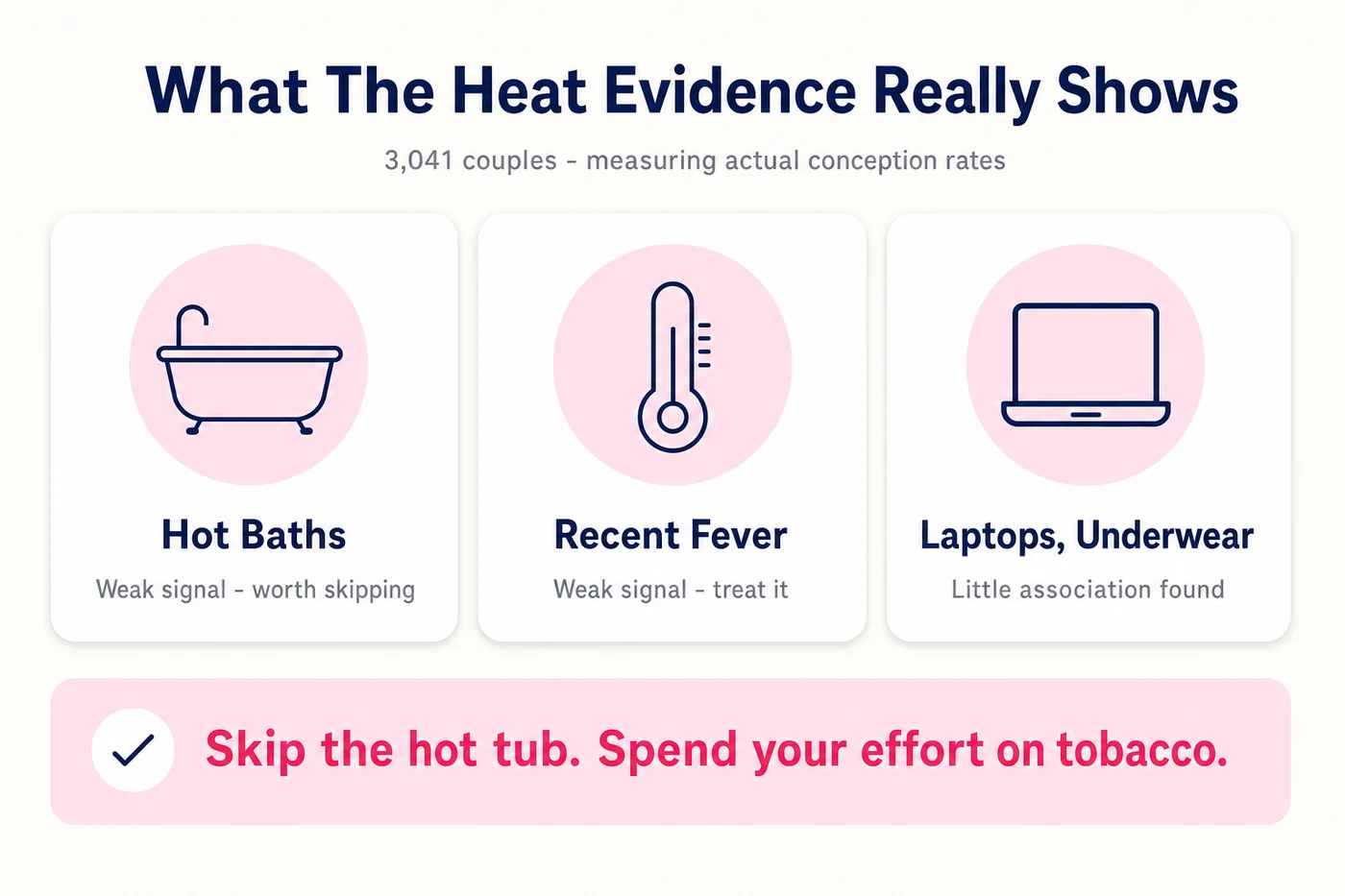
Laptops, tight underwear and long drives show little association with actual conception rates. That will contradict most of what you have read, so here is the study.
A preconception cohort of 3,041 couples measured conception, not just semen numbers. It found little association between fecundability and sauna use, laptop-on-lap hours, seat heaters, time spent sitting, or tight-fitting underwear. Only hot tub or hot bath use and recent fever showed weak inverse associations — and even those confidence intervals crossed one (McKinnon, 2022).
So here is what I actually tell patients. Skip the hot tub and long hot baths. Treat a fever properly rather than pushing through it. Beyond that, do not spend your energy policing your underwear drawer — spend it on the tobacco, the weight and the sleep, which have far better evidence behind them.
9. Train, but pick the right kind
Exercise genuinely helps. A network meta-analysis of seven randomised trials in 2,641 men ranked combined aerobic and resistance training highest for pregnancy rate, and moderate-intensity continuous training highest for live birth rate (Hajizadeh Maleki, 2022).
So: a mix of cardio and weights, at moderate intensity, three to five times a week.
There is a ceiling, though. Extreme endurance volume and anabolic steroids both damage sperm production. Steroids in particular can shut it down completely, and I see this constantly in gym-going men in their twenties and thirties. If you are on them, that conversation comes before everything else on this page.
10. Check what else you are putting in your body
Two categories get missed almost every time, and both are fixable this week.
Recreational drugs. Cannabis, cocaine and opioids all affect male reproductive function, and cannabis is the one I see most often in men who do not think of it as relevant. If you use anything regularly, tell your doctor — it changes how your semen report should be read.
Anabolic steroids and testosterone. This deserves its own line, because it is the most common reversible cause of a shockingly bad semen report in men under forty. Testosterone — whether prescribed as TRT or bought at a gym — switches off the brain signal driving your own sperm production. It is a contraceptive, not a fertility treatment. Never start it while trying to conceive, and never stop it abruptly without medical advice.
Prescription medicines. Several common drugs affect sperm or ejaculation. Do not stop any of them on your own. Take this list to whoever prescribed them and ask whether an alternative exists while you are trying.
| What you may be taking | Why it matters when trying to conceive |
|---|---|
| Testosterone or anabolic steroids | Suppresses your own sperm production, often to zero |
| Finasteride or dutasteride | Can reduce semen volume and sperm parameters |
| Sulfasalazine | Reversibly lowers sperm count and motility |
| Long-term opioid painkillers | Lowers testosterone via the pituitary |
| Some SSRIs and antidepressants | Delayed or absent ejaculation, reduced libido |
| Chemotherapy or radiotherapy | Can permanently damage sperm production |
| Ketoconazole, cimetidine, spironolactone | Anti-androgen effects |
If chemotherapy or radiotherapy is anywhere on your horizon, freeze sperm before treatment starts, not after. It is the one item on this page that cannot be undone later. If you have had either, male infertility treatment starts with an assessment, not a home remedy.
11. Eat like an adult — but do not eat for your sperm
Diet matters, and it matters less dramatically than the supplement industry needs you to believe.
A sensible mixed diet — vegetables, fruit, fish, nuts, less ultra-processed food — supports the weight, sleep and metabolic health that actually drive your hormone axis. That is the mechanism. There is no single food that raises sperm count.
Note the distinction, because it is this article’s whole argument in one line: eating food that contains antioxidants is not the same as swallowing concentrated antioxidant supplements. Food delivers them in ordinary amounts alongside everything else. A capsule delivers a supra-dietary dose of one or two compounds in isolation, for months. The first is diet. The second is an intervention — and it is the one the trial evidence does not support.
For the full food-by-food breakdown, see how to increase sperm quality.
The bedroom mechanics nobody mentions when you are trying to get pregnant
These three cost nothing, work within days rather than months, and are almost entirely absent from the major fertility sites.
12. Stop “saving up” sperm
Men abstain for a week before the important days, believing they are stockpiling.
Volume does go up. What you gain in volume you tend to lose in motility.
A dose-response meta-analysis of 85 studies found shorter abstinence associated with limited improvements in semen quality in healthy men, and potentially more benefit in infertile men — particularly within the first four days. Its authors urge caution about reading that as cause and effect (Du, 2024).
So this is a modest lever, not a magic one. But two to three days is the sensible interval, and it is exactly what sex three times a week gives you automatically without anyone having to plan it.
This is also why the fear that masturbation causes infertility has it backwards. Regular ejaculation does not empty the tank.
13. Change your lubricant
A standard lubricant can halve sperm motility within ten minutes. That is the single most actionable fact in this section, and almost no one is told it.
When researchers incubated prepared sperm with Aquagel — the one lubricant actually being prescribed in their fertility setting — progressive motility fell to 49 percent of control within ten minutes, even at a concentration as low as 5 percent. A lubricant formulated as sperm-safe had no significant effect on sperm function. The same study surveyed fertility healthcare professionals and found their knowledge of lubricant toxicity was generally poor, and that they rarely asked about it (Mackenzie, 2019).
That was one lubricant tested properly, not the whole shelf. But it is the one that was being handed out in a fertility clinic, which tells you how little attention this gets.
Use a product labelled fertility-friendly or sperm-safe, or use none. Not saliva. I have written separately on whether coconut oil works as a lube.
14. Fix the erections and the ejaculation first
This gets skipped out of embarrassment, and it should not be.
If the erection is not firm enough for penetration, or if ejaculation is happening outside the vagina or not at all, sperm quality is beside the point. The semen is not being deposited where it needs to go.
Psychological stress is also frequently associated with poorer sperm concentration and motility, though the evidence is observational and does not establish cause (Costa, 2026).
Treat the mechanical problem first. It is usually the fastest win on this entire page. If this is you, read about erectile dysfunction treatment — and tell your doctor, because almost nobody volunteers it.
Day 90: the male fertility decision point
This is the step everyone skips, and it is the one that actually makes this a plan rather than a list.
Sperm are not made overnight. One full spermatogenesis cycle takes about 72 days, plus a couple of weeks to travel and mature. So the sperm in today’s sample were made roughly three months ago — which is why nothing you changed last week shows up in next month’s report.
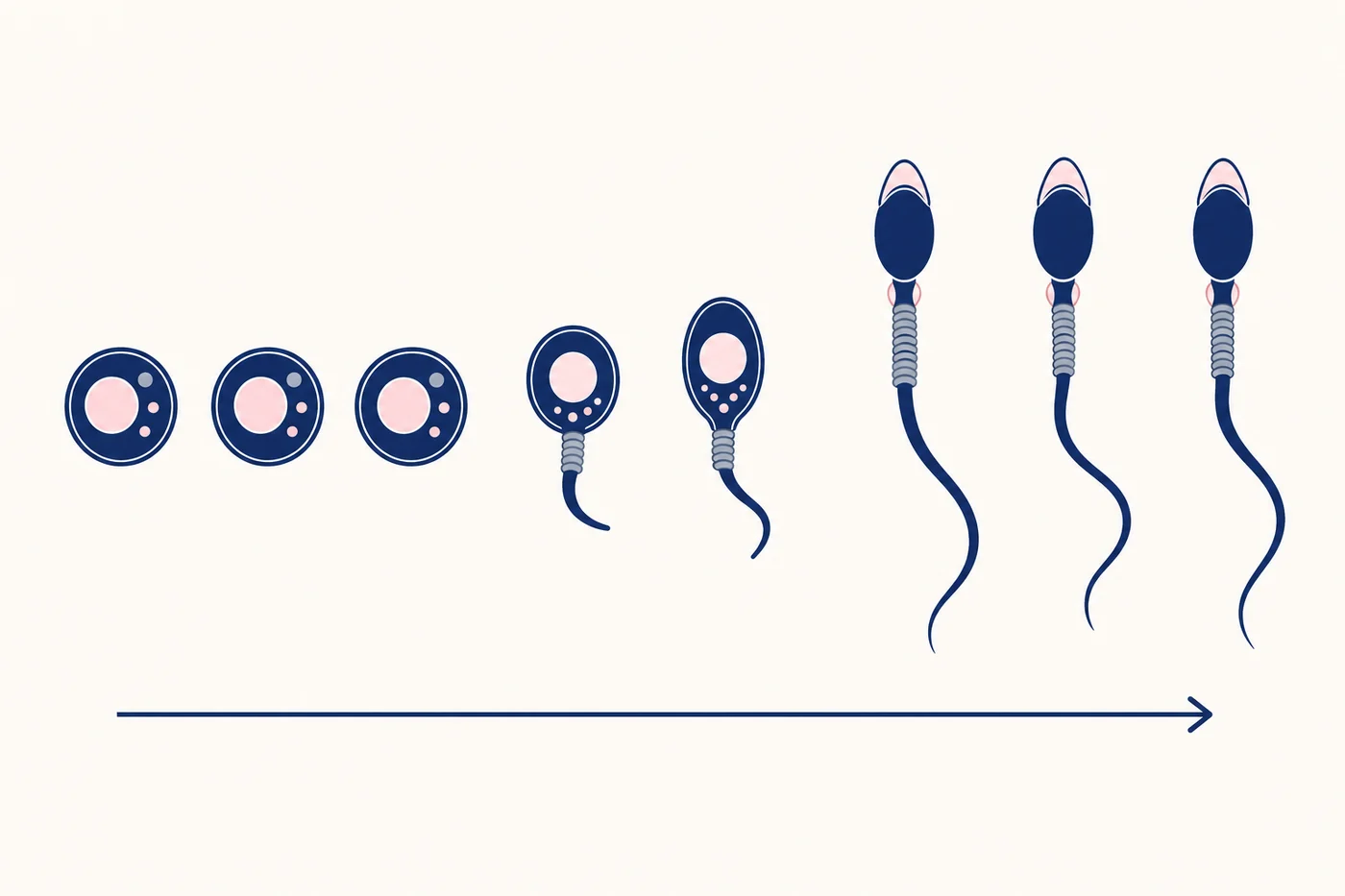
That is the whole reason this plan is ninety days long rather than thirty.
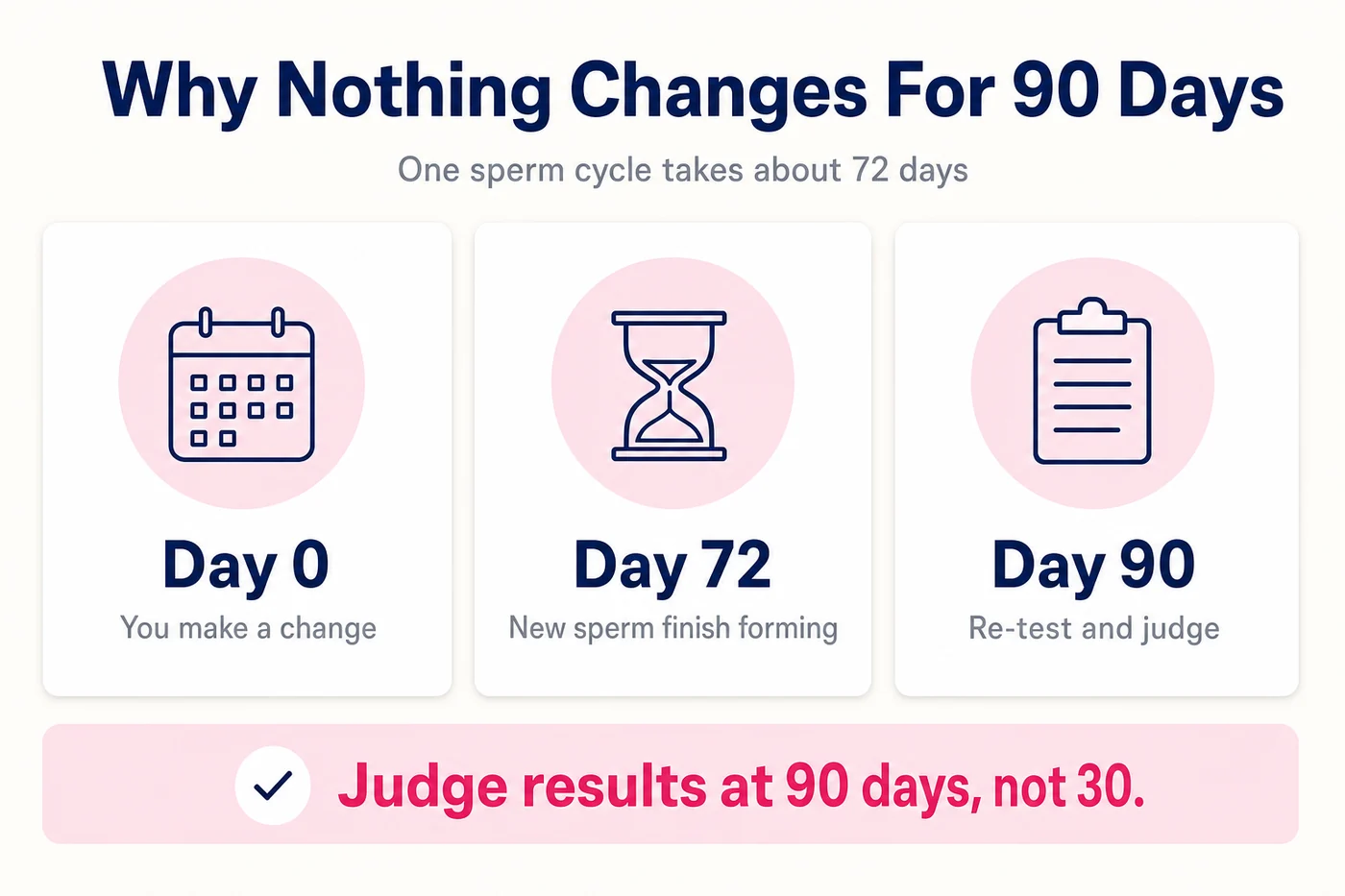
At ninety days, repeat the semen analysis. Then decide, rather than drift.
- Numbers improved and she is not yet pregnant? Keep going. You are inside the normal range of luck. Most couples having regular sex conceive within a year.
- Numbers unchanged despite genuine effort? Stop repeating the lifestyle cycle and get a proper workup — hormones, examination, and a discussion about DNA fragmentation.
- Numbers were very low or zero from the start? This was never a lifestyle problem. It needed a specialist on day one.
- Partner is over 35? Do not run a second ninety days. Escalate now.
Ninety days is one sperm cycle. Two ninety-day cycles with no plan is a year gone.
The 3 habits that waste ninety days when you are trying to get pregnant
Every one of these is standard advice somewhere on the internet. Every one of them, in my clinic, costs couples months.
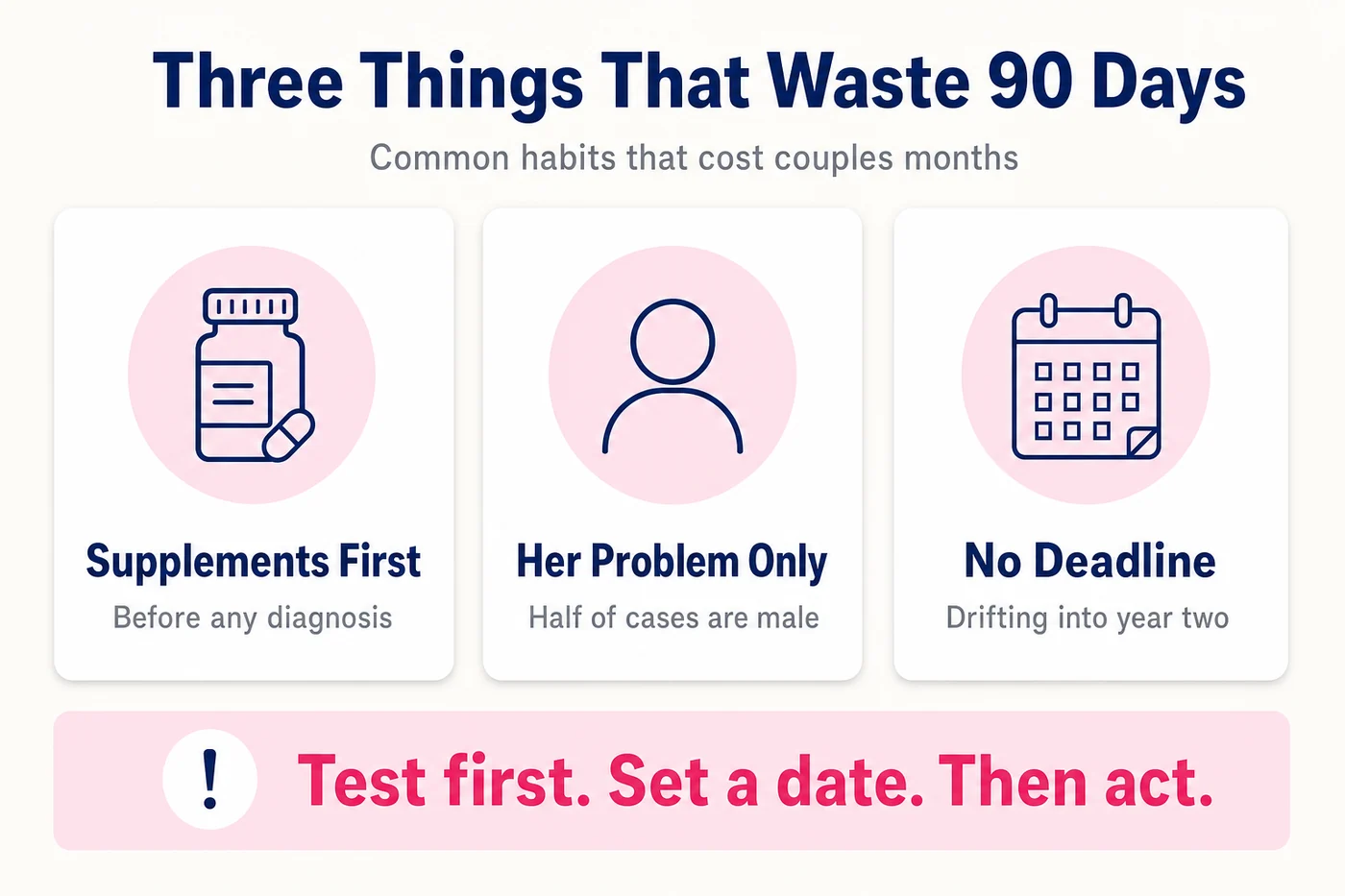
Two of them are things men do to themselves with the best of intentions. The third is a habit of thinking that delays the whole couple.
The short version of this section
Pills before a diagnosis
The Cochrane evidence was very low certainty and inconclusive (de Ligny, 2022); the largest trial since found no benefit (de Ligny, 2025). Meanwhile the tests go unbooked.
Only she gets investigated
A male factor is involved in about half of couples, yet the semen analysis – the cheapest test in the workup – is usually ordered last.
No review date in the diary
Twelve months if she is under 35, six if she is over. Couples who set a date get answers; couples who give it a few more months repeatedly do not.
Waste 1. Buying supplements instead of buying a diagnosis
Open almost any other article on male fertility and it will tell you to load up on antioxidants.
I do not prescribe them, and the evidence has moved in my direction. Let me show you the actual arc, because it is more interesting than either side admits.
The Cochrane review of antioxidants for male subfertility pooled 90 studies and 10,303 men. It found antioxidants may increase live birth — an odds ratio of 1.43 — but graded the certainty as very low, and stated plainly that the evidence was inconclusive, with serious risk of bias and small sample sizes throughout. Its authors called for large, well-designed, placebo-controlled trials (de Ligny, 2022).
So one of those authors went and ran exactly that trial.
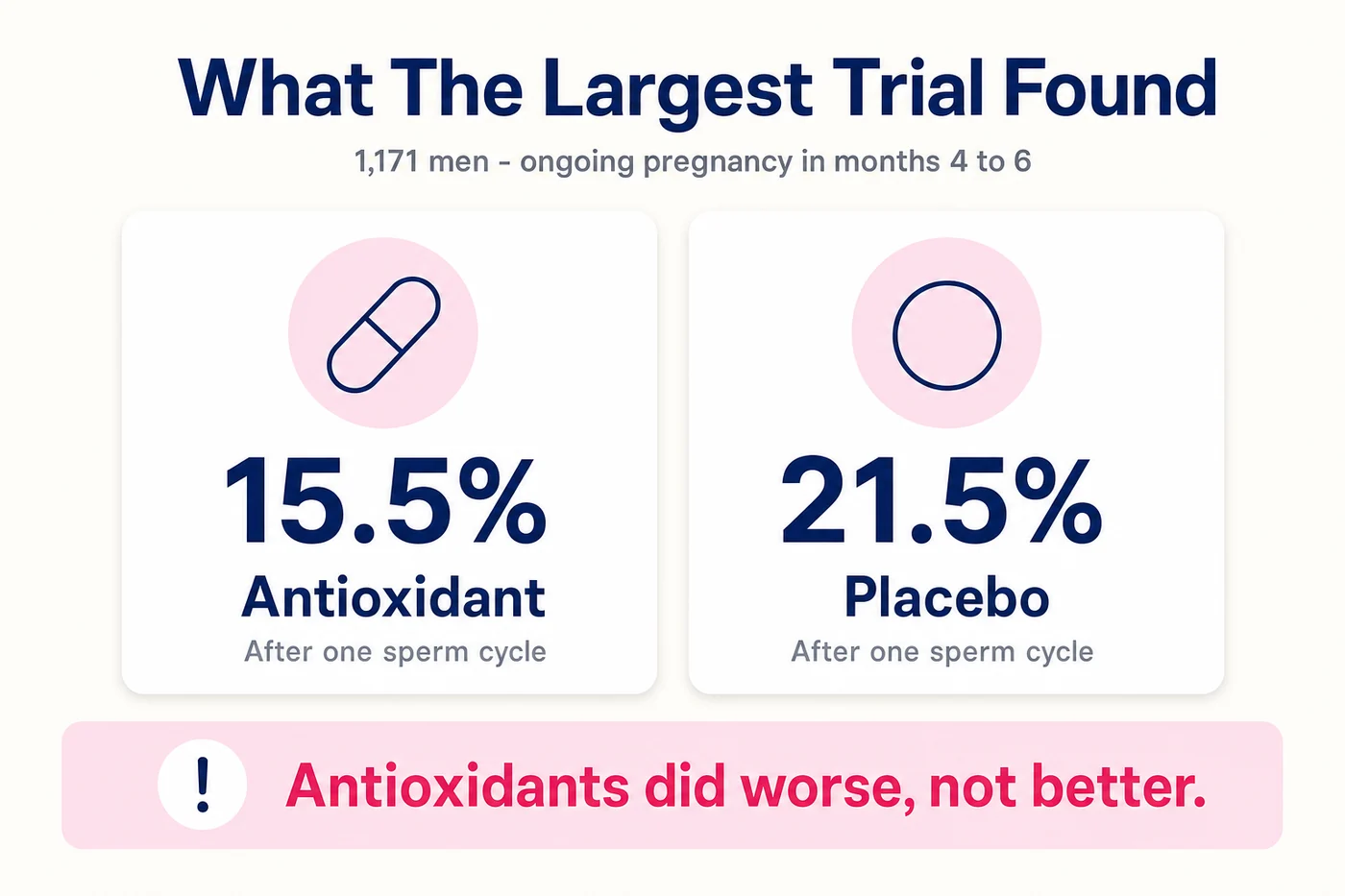
In the largest trial to date, men taking an antioxidant supplement had fewer ongoing pregnancies between months four and six than men on placebo — 15.5 percent versus 21.5 percent. Here is that trial in full.
The SUMMER trial randomised 1,171 men across 21 Dutch hospitals and fertility clinics to a micronutrient supplement or an identical placebo, double-blind, for six months. Ongoing pregnancy within six months was 33.8 percent on the supplement versus 37.5 percent on placebo — not a statistically significant difference. Between months four and six, after a full 72-day sperm cycle had elapsed, the supplement group did significantly worse: 15.5 percent versus 21.5 percent. Every secondary measure, including semen parameters and DNA fragmentation, showed no benefit. The investigators concluded they do not support its use in men seeking fertility care (de Ligny, 2025).
Two honest caveats about that trial
You should not accept this from me any more than from the supplement sellers.
First, the headline six-month result was not statistically significant. The significant harm signal sits in the four-to-six-month window. That window was chosen for a sound biological reason — it is one full sperm cycle — but it is still a narrower slice than the primary endpoint, and it should be treated as a strong warning rather than settled proof of harm.
Second, the supplement tested was a specific methylation formula: betaine, L-cystine, zinc, niacin, folate and B vitamins at roughly everyday doses. It did not contain vitamin C, vitamin E, selenium or coenzyme Q10. So this trial does not, on its own, condemn every pill on the shelf.
What it does do is remove the assumption that these things are free. There is a plausible mechanism for harm: sperm actually require reactive oxygen species for capacitation, chromatin cross-linking and the signalling that lets them fertilise an egg. A 2026 review of that physiology concludes that we should use antioxidants with care and avoid inducing reductive stress (Pyneandee, 2026).
And there is a third cost I see every week that no trial measures. A man on a shelf of supplements feels like he is treating himself. He is not. He is postponing the semen analysis, the examination and the hormone panel that would have found the actual problem. That delay is the expensive part.
If your own doctor has prescribed a supplement, do not stop it because of this article. Take this page to them and ask why it was chosen. That is a different conversation from buying a fertility blend off a shopping app.
I have written the longer version of this argument in the antioxidant trap.
So what do I give instead? Two things — and neither of them is something you can order for yourself. That is the whole point, and it is the next section.
Waste 2. Treating it as her problem
A male factor is involved in roughly half of infertile couples. Yet the semen analysis — the cheapest, fastest, least invasive test in the entire workup — is routinely the last one ordered.
I have watched couples spend a year and a great deal of money investigating the woman before anyone asked the man for a sample.
Run both workups in parallel, starting now. Her assessment should not wait for your ninety days, and yours should not wait for hers.
And do not let optimising sperm delay treatment you actually need. If your situation calls for IUI, IVF or ICSI, improving your sleep is a supplement to that plan, not a substitute for it.
Waste 3. Not having a deadline
The most expensive mistake is not a wrong supplement. It is drift.
Twelve months of regular unprotected sex is the standard threshold for investigation if your partner is under 35. Six months if she is 35 or over. Immediately, at any age, if there is a history of undescended testis, testicular surgery, chemotherapy or radiotherapy, mumps after puberty, or if erections or ejaculation are not working.
Write the date down. Couples who set a review date get answers. Couples who “give it a few more months” repeatedly are the ones I meet three years later.
What I actually prescribe — and why you cannot buy it yourself
This is the part that separates a medical protocol from a shopping list. Both of the things below are chosen after a semen analysis, an examination and a hormone panel. Neither is something to start on your own.
Lyon bean (Mucuna pruriens) — prescription-supervised, and the product matters
Lyon bean is Mucuna pruriens, the velvet bean. I use it instead of an antioxidant blend because its demonstrated route of action is the hormone axis rather than dose-loading the seminal antioxidant pool.
In a clinical trial in infertile men it raised testosterone, luteinising hormone and dopamine while lowering FSH and prolactin, with sperm count and motility recovering significantly (Shukla, 2009). A second trial, comparing treated infertile men against healthy fertile controls, found it elevated spermatogenesis and improved sperm concentration and motility (Ahmad, 2008). And in men under psychological stress, 5 grams a day of seed powder over three months lowered serum cortisol and improved count and motility (Shukla, 2010).
Why you should not buy lyon bean yourself
Now the warning that matters more than any of that. Do not go and buy this.
The market is full of cheap generic Mucuna products, and in my experience many of them do nothing at all. L-DOPA content varies enormously between brands, extraction quality is inconsistent, and almost none of it is standardised or verified. A man who buys a random velvet bean powder online and takes it for three months has usually bought nothing but a delay. Which is exactly the trap I described in the previous section, just with a different label on the bottle.
It needs a prescription, a specific standardised preparation, a defined dose and a re-test. Without those four things it is not treatment.
There is also real pharmacology here. Lyon bean contains L-DOPA, the same molecule used in Parkinson’s disease. Do not take it if you are on levodopa, an MAO inhibitor or an antipsychotic. Be cautious with blood pressure or diabetes medication, since it may lower both. It is not appropriate with a history of psychosis.
And let me hold this to the same standard I applied to antioxidants, because you should expect that. These are small single-centre trials from one Indian research group. None measured pregnancy or live birth — they measured semen parameters and hormones. That is a weaker evidence base than the trial I used to argue against antioxidant blends, and I will not pretend otherwise.
One fair objection, which you should hear from me rather than from someone trying to discredit the idea: those same trials show Mucuna restoring antioxidant enzymes in seminal plasma and raising seminal vitamins A, C and E. So calling it “not an antioxidant” is too neat. My distinction is narrower — restoring a depleted enzyme system toward normal is not the same intervention as months of supra-dietary exogenous antioxidants. I think that distinction holds. You should know it is a distinction, not a wall.
Letrozole and anastrozole — for the right man, identified by a blood test
This is the part of my protocol that almost no fertility website discusses, and it is the one that changes outcomes in the men who are hardest to treat.
Letrozole and anastrozole are aromatase inhibitors. Aromatase is the enzyme that converts testosterone into estradiol. In some infertile men — particularly heavier men and men with severe sperm problems — too much testosterone is being converted, the testosterone-to-estradiol ratio falls, and the excess estradiol suppresses the brain signals that drive sperm production. Block the enzyme and that feedback loop is released.
The selection criterion is a blood test, not a symptom. I check the testosterone-to-estradiol (T:E2) ratio. That number, not a hunch, decides whether this is the right treatment for you.
In men with severe spermatogenic failure, letrozole raised the proportion upgrading a WHO sperm concentration category from 5.4 percent to 14.3 percent. That is the headline. Now the caveats, which matter more than usual here.
A 2026 multicentre randomised trial gave letrozole 2.5 mg daily for three months to 296 men with spermatogenic failure — 73.6 percent of them with non-obstructive azoospermia. The proportion who upgraded a WHO sperm concentration category was 14.3 percent on letrozole versus 5.4 percent on control, with roughly double the odds of reaching a better grade. The authors concluded it can downstage the severity of infertility and potentially allow less invasive reproductive management (Sun, 2026).
For a man facing surgical sperm retrieval, moving from no sperm in the ejaculate to some sperm in the ejaculate is not a statistic. That is why this trial matters.
The three caveats that matter
But read the small print with me, because it is unusually important here.
First, both arms of that trial took vitamins C and E. The design was letrozole plus vitamins C and E, against vitamins C and E alone (Sun, 2026). Yes — the antioxidants I spent the previous section arguing against were the background treatment in both groups. That does not invalidate the letrozole result, because the difference between the arms is still attributable to letrozole. But you deserve to know it, and I am not going to quietly leave it out of an article that takes the position this one does.
Second, the trial improved sperm concentration categories — not the raw numbers. There were no significant between-group differences in the continuous semen parameters themselves. And decreased libido was more common on letrozole, 12.2 percent versus 5.4 percent (Sun, 2026).
Third, and this is the one that matters most: no controlled trial of aromatase inhibitors has shown a pregnancy or a live birth. Sun measured WHO categories, semen parameters and hormones. Not pregnancy. I applied exactly this test to lyon bean a few paragraphs ago, in bold, and it would be dishonest of me to exempt the drug from it.
The rest of the evidence is thinner than the headline suggests:
- The frequently quoted meta-analysis of 10 studies and 666 men found letrozole and anastrozole raised sperm concentration, total count, testosterone and the T:E2 ratio compared with each man’s own baseline. Compared with an actual control group, they did not significantly improve sperm concentration, motility or morphology — and performed slightly worse than comparators on motility (Guo, 2022). Before-and-after is not the same as better-than-control.
- The study showing reduced sperm DNA fragmentation was single-arm, open-label, and enrolled 20 men. Within that group letrozole improved concentration, motility and morphology and significantly reduced TUNEL positivity, with four spontaneous pregnancies (Kooshesh, 2020). Twenty men with no control group is a promising signal, not proof.
- In a network meta-analysis of 24 studies and 1,676 men, clomiphene citrate outranked aromatase inhibitors for sperm concentration, and no drug in the network significantly improved progressive motility (Santi, 2025).
- It is off-label for male infertility, and the overall evidence base is graded low quality (Del Giudice, 2020; Ribeiro, 2016).
So why do I still use it? Because in the specific man with a low T:E2 ratio and a severe problem, it is one of very few levers that exists at all, and the 2026 trial is the best evidence any of those levers has. I use it with my eyes open about what it has not yet been shown to do.
Letrozole safety and monitoring
Please read this properly, because letrozole is easy to obtain in India.
This is a prescription drug, not a supplement, and self-medicating with it is a genuinely bad idea.
- It works by suppressing estradiol. Men need some estradiol. Sustained suppression risks falling bone mineral density, and the trials above ran for only three months — there is no good long-term safety data in fertility use.
- Reported effects include reduced libido (12.2 percent in the trial above), joint and muscle aches, fatigue and mood change.
- It warrants monitoring bloods — testosterone, estradiol, and a check on lipids and liver function — not a repeat prescription and silence.
- There must be a stop rule. If the T:E2 ratio and the semen report have not moved by ninety days, it is not working for you and should be stopped, not continued hopefully.
- It is not for men with a normal T:E2 ratio. Prescribed to the wrong man it is a side-effect profile with no upside.
In practice I often use it alongside lyon bean rather than instead of it, since they act at different points of the same axis — the aromatase inhibitor on oestrogen feedback, the Mucuna on the dopamine and stress side.
None of this is a request to make of a pharmacist. It needs the blood test, the prescription, the monitoring and the re-test.
Dr Shahs notes (from my clinical observation)
The couples who conceive fastest in my practice are rarely the ones doing the most.
They are the ones who did the boring things properly and in order. Testing came early. Tobacco stopped, and stayed stopped. Sex stayed regular and unremarkable rather than becoming a monthly examination. And a review date went in the diary instead of drifting.
The couples who struggle longest are usually doing more, not less. Six supplements, three apps, and sex that has become an obligation on days 12, 14 and 16.
One pattern worth naming, because no one volunteers it. When a man’s erection fails on the “important” day, he tells nobody. He tells me eighteen months later, after the couple has been investigated for everything else. If that is happening to you, it is common, it is treatable, and it is the fastest thing on this entire page to fix.

Private 1-on-1 consultation
Not sure whether the problem is you, her, or the timing?
I am Dr Shah Dupesh, a consultant andrologist in Chennai. I will look at your semen report properly, examine you for the things a report cannot show, and tell you honestly whether you need treatment, more time, or a different plan.
Book a Confidential Consultation
See a doctor now, not in three months
Some things should not wait for a lifestyle plan.
- A lump, swelling or hardness in a testicle. This needs examining this week. Testicular cancer is most common in exactly this age group and is highly curable when caught early.
- Pain or swelling in a testicle, or a testicle that has changed size.
- No sperm at all on a report. This is not a lifestyle problem and no diet will fix it.
- Very low counts, absent ejaculation, or semen that has stopped appearing.
- Breast enlargement or tenderness, or loss of body hair.
- You are taking, or have taken, anabolic steroids or testosterone. Testosterone shuts down your own sperm production. Never start it while trying to conceive, and never stop it abruptly without medical advice.
Frequently asked questions
How should men prepare to conceive?
Start three months before you begin trying. Book a semen analysis, stop all tobacco, get your weight into a healthy range and protect your sleep. Three months is one full sperm cycle, so it is the minimum useful runway for anything you change.
How can a man improve his sperm in 30 days?
Mostly he cannot. Sperm take about 72 days to make, so 30 days is under half a cycle. What you can change inside 30 days is the abstinence interval, the lubricant and alcohol intake, which affect sperm already made. Real improvement shows at 90 days.
What are the signs of healthy sperm?
There are no reliable visible signs. Semen volume, colour and thickness tell you almost nothing about count or motility, and thick or jelly-like semen is usually normal. The only way to know is a semen analysis.
At what age is male sperm most fertile?
Male fertility peaks in the twenties and declines gradually from the mid-thirties, with consistent age-dependent falls in semen quality (Johnson, 2015). Unlike women, men have no hard cut-off, but sperm DNA damage does rise with age.
What drinks increase sperm count?
None specifically. No juice, herbal drink or branded tonic has been shown to raise sperm count. Water and less alcohol are what help. Treat any product marketed as a sperm-boosting drink with scepticism.
Do antioxidant supplements help male fertility?
The evidence does not support routine use. The Cochrane review graded the possible live-birth benefit as very low certainty and inconclusive (de Ligny, 2022). The largest trial since, in 1,171 men, found no improvement in ongoing pregnancy and significantly worse results between months four and six (de Ligny, 2025). Do not stop a doctor-prescribed supplement without asking them first.
What is lyon bean extract and does it help sperm?
Lyon bean is Mucuna pruriens, or velvet bean. It acts on the hormone axis rather than as an antioxidant. Small clinical trials in infertile men report higher testosterone, LH and dopamine, lower FSH and prolactin, and improved sperm count and motility (Shukla, 2009; Ahmad, 2008). None measured pregnancy. It contains L-DOPA, needs a prescription, and cheap unstandardised products are common and largely ineffective.
Can I just buy Mucuna pruriens online?
I would advise against it. L-DOPA content varies widely between brands, most products are not standardised, and in my experience many generic preparations do nothing. Taking an unverified powder for three months usually buys a delay rather than a result. It needs a prescription, a defined dose and a re-test.
Does letrozole improve sperm count?
Partly, in selected men. In a 2026 multicentre randomised trial of 296 men with spermatogenic failure, 14.3 percent upgraded a WHO sperm concentration category on letrozole versus 5.4 percent on control — but the continuous semen parameters showed no significant between-group difference, and no pregnancy outcome was measured (Sun, 2026). It is prescription-only, off-label, and suits men with a low testosterone-to-estradiol ratio.
Can medication help non-obstructive azoospermia?
Sometimes. In that 2026 trial 73.6 percent of participants had non-obstructive azoospermia, and letrozole roughly doubled the odds of reaching a better sperm concentration grade overall. The authors concluded it can downstage infertility severity and potentially allow less invasive management (Sun, 2026). The trial did not report a separate azoospermia subgroup result or measure sperm-retrieval success, so treat it as a reasonable hope rather than a promise.
Do aromatase inhibitors reduce sperm DNA fragmentation?
There is early evidence that they can. In a single-arm, open-label study of 20 men with idiopathic OATS and a low testosterone-to-estradiol ratio, letrozole significantly reduced sperm TUNEL positivity alongside improvements in concentration, motility and morphology (Kooshesh, 2020). Twenty men with no control group is a promising signal, not settled evidence.
Is letrozole safe to take for fertility?
Only under supervision. It suppresses estradiol, which men need, so sustained use risks bone-density loss, and the fertility trials have run for just three months. Reported effects include reduced libido, joint aches and mood change. It needs monitoring bloods and a stop rule at 90 days. Do not self-medicate.
Does masturbation reduce our chances of conceiving?
No. Regular ejaculation does not deplete sperm, and shorter abstinence intervals are associated with better semen quality, not worse (Du, 2024). More on masturbation and infertility.
What can men do to increase the chances of conception?
Have sex three times a week, stop all tobacco, get a semen analysis early, get examined for a varicocele, sleep seven to eight hours, keep weight in range, avoid long abstinence and use a sperm-safe lubricant. Then re-test at 90 days and decide.
Should we lie down after sex?
It is not essential, though a short lie-down does no harm. Details here: how long to lie down after sex to get pregnant.
Ask an andrologist, not a forum
Male fertility is the half of the workup that gets skipped. If you have been trying for more than a year — or six months if your partner is over 35 — get the male side checked properly.
References
Every claim above is sourced. These are the primary studies, linked so you can read them yourself.
- Agarwal A, Farkouh A, Saleh R, et al. Technical Aspects and Clinical Limitations of Sperm DNA Fragmentation Testing in Male Infertility: A Global Survey, Current Guidelines, and Expert Recommendations. 2024. PubMed 37635341
- Ahmad MK, Mahdi AA, Shukla KK, et al. Effect of Mucuna pruriens on semen profile and biochemical parameters in seminal plasma of infertile men. 2008. PubMed 18001713
- Costa AF, Silveira LV, Onofre FBM, et al. Psychological stress and semen quality impairment: A systematic review. 2026. PubMed 42441879
- de Ligny WR, de Bruin JP, Smits RM, et al. Antioxidant Treatment and the Chance to Conceive in Men Seeking Fertility Care: The SUMMER Randomized Clinical Trial. 2025. PubMed 40996763
- de Ligny W, Smits RM, Mackenzie-Proctor R, et al. Antioxidants for male subfertility. 2022. PubMed 35506389
- Del Giudice F, Busetto GM, De Berardinis E, et al. A systematic review and meta-analysis of clinical trials implementing aromatase inhibitors to treat male infertility. 2020. PubMed 31621654
- Du C, Li Y, Yin C, et al. Association of abstinence time with semen quality and fertility outcomes: a systematic review and dose-response meta-analysis. 2024. PubMed 38197853
- Gibbons T, Reavey J, Georgiou EX, et al. Timed intercourse for couples trying to conceive. 2023. PubMed 37709293
- Guo B, Li JJ, Ma YL, et al. Efficacy and safety of letrozole or anastrozole in the treatment of male infertility with low testosterone-estradiol ratio: A meta-analysis and systematic review. 2022. PubMed 35438843
- Hajizadeh Maleki B, Tartibian B, Chehrazi M Effectiveness of Exercise Training on Male Factor Infertility: A Systematic Review and Network Meta-analysis. 2022. PubMed 34806474
- Johnson SL, Dunleavy J, Gemmell NJ, et al. Consistent age-dependent declines in human semen quality: a systematic review and meta-analysis. 2015. PubMed 25462195
- Kooshesh L, Bahmanpour S, Zeighami S, et al. Effect of Letrozole on sperm parameters, chromatin status and ROS level in idiopathic Oligo/Astheno/Teratozoospermia. 2020. PubMed 32404173
- Liu MM, Liu L, Chen L, et al. Sleep Deprivation and Late Bedtime Impair Sperm Health Through Increasing Antisperm Antibody Production: A Prospective Study of 981 Healthy Men. 2017. PubMed 28412762
- Mackenzie SC, Gellatly SA Vaginal lubricants in the couple trying-to-conceive: Assessing healthcare professional recommendations and effect on in vitro sperm function. 2019. PubMed 31086364
- Martins MV, Fernandes J, Pedro J, et al. Effects of trying to conceive using an every-other-day strategy versus fertile window monitoring on stress: a 12-month randomized controlled trial. 2022. PubMed 36272105
- McKinnon CJ, Joglekar DJ, Hatch EE, et al. Male personal heat exposures and fecundability: A preconception cohort study. 2022. PubMed 35924639
- Palani A, Cannarella R, Saleh R, et al. Impact of Varicocele Repair on Assisted Reproductive Technique Outcomes in Infertile Men: A Systematic Review and Meta-Analysis. 2025. PubMed 39344117
- Peel A, Lyons H, Tully CA, et al. The effect of obesity interventions on male fertility: a systematic review and meta-analysis. 2026. PubMed 41065428
- Pyneandee EM, Bakos HW, De Iuliis GN, et al. The Positive Roles for Reactive Oxygen Species in Human Reproduction; Implications for the Therapeutic Application of Antioxidants. 2026. PubMed 42351980
- Ribeiro MA, Gameiro LF, Scarano WR, et al. Aromatase inhibitors in the treatment of oligozoospermic or azoospermic men: a systematic review of randomized controlled trials. 2016. PubMed 27244767
- Santi D, Pallotti F, Tienforti D, et al. Empirical hormonal treatments for idiopathic male infertility: a network meta-analysis comparing antiestrogens and FSH. 2025. PubMed 41347881
- Sharma R, Harlev A, Agarwal A, et al. Cigarette Smoking and Semen Quality: A New Meta-analysis Examining the Effect of the 2010 World Health Organization Laboratory Methods for the Examination of Human Semen. 2016. PubMed 27113031
- Shukla KK, Mahdi AA, Ahmad MK, et al. Mucuna pruriens improves male fertility by its action on the hypothalamus-pituitary-gonadal axis. 2009. PubMed 18973898
- Shukla KK, Mahdi AA, Ahmad MK, et al. Mucuna pruriens Reduces Stress and Improves the Quality of Semen in Infertile Men. 2010. PubMed 18955292
- Sun Y, Yao C, Liu G, et al. Letrozole and Infertility Among Males With Spermatogenic Failure: A Randomized Clinical Trial. 2026. PubMed 42313386
- Yao HL, Yang TT, Tian R, et al. Modifiable key factors and semen quality in men undergoing preconception evaluation: a cross-sectional study. 2026. PubMed 42267466
A private, judgment-free space to talk through fertility and men’s sexual health. Walk in, or book ahead by phone.
No 21, Sree Kalki Apartments, Ground Floor, Bazullah Road, T-Nagar, Chennai 600017