
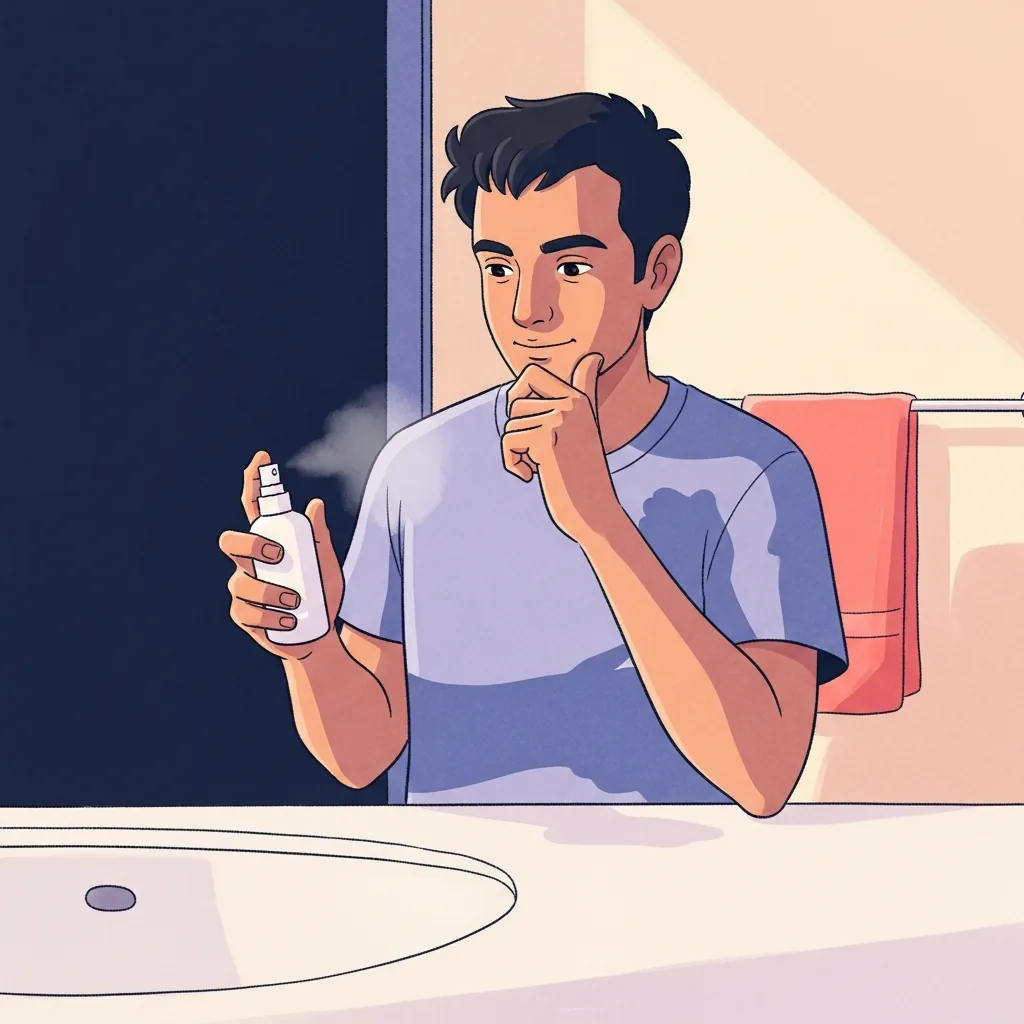
Yes — delay sprays work. A lidocaine (or lidocaine-plus-prilocaine) spray applied to the head of the penis 5 to 15 minutes before sex reliably buys you more time: in the pivotal trials the prescription spray raised timed intercourse from about 0.6 minute to 2.6–3.8 minutes (Dinsmore, 2009; Carson, 2010), and the world’s urology bodies now list topical anaesthetics as a first-line treatment for premature ejaculation (Shindel, 2022). But a spray only numbs the problem — it does not cure it. Used carelessly it can numb your partner, soften your erection, and — if you are trying for a baby — dent your sperm. So the real answer is: a delay spray is an excellent short-term bridge, not a long-term fix.
I am Dr Shah Dupesh, a practising andrologist in Chennai, and almost every week a man asks me some version of the same two questions: “Doctor, do these delay sprays actually work — and are they safe?” Usually he has already bought one online, used it once or twice, and is now quietly worried about something the box did not explain: will it hurt my partner, will it affect my erection, will it harm my chances of having a child? This page answers all of that, honestly, with the actual evidence — the good news and the fine print — so you can decide for yourself whether a spray belongs in your bedroom, and for how long.
What every man should know before using one
The essentials I give men in my clinic — what a delay spray does well, and the catches the marketing leaves out.
They genuinely work
Good-quality trials show topical anaesthetic sprays multiply your timing several-fold and are rated first-line by the AUA/SMSNA guideline (Shindel, 2022). This is real medicine, not a gimmick.
5–15 minutes, not 45
The common “apply 45 minutes before” advice is wrong. A metered spray works in about 5–15 minutes; leave it too long and it just wears off.
They mask, they don’t cure
A spray numbs the glans for one session. It does nothing about the underlying reflex, so the moment you stop, premature ejaculation returns.
Trying for a baby? Be careful
Lidocaine reduces sperm movement in the lab (Bennett, 1992). If you are trying to conceive, wipe it off thoroughly before penetration — never ejaculate the numbing agent into the vagina.
Wipe off to protect her — and your erection
Left on, the spray can numb your partner and, in excess, soften your own erection. Wiping the head before sex prevents both.
Prescription beats the OTC hype
The only spray actually approved for premature ejaculation is a prescription lidocaine-prilocaine spray. Most online sprays are ordinary OTC lidocaine — and some Indian “ayurvedic” ones hide undeclared lidocaine.
Do delay sprays actually work for premature ejaculation?
Let me answer this plainly, because it is the question that matters most: yes, they do — and unlike a lot of what is sold to men online, this one is backed by proper evidence. Premature ejaculation is driven in part by an over-sensitive glans (the head of the penis) and a trigger-happy ejaculatory reflex (Porst, 2018). A delay spray is a topical local anaesthetic — lidocaine, sometimes with prilocaine — that briefly dials down the sensitivity of the glans, so it takes more stimulation, and more time, to reach the point of no return. I walk through how they work, and when they help, in this short video before we get to the numbers.
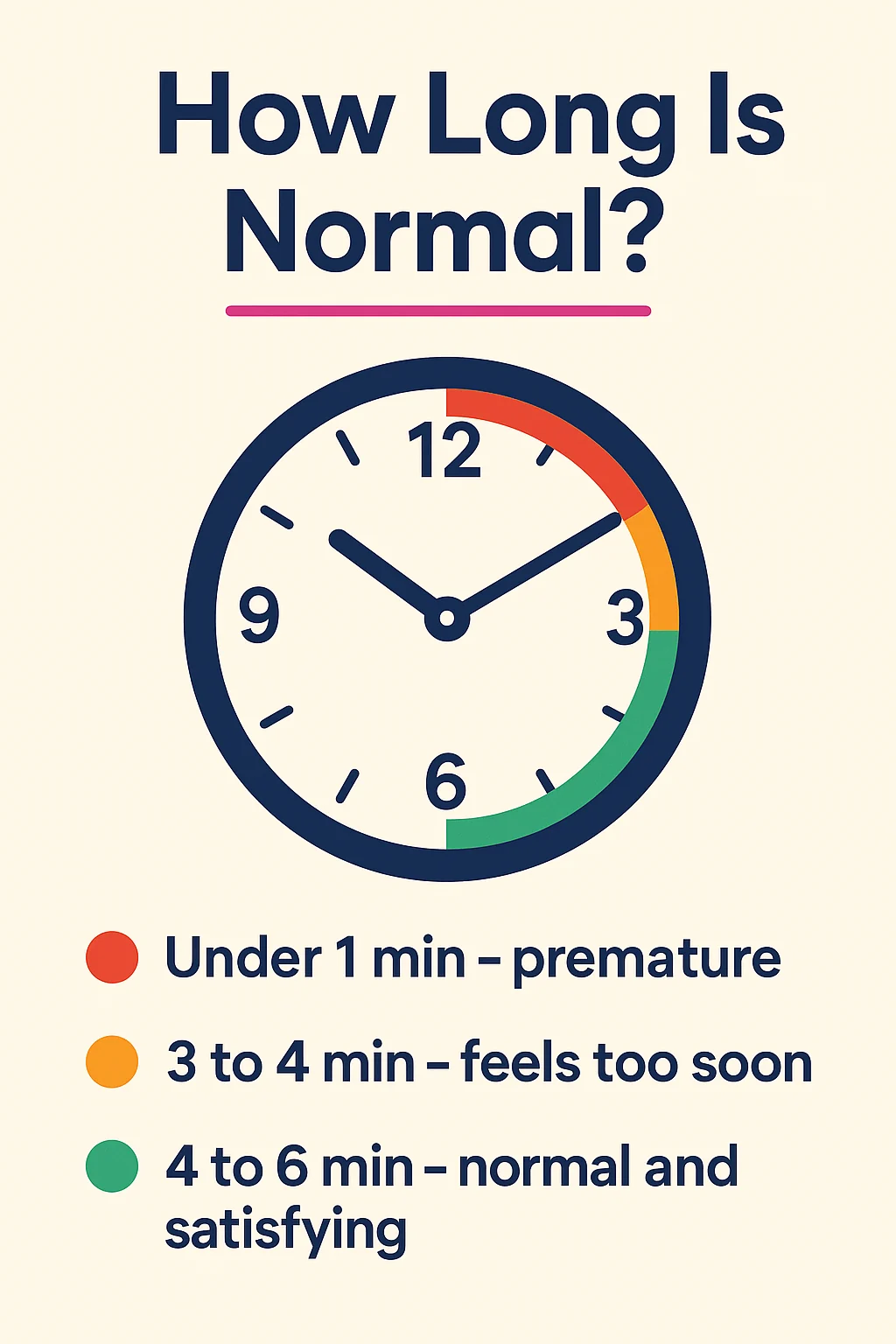
How much more time? In the two pivotal placebo-controlled trials of the prescription lidocaine-prilocaine spray (the studied compound PSD502), men with lifelong premature ejaculation (which doctors define as almost always finishing within about a minute of penetration — Serefoglu, 2014) went from a stopwatch-timed average of about 0.6 minute to 3.8 minutes in one study (Dinsmore, 2009) and from 0.56 to 2.6 minutes in the other (Carson, 2010) — several times longer, and far more than placebo. A systematic review of nine trials reached the same verdict: topical anaesthetic sprays and gels reliably and consistently beat placebo (Martyn-St James, 2016). Real-world data on an ordinary over-the-counter lidocaine spray tells a similar story — men reported lasting about 11 minutes with it versus under 7 minutes without, and far more couples climaxed together (Mark, 2016). That is why the AUA/SMSNA guideline lists topical anaesthetics as a recommended first-line option for premature ejaculation (Shindel, 2022).
Notice the honest part of that chart: a spray does not turn you into a marathon man, and it is not meant to. The realistic goal of any premature-ejaculation treatment is to get you into a normal, satisfying range — the general-population median is only about 5.4 minutes (Waldinger, 2005), not the half-hour men imagine. A spray gets most men comfortably into that range for the night. What it does not do is fix why you finish quickly in the first place — and that distinction is the whole point of this article.
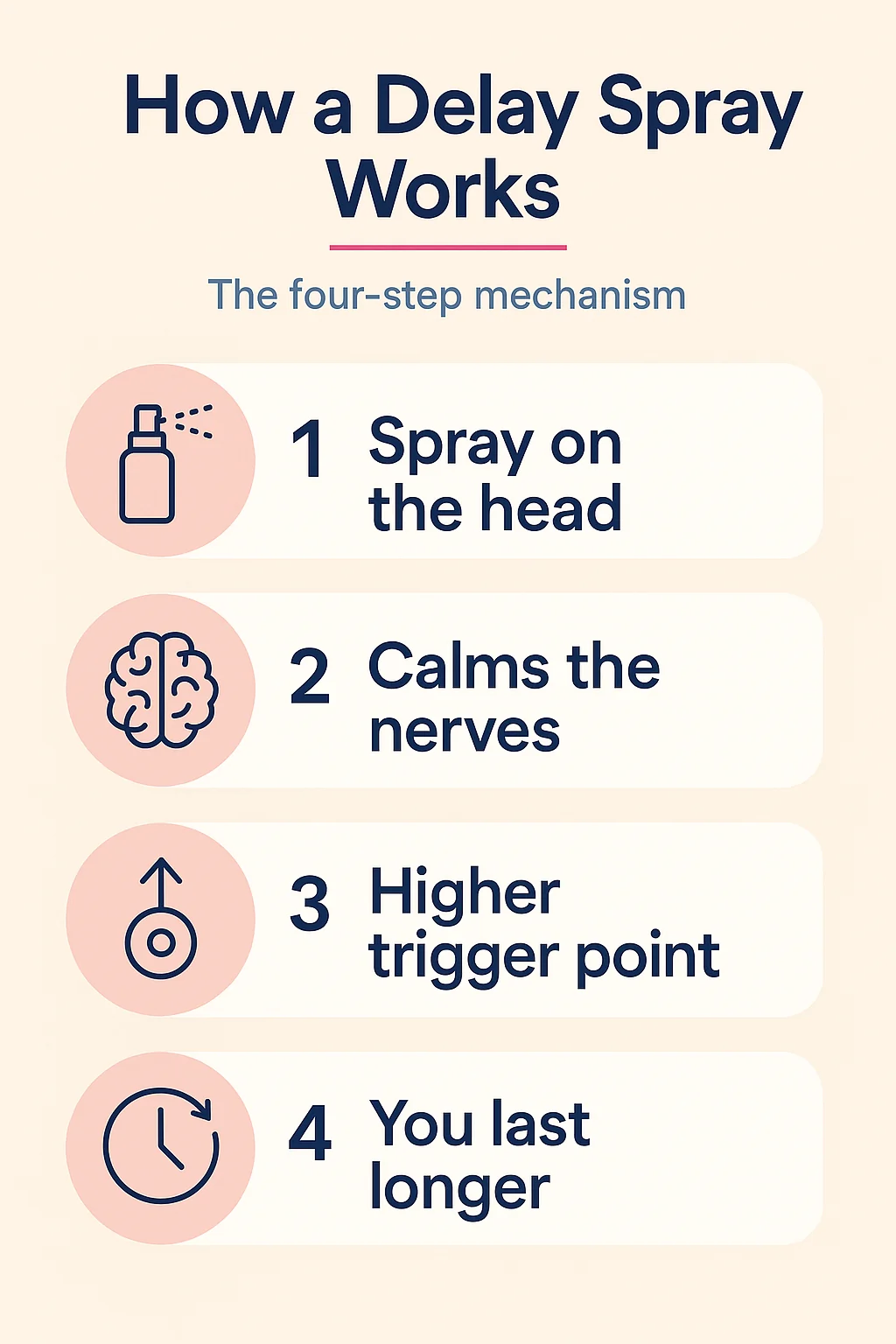
It helps to know what is actually in the bottle, because it explains both the benefit and every side effect. Almost all delay sprays are built on lidocaine; the prescription spray adds prilocaine; a few products and wipes use benzocaine. The same anaesthetics also come as a lidocaine-prilocaine cream or as pre-soaked wipes — a spray is the easiest to dose evenly and dries fastest, a cream is cheaper but messier and slower to absorb, and wipes are the most travel-friendly; all three work the same way. All are local anaesthetics that block the tiny sodium channels the glans uses to send “I’m being stimulated” signals to the spinal cord. Fewer signals reach the ejaculation switch, so the switch flips later. Because the effect is purely local and temporary, it is also why the spray must be dosed and timed correctly — which is exactly where most men go wrong.
How to use a delay spray correctly (and the 45-minute myth)
The single most common mistake I see — and it was even repeated on the older version of this very page — is the belief that you apply a delay spray 45 minutes before sex. That is wrong, and it makes the spray fail. A modern metered spray is designed to work in about 5 to 15 minutes; the prescription lidocaine-prilocaine spray acts within roughly 5 minutes, and typical over-the-counter lidocaine sprays within 10–15. Wait 45 minutes and the anaesthetic has largely worn off — so men conclude “it doesn’t work,” when in fact they mistimed it. Here is the protocol I actually give patients.
A few details make all the difference. Start on clean, dry, unbroken skin, and if you are uncircumcised, draw the foreskin back so the spray reaches the exposed head. Apply it to the head and the underside/frenulum — the most sensitive zone — not the shaft. Start with the lowest number of sprays (one to three) and only increase if you genuinely need to; more is not better — extra sprays just add numbness and can soften your erection. Give it time to absorb, then wipe the head with a tissue or rinse briefly before penetration. That wipe-off step is not optional — it is what stops the spray from numbing your partner and from over-numbing you. If it is your first time with a product, dab a little on the inner forearm a day earlier to check you are not one of the rare people allergic to it.
Does delay spray affect sperm, fertility, or pregnancy?
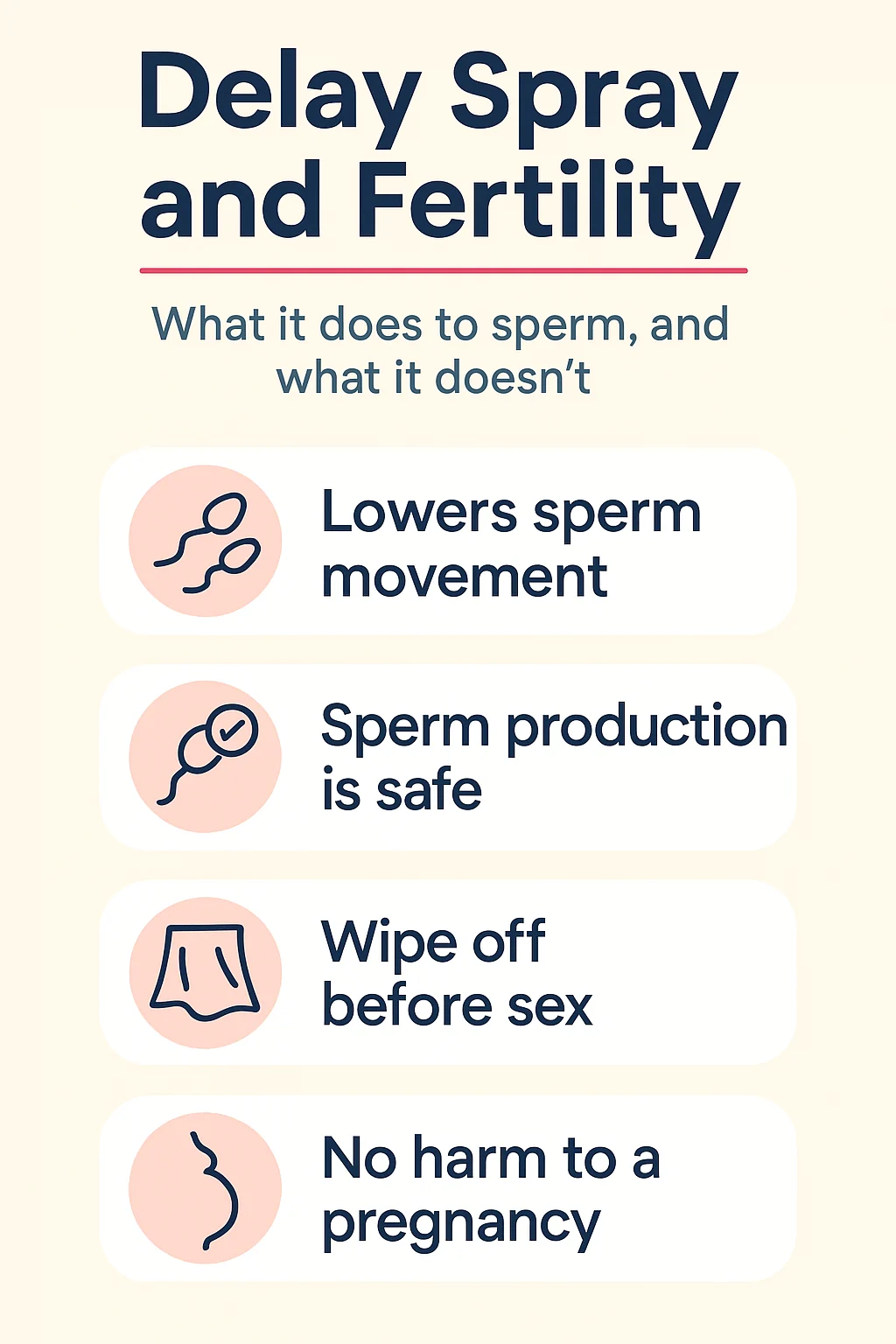
This is the question I most want you to read carefully, because it is the one the marketing never answers and the one that matters if you are trying — or might soon try — for a baby. Here is the honest answer: on its own, a delay spray does not damage your body’s ability to make sperm. But the numbing chemical itself is not sperm-friendly, so what you do with it matters.
In laboratory studies, lidocaine reduces the movement (motility) of human sperm — the very quality sperm need to reach and fertilise an egg (Bennett, 1992). A delay spray sits on the head of the penis, exactly where semen exits. If you spray, do not wipe off, and then ejaculate inside the vagina while trying to conceive, you are effectively coating your own sperm in a mild motility-reducer at the worst possible moment. There is no evidence it causes birth defects, and it will not make you permanently infertile — but for that cycle it can quietly lower your odds of conception. (Drug trials involving sex routinely require couples to use reliable contraception anyway — that is standard practice to keep an experimental product away from a possible pregnancy, not proof that the spray harms sperm.)
So to the exact questions men search for: Does delay spray affect sperm quality? The spray can temporarily impair the sperm it directly contacts, but it does not damage sperm production in the testicle — that is separate, and it is what a semen analysis measures if you are worried about a genuine low sperm count. Does it affect fertility or pregnancy? Only in the narrow sense that anaesthetic delivered into the vagina during the fertile window can lower conception odds for that attempt — easily avoided by wiping the spray off thoroughly before penetration. Is it safe while trying to conceive? Yes, if you keep the numbing agent away from the point of ejaculation. If natural conception is the goal, though, this is exactly when I would rather treat the root cause than rely on a spray.
Can delay spray cause erectile dysfunction?
It can — and understanding why tells you how to avoid it. An erection is partly a feedback loop: your brain keeps it firm partly in response to the pleasurable sensation coming back from the penis. Numb the penis too heavily and you cut that feedback, so some men find the erection goes soft. In the prescription-spray trials the two most common side effects were exactly this pair — reduced penile sensation (about 4.5% of men) and erectile difficulty (about 4.4%) — though they were usually mild and made very few men stop (Porst, 2018).
There is one counter-intuitive trap worth knowing: using a delay spray together with a condom can actually make numbness and softening more likely, because the condom traps the anaesthetic against the skin instead of letting the excess rub off (approved product label / SmPC, 2024). The fix for all of this is the same and it is simple — use the smallest effective dose, give it time to absorb, and wipe the excess off before sex. Done that way, most men get the delay without losing the erection. If you already have any erectile difficulty, though, I would avoid a numbing spray altogether — that combination needs treatment aimed at both problems, not a spray (more on why in my clinical notes below).
Delay spray side effects: short-term, long-term, and who should not use one
Used sensibly, delay sprays are among the safer things a man can buy for this problem — the anaesthetic stays local and systemic effects are unlikely (Porst, 2018). But “safer” is not “risk-free,” and a few people genuinely should not use them.
Are there long-term side effects? From the spray itself, no. Because the anaesthetic acts only on the surface and wears off within the hour, there is no known cumulative or whole-body harm from using it, even over months. The real “long-term” problem is a different one: leaning on a spray for years while the underlying premature ejaculation stays untreated, plus the numbness and softer erections that come from habitually over-applying it. That is a reason to fix the cause — not a toxin building up in your body.
| Effect | How common | What to do about it |
|---|---|---|
| Mild burning, tingling or redness of the skin | Most common complaint | Use fewer sprays; it settles quickly. Persistent rash = stop and see a doctor |
| Reduced sensation / “too numb” | ~4–5% of men | Lower the dose and wipe off more thoroughly before sex |
| Softer erection / erectile difficulty | ~4% of men | Smaller dose, avoid pairing with a condom, or switch treatment |
| Numbness or burning in the partner | ~4–5% of partners | Wipe the head before penetration; if you use a condom, wipe first so it isn’t trapped |
| True allergy to the anaesthetic | Rare | Patch-test first; stop if you react. Amide (lidocaine) allergy is uncommon |
| Methaemoglobinaemia (a rare blood effect) | Very rare | Real risk only with excess prilocaine/benzocaine or G6PD deficiency — don’t overdose |
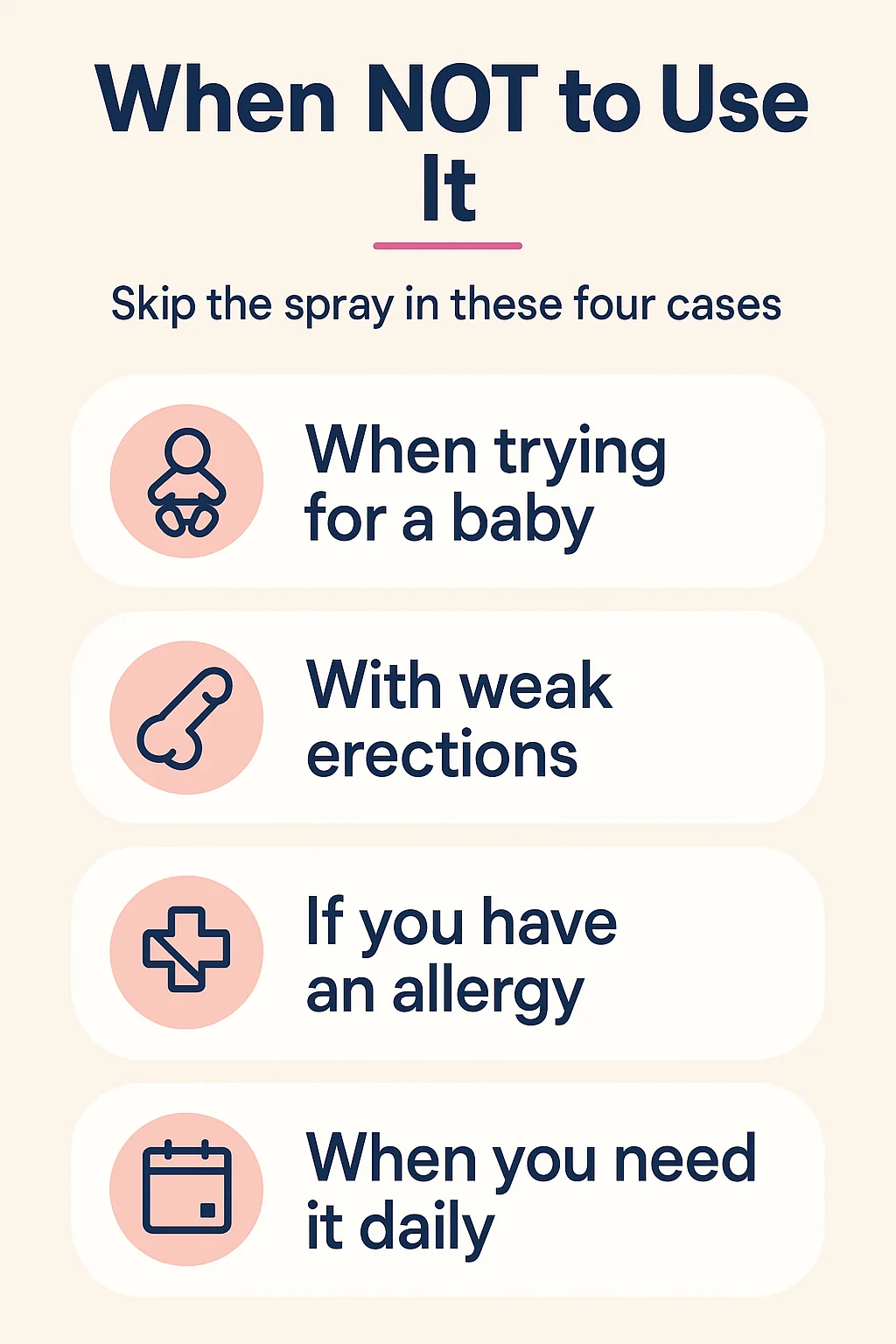
Put simply, you should avoid a delay spray if you are allergic to local anaesthetics, if you have broken or inflamed skin on the penis, or if you already struggle with erections. And if you and your partner are actively trying for a baby, treat that as a “not right now” — not because a spray is dangerous, but because there are cleaner ways to last longer during the very cycle when you want your sperm at their best.
In my Chennai practice, the men who do best with delay sprays are the ones who treat them as a tool, not a cure — a man in a new relationship who wants confidence for a few weeks, or a couple bridging a rough patch while we sort out the real cause. The men who end up frustrated are the ones who buy a spray online, use it wrong (too much, too early, never wiped off), quietly develop numbness or a softer erection, and conclude that “nothing works.” Almost every one of them could have had a better result with a five-minute conversation about dose and timing. And I will say this plainly, because no product website will: if you have been spraying yourself for two or three years to get through sex, you do not have a spray problem — you have an untreated premature-ejaculation problem, and it is very treatable.
Two things I see again and again that the boxes never mention. First, in men who have both a weak erection and premature ejaculation — a very common combination in my clinic — I avoid delay sprays altogether: the extra numbness is exactly what tips an already-shaky erection over into failure. Second, in many younger men the root cause traces back to masturbation habits — finishing fast, over and over, often to steadily higher degrees of pornography. In my experience that seems to condition the brain to arouse and finish sooner — in effect lowering the ejaculatory threshold the brain has learned. A spray numbs that symptom for a night; it does nothing about the learned pattern underneath.
Delay spray vs the other options: tablets, behaviour and condoms
A spray is one rung on a ladder of proven treatments, and the honest way to choose is to see the whole ladder. The prescription tablet dapoxetine — the only oral medicine actually licensed for premature ejaculation, and available in India as Duralast, Sustinex and others — is taken one to three hours before sex and lengthens timing roughly two-and-a-half to three times, at the cost of nausea in some men (McMahon, 2012). Older antidepressants such as paroxetine or sertraline are used off-label, taken daily, and give the strongest delay of all, but they are a doctor-guided commitment. Behavioural techniques (the start-stop and squeeze methods) can retrain the reflex over a few weeks (Cooper, 2015), and pelvic-floor training needs no drugs at all — in one study 82.5% of men regained ejaculatory control with it (Pastore, 2014). Even a climax-control condom with a little benzocaine inside the tip measurably adds time (Coupland, 2026).
| Option | How it’s used | Roughly how well it works | Best for |
|---|---|---|---|
| Delay spray (lidocaine ± prilocaine) | On-demand, 5–15 min before; wipe off | Timing up several-fold; first-line | Fast, drug-free-ish, occasional or bridge use |
| Dapoxetine (Rx) | On-demand tablet, 1–3 h before | ~2.5–3× timing | Men who prefer a pill to a spray |
| Daily SSRI — fluoxetine/paroxetine/sertraline (off-label, Rx) | A daily tablet, often ~2 months then step-down | Strongest delay | Stubborn lifelong PE, under supervision |
| Behaviour + pelvic floor | Practice over weeks | Retrains the reflex; can last | Men who want a real, drug-free cure |
| Climax-control condom | Worn during sex | Adds a couple of minutes | Simple, no prescription |
| Treat the cause (andrology work-up) | Diagnose & combine the above | Best long-term results | Anyone wanting to stop relying on a spray |
The most durable results in my clinic almost always come from combining a couple of these — say a spray or tablet now for confidence, while behavioural work and pelvic-floor training build lasting control underneath. A spray on its own is a fine start; a spray forever is a missed opportunity.
Best delay spray in India? What’s actually in them
Walk into any pharmacy or open any app in India and you will find a wall of “delay” and “long-time” sprays, each with a different brand name and a big promise. Here is the honest truth that cuts through all of it: underneath the branding they are almost all the same active ingredient — lidocaine — at slightly different strengths, so there is no magic “best brand.” What actually matters is the chemical, its strength, and honest labelling, not the name on the bottle. So rather than push any brand, here is what to look for.
| Type | Active ingredient | Prescription? | What to know |
|---|---|---|---|
| Prescription anaesthetic spray | Lidocaine 150 mg/ml + prilocaine 50 mg/ml | Prescription | The only spray actually tested and approved for premature ejaculation (EU, 2013); 3 sprays, works in ~5 min |
| OTC lidocaine spray | Lidocaine ~9.6–13% | Over the counter | By far the commonest type; 1–3 sprays, wait 5–15 min, then wipe off. Little real difference between brands |
| OTC benzocaine spray or wipe | Benzocaine ~7.5% | Over the counter | A different anaesthetic that works the same way; wipes are the pre-dosed, travel-friendly format |
| “Herbal / ayurvedic” spray | Often undeclared lidocaine | Over the counter | Sold as gentle or natural, but frequently contains a real anaesthetic with no dose on the label — the riskiest choice |
Two honest cautions. First, “FDA-approved” on a delay-spray box is usually marketing sleight-of-hand — most of these are ordinary over-the-counter anaesthetics, not medicines approved specifically for premature ejaculation. The genuinely approved-for-PE options are a prescription lidocaine-prilocaine spray (topical) and dapoxetine (oral). Second, be wary of cheap “herbal” or “ayurvedic” sprays sold online: several contain undeclared lidocaine, which means you are numbing yourself with a real drug while thinking you are using something gentle — with no reliable dosing on the label. If you are going to use a spray, use a plainly-labelled lidocaine one and follow the dose.

Private 1-on-1 consultation
Tired of relying on a spray? Let’s treat the real cause.
A calm, judgement-free consultation to find out why you finish quickly — and a plan that actually lasts, from behavioural work to the right medication. No shame, no jargon.
Book a Confidential Consultation
When a delay spray is a reasonable choice — and when it’s not
So, back to the two words in this article’s title: when, and when not. A delay spray is a sensible, low-risk choice when you want a fast, occasional boost — a new relationship where nerves make you quick, a special night, or a short bridge while you get proper treatment underway. In those situations it is honestly one of the easiest wins in men’s health: cheap, effective within minutes, and mostly free of whole-body side effects.
It is the wrong choice when it becomes a permanent crutch. If you are reaching for a spray every single time, year after year, it is quietly telling you that the underlying reflex was never treated. A spray — much like masturbating before sex to take the edge off — is a crutch, not a cure. It is also the wrong choice if you are actively trying to conceive, if you already have erectile difficulty, or if you are allergic to local anaesthetics. In all of those cases there is a better path — and it usually ends with you not needing the spray at all.
The better long-term fix: treat the cause
Premature ejaculation is one of the most treatable problems I see, and the reason I push men past the spray is simple: masking a symptom for years is not the same as solving it. A proper andrology assessment sorts out whether your PE is lifelong or newly acquired, whether an over-sensitive glans, anxiety, a thyroid or prostate issue, or a coexisting erection problem is driving it — and then matches the treatment to the cause. For most men that is a short, combined plan: something on-demand for confidence now, behavioural and pelvic-floor work to retrain control, and a clear exit from needing anything at all. You can always consult a sexologist in Chennai directly.
In my own practice, the plan that actually lasts usually has three parts. First, we tackle the habits that reset the reflex — most importantly easing off the fast, pornography-driven masturbation pattern that trains early ejaculation. Second — and this is a plan a doctor prescribes and monitors for you, never a self-treatment protocol — where medication helps, I most often prescribe a daily SSRI such as fluoxetine 20 mg for about two months, then step it down to alternate days rather than stopping suddenly, which gives the ejaculatory reflex time to relearn control. In men who also have a weak erection, I lean on tadalafil, and a tadalafil-plus-SSRI combination often lifts both the erection and the latency together — combining treatments this way is exactly what the guidelines recommend when the two problems coexist (Shindel, 2022). Third, pelvic-floor and behavioural training lock the gains in, so that over time you need less and less — often nothing at all. None of this is something a spray can do, and none of these medicines should ever be self-prescribed — they need a doctor’s guidance.
Last longer without depending on a spray
A private consultation with Dr Shah gets to why you finish quickly and gives you a plan that lasts. Most premature-ejaculation problems are very treatable.
Frequently asked questions
Does delay spray really work for premature ejaculation?
Yes. In controlled trials, topical lidocaine-prilocaine spray raised timed intercourse from about 0.6 minute to 2.6–3.8 minutes, and urology guidelines list topical anaesthetics as a first-line treatment (Dinsmore, 2009; Carson, 2010; Shindel, 2022). It works by briefly reducing the sensitivity of the head of the penis.
How long before sex should I apply delay spray?
About 5 to 15 minutes — not 45. The prescription lidocaine-prilocaine spray works within roughly 5 minutes; typical over-the-counter lidocaine sprays within 10–15. Applying it far too early just lets it wear off before you need it.
Does delay spray affect sperm quality or fertility?
The numbing chemical (lidocaine) lowers sperm movement in the lab, but the spray does not harm sperm production in the testicle. If you are trying to conceive, wipe the head thoroughly before penetration so no anaesthetic reaches your sperm (a condom would keep it off your sperm but also stop conception, so wiping off is the right move).
Is it safe to use delay spray while trying to conceive?
It can be, but only if you keep the spray away from the point of ejaculation — wipe it off thoroughly before penetration. During the fertile window, I usually prefer to treat the premature ejaculation another way so nothing interferes with conception.
Can delay spray affect pregnancy?
There is no evidence a delay spray harms an existing pregnancy — the only concern is at the moment of conception, when anaesthetic reaching the vagina can lower the odds of the sperm fertilising the egg. Wiping it off thoroughly during the fertile window makes that risk very small — even so, when a couple is actively trying, I usually prefer to treat the premature ejaculation another way so nothing touches the sperm at all.
Can delay spray cause erectile dysfunction?
Over-numbing can soften the erection by cutting the sensory feedback that helps sustain it; mild erectile difficulty affected about 4% of men in trials. Using the smallest effective dose, wiping off excess, and avoiding pairing it with a condom prevents this in most men.
Can delay spray numb my partner?
Yes, if left on — around 4–5% of partners report numbness or burning. Wiping the head before penetration prevents transfer while keeping the delay effect for you; if you use a condom, wipe the spray off first so it isn’t trapped against you.
Is it safe to use delay spray every day?
Occasional use is fine, but needing it every single time is a sign the underlying premature ejaculation is untreated. Daily reliance for years is not “using a spray” — it is living with an unsolved, and very treatable, problem.
What are the long-term side effects of delay spray?
There are no known cumulative or whole-body long-term side effects from the anaesthetic itself — it acts on the surface and wears off within the hour. The real long-term downsides are practical: masking untreated premature ejaculation for years, and the numbness or softer erections that come from habitually over-applying it.
Is delay spray better than tablets like dapoxetine?
Neither is simply “better.” A spray works within minutes and stays local; dapoxetine is a tablet taken 1–3 hours ahead and can cause nausea. Most men I see do best pairing an on-demand spray or tablet now with pelvic-floor and behavioural work — that is the combination I start people on.
Do I need a prescription to buy a delay spray?
Most over-the-counter lidocaine sprays are sold without a prescription; only the lidocaine-prilocaine spray actually approved for premature ejaculation needs one. Be cautious with cheap “herbal” sprays online — several contain undeclared lidocaine.
References
- Dinsmore WW, Wyllie MG. PSD502 improves ejaculatory latency, control and sexual satisfaction when applied topically 5 min before intercourse in men with premature ejaculation. BJU International. 2009. PMID: 19245438.
- Carson C, Wyllie M. Improved ejaculatory latency, control and sexual satisfaction when PSD502 is applied topically in men with premature ejaculation. The Journal of Sexual Medicine. 2010. PMID: 20584124.
- Porst H. An overview of pharmacotherapy in premature ejaculation (PSD502). Urologia. 2018. PMID: 30047847.
- Martyn-St James M, et al. Topical anaesthetics for premature ejaculation: a systematic review and meta-analysis. Sexual Health. 2016. DOI: 10.1071/SH15042.
- Mark KP, et al. Event-level impact of a topical lidocaine spray on quality of sexual experience in men with subjective premature ejaculation. International Journal of Impotence Research. 2016. PMID: 27557610.
- Serefoglu EC, et al. An evidence-based unified definition of lifelong and acquired premature ejaculation (ISSM). Sexual Medicine. 2014. DOI: 10.1002/sm2.27.
- Waldinger MD, et al. A multinational population survey of intravaginal ejaculation latency time. The Journal of Sexual Medicine. 2005. PMID: 16422843.
- Shindel AW, et al. Disorders of Ejaculation: An AUA/SMSNA Guideline. The Journal of Urology. 2022. DOI: 10.1097/JU.0000000000002392.
- Bennett SJ, et al. The effects of lignocaine (lidocaine) on human sperm motility. 1992. PMID: 1525460.
- McMahon CG. Dapoxetine: a new option in the medical management of premature ejaculation. Therapeutic Advances in Urology. 2012. PMID: 23024705.
- Cooper K, et al. Behavioral therapies for management of premature ejaculation: a systematic review. Sexual Medicine. 2015. PMID: 26468381.
- Pastore AL, et al. Pelvic floor muscle rehabilitation for patients with lifelong premature ejaculation. Therapeutic Advances in Urology. 2014. DOI: 10.1177/1756287214523329.
- Coupland C, et al. Prolonging ejaculatory latency with benzocaine-containing condoms. The Journal of Sexual Medicine. 2026. DOI: 10.1093/jsxmed/qdag134.
- Lidocaine/prilocaine cutaneous spray. Summary of Product Characteristics (SmPC). electronic Medicines Compendium. 2024.
This article is for education and does not replace an in-person consultation. If premature ejaculation is affecting you or your relationship, it is common and very treatable. Call +91 97907 83856 to book a confidential appointment with Dr Shah Dupesh in Chennai.
A private, judgement-free space to talk through premature ejaculation, erections and men’s sexual health. Walk in, or book ahead by phone.
📍No 21, Sree Kalki Apartments, Ground Floor, Bazullah Road, T-Nagar, Chennai 600017